Have you ever seen someone write “Shiver me timbers!” in a chat and wondered what it means?
You may have seen it in a funny meme, a pirate movie, or a comment on Instagram. At first, the phrase may sound strange. Why would someone talk about shaking wood?
Don’t worry! The phrase has a fun meaning.
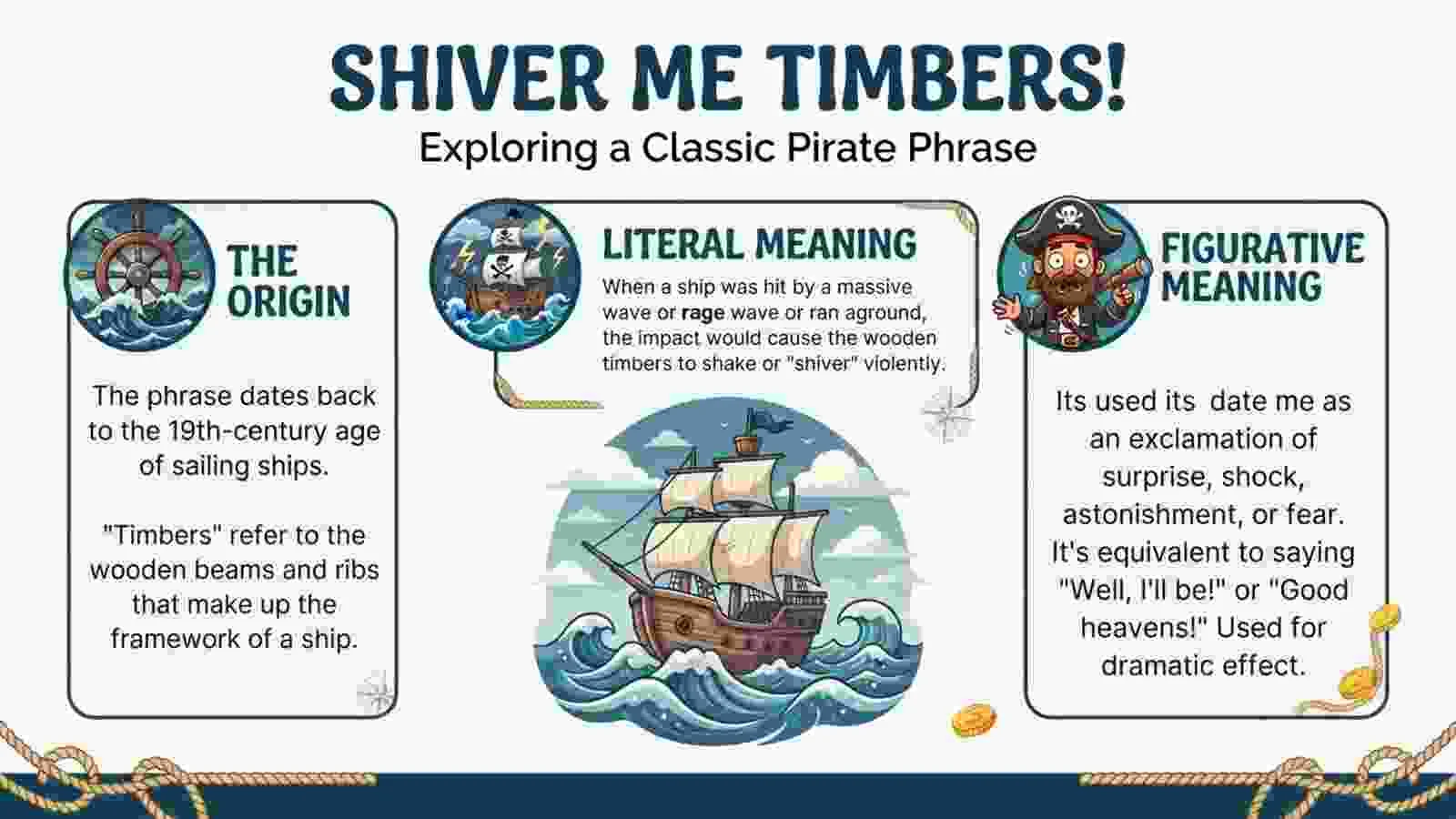
“Shiver me timbers” is an old pirate-style expression used to show surprise, shock, or amazement.
Today, people often use it as a joke or to make a message sound funny and dramatic.
You may see this phrase on WhatsApp, Instagram, Snapchat, TikTok, or other social media platforms. People also use it when talking about pirates or making jokes with friends.
In this guide, you will learn the meaning of “shiver me timbers,” where it came from, how people use it, and how to reply when someone says it.
What Does “Shiver Me Timbers” Mean in Text?
“Shiver me timbers” is a playful phrase that shows surprise, shock, or amazement. It is linked to the way pirates are often shown speaking in stories and movies.
In simple words, it can mean:
- “Wow!”
- “Oh my goodness!”
- “I can’t believe it!”
- “That is amazing!”
For example:
Friend 1: “I got 100% on my test!”
Friend 2: “Shiver me timbers! That’s amazing!”
Here, the speaker uses the phrase to show surprise in a funny way.
The phrase is not common modern texting slang in the same way as LOL or OMG. It is an old expression that people still use for humor, pirate jokes, and playful reactions.
Full Form of “Shiver Me Timbers”
“Shiver me timbers” has no full form. It is not an acronym or an abbreviation. It is a traditional English expression.
The word “shiver” means to shake or tremble. “Me” is an old-fashioned or dialect form of “my.” “Timbers” refers to the wooden beams used to build a ship.
So, the phrase can be understood as “make my ship’s timbers shake.” It creates a dramatic image of a ship shaking in rough seas.
Today, people usually do not take the words literally. They use the phrase to express surprise or to sound like a pirate.
How Is “Shiver Me Timbers” Used in Chat?
People use this phrase to react to something surprising, funny, or unexpected. It can make a normal message sound more playful.
Here are three examples.
Example 1: Reacting to Good News
Alex: “I won a new phone in a giveaway!”
Sam: “Shiver me timbers! You’re so lucky!”
Sam uses the phrase to show surprise and excitement.
Example 2: Making a Joke
Mia: “I ate the whole pizza by myself.”
Jake: “Shiver me timbers! A true pizza pirate!”
Jake uses the phrase to make the chat funny.
Example 3: Reacting to Something Unexpected
Lily: “Our teacher gave us no homework today.”
Noah: “Shiver me timbers! Is this real life?”
Noah uses the phrase to show playful disbelief.
In all three examples, the phrase adds humor. It is not meant to be taken literally.
What Does “Shiver Me Timbers” Mean From a Girl or Boy?
The meaning does not change based on who says it. A girl or boy can use it to show surprise, excitement, or humor.
The tone depends on the message and the relationship between the people.
When a Girl Says “Shiver Me Timbers”
A girl may use this phrase when something surprises her or makes her laugh.
Example:
Girl: “Shiver me timbers! You actually remembered my birthday!”
She may be excited or joking in a playful way.
If she uses it while chatting with someone she likes, it may be part of friendly teasing. But the phrase alone does not mean she is flirting.
When a Boy Says “Shiver Me Timbers”
A boy may use it to make a reaction sound funny or dramatic.
Example:
Boy: “Shiver me timbers! You finished that game in five minutes?”
He is showing surprise and may be joking.
Can It Be Flirty?
It can be used in a playful or flirty chat, but it is not a romantic phrase by itself.
For example:
Person A: “You look great today.”
Person B: “Shiver me timbers! Look who’s being charming!”
This reply may sound playful or teasing. The real meaning depends on the full conversation.
Is “Shiver Me Timbers” Rude or Polite?
“Shiver me timbers” is usually harmless, playful, and humorous. It is not a swear word or an insult.
People often use it with friends, family, or online groups to make a reaction more fun.
When It Sounds Friendly
Example:
“Shiver me timbers! You baked all these cookies yourself?”
This sounds like a fun way to show surprise.
When It May Sound Strange
In a serious conversation, the phrase may seem out of place.
For example, if someone shares sad news, replying with “Shiver me timbers!” may seem insensitive because the phrase has a comic tone.
It may also sound silly in a formal meeting or business email.
Tip: Use the phrase when the mood is light. If someone is upset or discussing a serious matter, choose a more thoughtful response.
When Should You Use “Shiver Me Timbers”?
You can use this phrase in casual and playful situations.
- When a friend shares surprising news.
- When you want to make a funny reaction.
- When talking about pirates or ships.
- When commenting on pirate memes or videos.
- When joking with friends in a group chat.
- When you want to sound dramatic in a playful way.
Example: “Shiver me timbers! You ate three burgers?”
The phrase works best when everyone understands that you are joking.
When Should You NOT Use “Shiver Me Timbers”?
Although the phrase is harmless, it does not fit every situation.
- Do not use it during a serious or sad conversation.
- Avoid it in formal emails and professional reports.
- Do not use it when a clear and direct response is needed.
- Avoid using it to mock someone who is upset.
- Do not assume everyone will understand the pirate reference.
For example, if your manager asks you to finish an urgent report, replying “Shiver me timbers!” may sound unprofessional.
A simple reply like “Understood. I’ll finish it today” is better.
Best Replies to “Shiver Me Timbers”
If someone sends you this phrase, you can reply in different ways based on the mood.
Here are five simple replies.
- “Haha, what happened?” — Use this when you want to know why they are surprised.
- “Arrr, matey!” — A funny pirate-style reply.
- “I know, right?” — Use this when you share their surprise.
- “That’s wild!” — A casual reply to surprising news.
- “Captain, what’s the plan?” — A playful response that continues the pirate joke.
Example Conversation
Friend: “Shiver me timbers! he got the highest score!”
You: “Haha, I can’t believe it either!”
You do not need to reply with another pirate phrase. A normal response is fine, too.
“Shiver Me Timbers” Meaning on WhatsApp, Instagram, and Snapchat
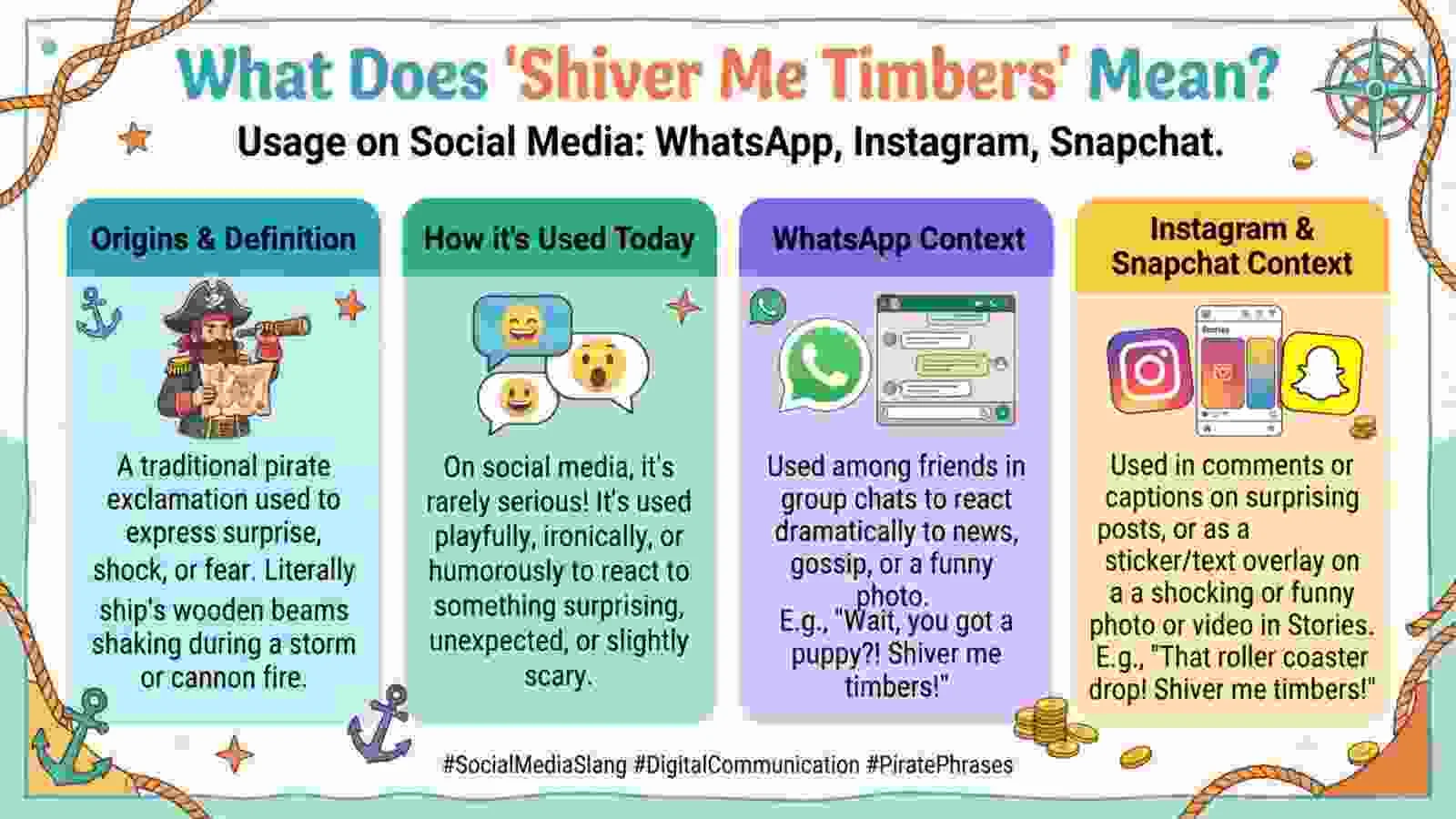
The basic meaning stays the same across social media platforms. It usually shows surprise, amazement, or humor.
On WhatsApp
Friends may use it in private messages or group chats.
Example:
“Shiver me timbers! You reached the airport before everyone else!”
It adds a funny tone to the message.
On Instagram
You may see it in comments, captions, reels, or memes.
Example:
“Shiver me timbers! That outfit is amazing!”
The person is using the phrase to show excitement or surprise.
On Snapchat
Friends may use it when reacting to a snap or a surprising update.
Example:
“Shiver me timbers! You cut your hair so short!”
The phrase makes the reaction sound playful.
The platform does not change the meaning. The main difference is how people use it to fit the conversation.
Similar Slang Words and Phrases Like “Shiver Me Timbers”
If you want to express surprise in a chat, these five expressions may also help.
- OMG: Short for “Oh my God.” People use it to show surprise, shock, or excitement.
- Whoa: A simple reaction to something amazing or unexpected.
- Holy moly: A playful phrase used to show surprise.
- No way!: Used when something is hard to believe.
- Blimey: An informal British expression used to show surprise.
How Are They Different?
“OMG” is common in modern texting. “Whoa” is short and easy to use. “Holy moly” sounds playful, while “blimey” has a stronger British feel.
“Shiver me timbers” is different because it brings a pirate-style joke into the conversation.
FAQs About “Shiver Me Timbers”
1. Is “shiver me timbers” positive or negative?
It can be either, depending on the situation. However, it is often used in a playful or positive way to show surprise or excitement.
2. Is “shiver me timbers” slang?
It is better described as an old-fashioned English expression. Today, people often use it like humorous slang in chats, memes, and jokes.
3. Is it safe to use with elders?
Yes. The phrase is generally harmless. However, some older people may find it silly or may not understand why you are using pirate-style language.
4. Is “shiver me timbers” common in daily chat?
It is not as common as expressions like “OMG” or “wow.” People tend to use it for jokes, pirate references, and funny reactions.
5. Does “shiver me timbers” mean I am scared?
Not always. It can express shock or surprise, but people often use it humorously rather than to show real fear.
6. Is “shiver me timbers” a pirate phrase?
Yes, it is strongly linked to traditional pirate speech in popular culture. It is widely recognized because of pirate stories, books, movies, and cartoons.
7. Can I use “shiver me timbers” with my crush?
Yes, if you want to make a conversation playful. But the phrase does not express romantic interest by itself.
Conclusion
“Shiver me timbers” is a fun, old-fashioned English expression that people use to show surprise, shock, or amazement. It is closely linked to pirates and is often used in jokes, memes, and casual chats.
You may see it on WhatsApp, Instagram, Snapchat, or other social media platforms. Its meaning usually stays the same, no matter where you see it.
Now you know how to understand the phrase and when to use it. Try it with friends when something surprising or funny happens. Just remember that it is best for casual chats, not serious or formal situations.
Want to learn more fun English expressions? Explore other slang words and idioms to make your chats more natural and interesting.
Continue Reading:
- Apple of My Eye Meaning: Definition, Origin, and Examples ( for 2026)
- La Vie en Rose Meaning: Translation, Origin, and Symbolism ( for 2026)
- Chip on Your Shoulder Meaning: Definition, Origin, and Examples ( for 2026)

Ella Peterson is an English language writer and grammar enthusiast at MeaningZones.com. She focuses on clear and practical English grammar, vocabulary, sentence structure, and everyday language usage.
Through easy-to-understand explanations and helpful examples, Ella helps readers improve their English writing and communication skills. Her goal is to make English grammar simple, useful, and accessible to everyone.