
Have you ever heard someone say “Vaya con Dios” and wondered what it means?
You may see this phrase in a text message, a movie, or a social media post. It may sound like slang, but it has a deeper meaning.
“Vaya con Dios” is a Spanish phrase that means “Go with God.” People use it to wish someone safety, peace, and good luck as they leave. It can also be a warm way to say goodbye.
You may see this phrase on WhatsApp, Instagram, or Snapchat. Someone might use it when a friend goes on a trip or when they say goodbye to a loved one. The phrase can sound kind, caring, or serious, based on the situation.
In this guide, you will learn what “Vaya con Dios” means, how to use it in chats, and how to reply to it.
What Does “Vaya Con Dios” Mean in Text?
“Vaya con Dios” means “Go with God” in English.
It is a Spanish phrase used to wish someone well as they leave. It can show care, love, respect, or a wish for God’s protection.
For example, a friend may text you “Vaya con Dios” before you leave for a long trip. They are wishing you a safe journey.
The phrase can also mean:
- Go safely.
- May God protect you.
- Take care as you go.
- May you have peace and good luck.
The exact feeling depends on the person and the situation. Some people use it in a religious way. Others use it as a warm or traditional goodbye.
Full Form of “Vaya Con Dios”
“Vaya con Dios” does not have a full form. It is a Spanish phrase, not an abbreviation.
Here is what each word means:
- Vaya: Go, or may you go.
- Con: With.
- Dios: God.
Together, the phrase means “Go with God.”
It is often used as a farewell. It can express a wish for safety, peace, and divine care.
For example:
Friend: “I’m leaving for my trip tomorrow.”
You: “Vaya con Dios! Have a safe journey.”
This means you hope your friend travels safely and stays protected.
How Is “Vaya Con Dios” Used in Chat?
People use “Vaya con Dios” to say goodbye or wish someone well. It can fit both personal messages and serious moments.
Here are three simple examples.
Example 1: Saying goodbye
Alex: “I’m heading home now.”
Mia: “Vaya con Dios! See you tomorrow.”
Mia wishes Alex well as he leaves.
Example 2: Before a trip
Sam: “My flight is early tomorrow morning.”
Lily: “Vaya con Dios. Hope you have a safe flight!”
Lily is sending Sam a kind wish for a safe trip.
Example 3: Offering comfort
Noah: “I’m moving to another city next week. I’ll miss everyone.”
Emma: “Vaya con Dios, my friend. I hope your new life brings you joy.”
Here, the phrase shows care and support. It may also make the goodbye feel more meaningful.
What Does “Vaya Con Dios” Mean From a Girl or Boy?
The meaning usually stays the same whether a girl or a boy says it. However, the tone may depend on your relationship.
When a girl says “Vaya Con Dios”
A girl may use this phrase to show care, kindness, or respect. She might say it when you travel, leave a place, or face a big change.
For example:
You: “I’m going away for a few weeks.”
Her: “Vaya con Dios. Take care of yourself!”
This sounds warm and caring. It does not automatically mean she is flirting with you.
When a boy says “Vaya Con Dios”
A boy may use the phrase to wish you well or say goodbye in a thoughtful way.
For example:
You: “I’m starting my new job tomorrow.”
Him: “Vaya con Dios! You’ve got this.”
His message shows support and goodwill.
Does it mean someone likes you?
Not always. The phrase is not a clear sign of romantic interest.
A person may use it because they care about you as a friend, respect you, or want to wish you well. Look at the rest of the conversation before guessing their feelings.
Is “Vaya Con Dios” Rude or Polite?
“Vaya con Dios” is generally polite and caring. It is often used as a kind farewell.
It can show that you want someone to be safe, happy, and protected. In religious settings, it may also express faith or a blessing.
However, tone matters.
If someone says the phrase warmly, it usually sounds kind. If they say it during an argument, it may sound cold or final. In some situations, it can feel like the speaker is ending the relationship or conversation for good.
For example:
Person A: “I wish you the best. Vaya con Dios.”
This may sound like a serious goodbye.
It is not usually an insult. Still, you should consider the situation and the speaker’s tone.
When Should You Use “Vaya Con Dios”?
You can use this phrase when you want to wish someone well.
Good situations include:
- Before a trip: Wish a friend a safe journey.
- When someone leaves: Give them a warm goodbye.
- During a life change: Offer support when someone moves or starts a new job.
- In a religious setting: Share a blessing with someone who appreciates religious language.
- When saying a heartfelt goodbye: Show that you care about the person.
Example:
“Good luck with your new journey. Vaya con Dios!”
The phrase works best when it fits the moment and the person understands Spanish or knows the expression.
When Should You NOT Use “Vaya Con Dios”?
Although the phrase is polite, it may not fit every situation.
Avoid using it when:
- You are writing a formal business email and a simple goodbye would be clearer.
- The person does not understand Spanish and may be confused by the phrase.
- The conversation is very casual and the phrase feels too serious or formal.
- The person does not welcome religious language.
- You are in the middle of a heated argument and the phrase could sound like a harsh farewell.
In these situations, you can use simple alternatives such as “Take care,” “Good luck,” or “Have a safe trip.”
Best Replies to “Vaya Con Dios”
If someone says “Vaya con Dios” to you, you can reply in several ways. Choose a reply that matches the situation.
- “Gracias!” — This means “Thank you” in Spanish.
- “You too!” — A simple and friendly reply.
- “Thank you. Take care!” — A warm response.
- “Dios te bendiga.” — This means “God bless you.”
- “Thanks, see you soon!” — A casual reply for a friend.
Example in a text conversation
Friend: “Vaya con Dios! Have a safe trip.”
You: “Gracias! I’ll let you know when I arrive.”
You do not need to reply in Spanish. A kind response in English is fine too.
“Vaya Con Dios” Meaning on WhatsApp, Instagram, and Snapchat
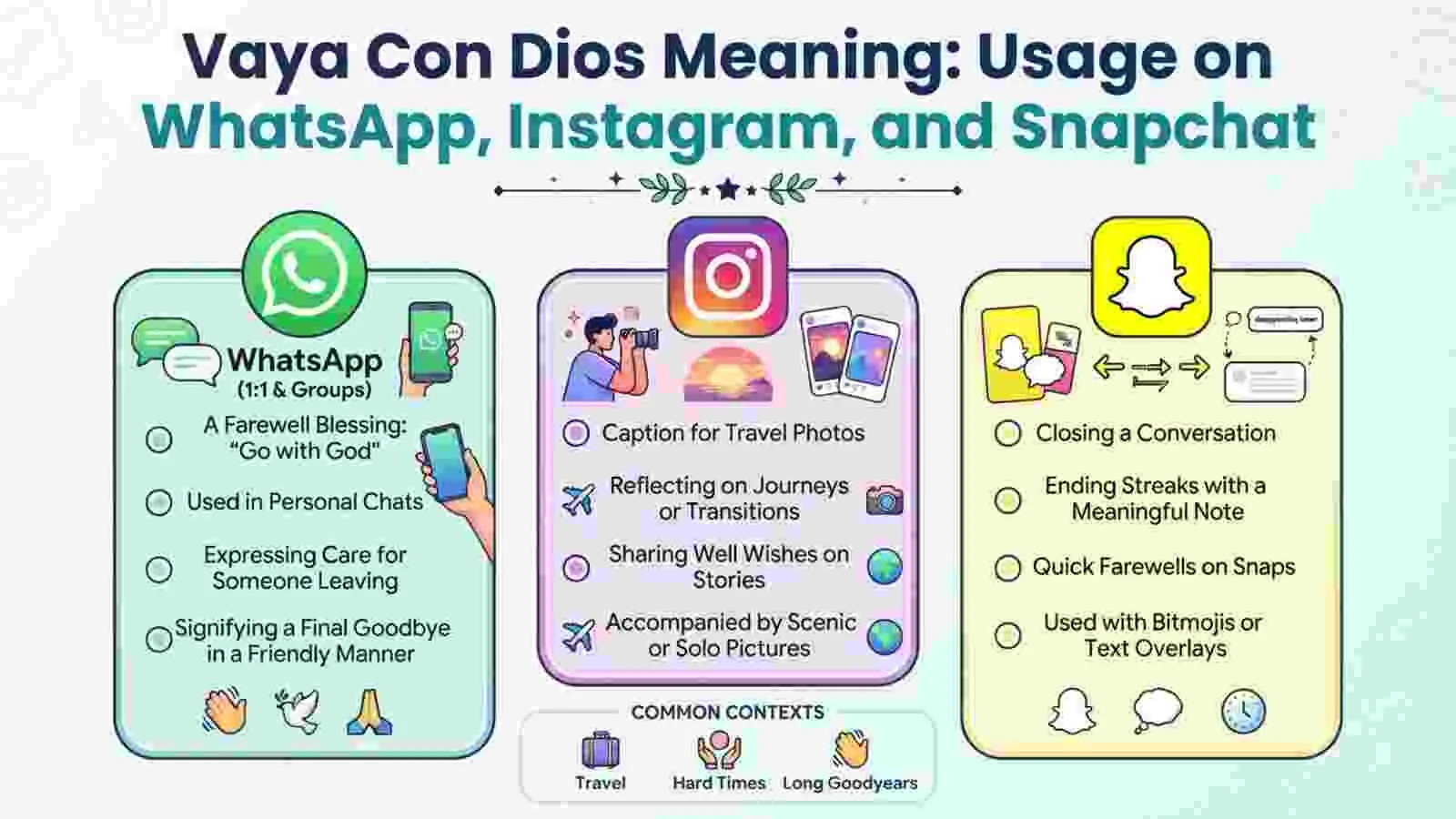
The basic meaning of “Vaya con Dios” stays the same across social media platforms. It still means “Go with God.”
However, people may use it in different ways.
Vaya con Dios on WhatsApp
On WhatsApp, it may appear in a private message when someone is leaving, traveling, or facing a big change.
Example: “Vaya con Dios, bro. Have a safe trip!”
Vaya con Dios on Instagram
On Instagram, people may use the phrase in comments, captions, or posts about travel, faith, and farewells.
Example: “New city, new chapter. Vaya con Dios.”
Vaya con Dios on Snapchat
On Snapchat, it may appear in a quick message or story. It can be a short way to wish someone well.
Example: “Heading out now. Vaya con Dios!”
The platform does not change the core meaning. The surrounding message helps show whether the phrase is casual, emotional, or religious.
Similar Slang Words and Phrases Like “Vaya Con Dios”
If you want to say goodbye or wish someone well, these phrases may be useful.
- Adiós: A Spanish word that means “goodbye.”
- Hasta luego: A Spanish phrase that means “see you later.”
- Cuídate: A Spanish phrase that means “take care.”
- Dios te bendiga: A Spanish phrase that means “God bless you.”
- Safe travels: An English phrase used to wish someone a safe trip.
These phrases are related, but they are not exact replacements in every situation.
For example, “Adiós” is a general goodbye. “Cuídate” focuses on taking care of oneself. “Vaya con Dios” has a stronger sense of a blessing or a wish for God’s care.
FAQs About “Vaya Con Dios”
1. Is “Vaya con Dios” positive or negative?
It is generally positive. People use it to wish someone safety, peace, and good fortune. In an argument, however, it may sound like a final goodbye.
2. Is “Vaya con Dios” safe to use with elders?
Yes, it can be respectful, especially when the person understands the phrase and appreciates its meaning. The tone and cultural setting still matter.
3. Is “Vaya con Dios” common in daily chat?
It is a known Spanish expression, but how often people use it varies by region and community. It may sound more traditional or heartfelt than a simple “bye.”
4. Does “Vaya con Dios” mean goodbye forever?
Not always. It can be used for an ordinary goodbye. In an emotional situation, it may sound more final, but that depends on the context.
5. Is “Vaya con Dios” a religious phrase?
Yes, it has a religious meaning because it refers to God. Some people use it as a blessing, while others use it as a traditional farewell.
6. Can I reply with “Gracias”?
Yes. “Gracias” means “thank you” in Spanish. It is a natural reply when someone uses “Vaya con Dios” to wish you well.
7. Is “Vaya con Dios” flirting?
No, not by itself. It usually expresses care, respect, or goodwill. You need more context to know if someone has romantic feelings.
Conclusion
“Vaya con Dios” is a Spanish phrase that means “Go with God.” People use it to say goodbye, wish someone a safe journey, or offer a blessing.
You may see it in text messages, WhatsApp chats, Instagram captions, or Snapchat messages. Its meaning stays much the same across these platforms.
The phrase is usually kind and polite. It can show care, respect, and hope for someone’s safety. Still, the tone and situation matter. It may sound more serious during an emotional goodbye.
Now you know what “Vaya con Dios” means and how to reply to it. You can say “Gracias,” “You too,” or “Take care” when someone uses it with you.
Want to learn more about words and phrases used in daily chats? Explore related slang meanings to understand online conversations with ease.

Ella Peterson is an English language writer and grammar enthusiast at MeaningZones.com. She focuses on clear and practical English grammar, vocabulary, sentence structure, and everyday language usage.
Through easy-to-understand explanations and helpful examples, Ella helps readers improve their English writing and communication skills. Her goal is to make English grammar simple, useful, and accessible to everyone.





1 thought on “Vaya Con Dios Meaning: Translation, Origin, and Usage ( for 2026)”