Imagine getting a message that says, “Please shelter in place until further notice.” You may stop and wonder, “What exactly does that mean?”
The phrase can sound serious, especially when you see it in a news alert, school message, workplace notice, or group chat.
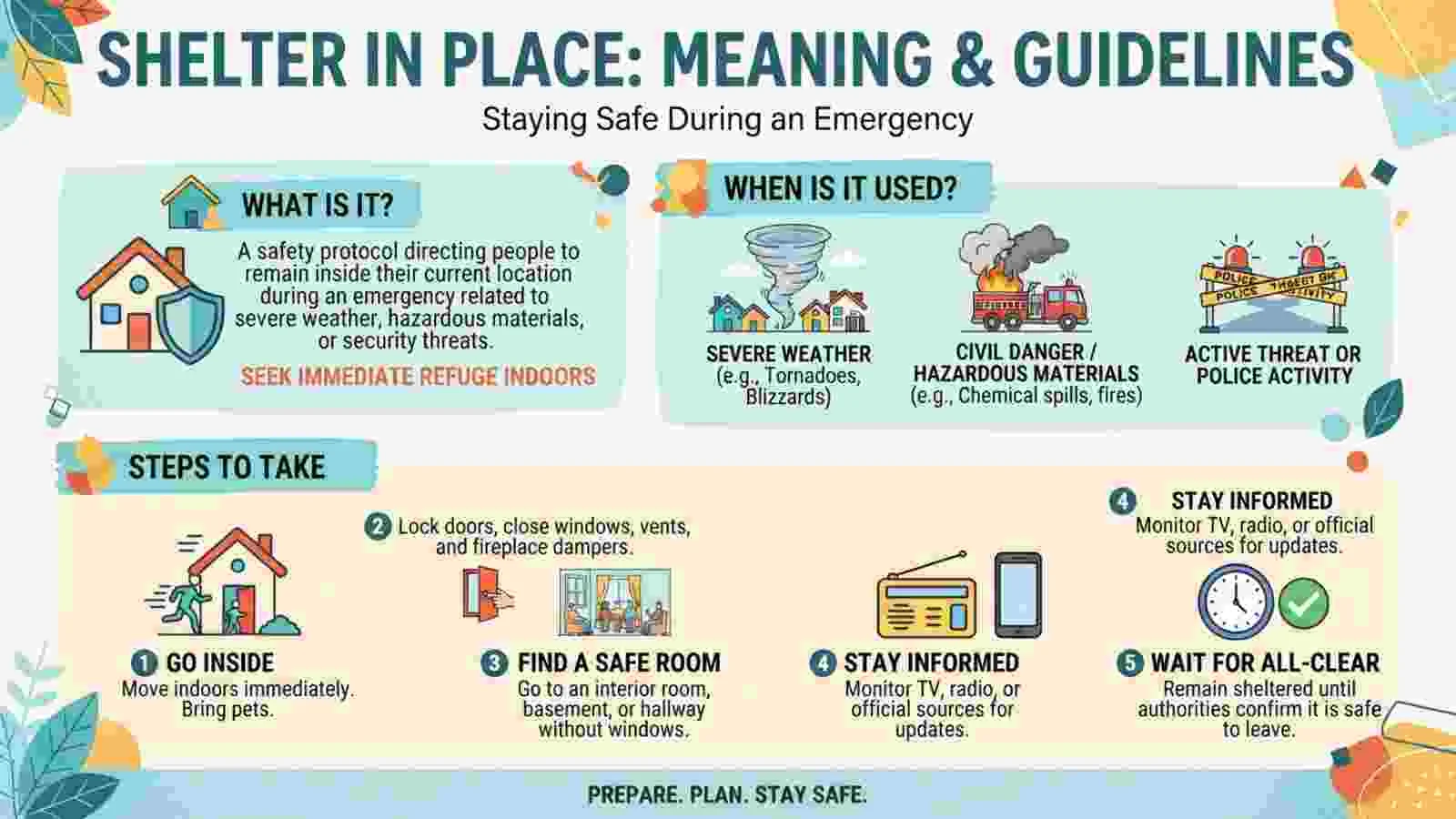
The shelter in place meaning is simple: stay where you are and remain in a safe indoor location until officials or another trusted source says it is safe to leave.
You may see this phrase in news reports, emergency alerts, school messages, or online posts. It can also appear in conversations on WhatsApp, Instagram, Snapchat, and other platforms.
Understanding this phrase is useful because it often relates to safety. Knowing what it means can help you understand an alert quickly and respond in the right way.
What Does “Shelter in Place” Mean?
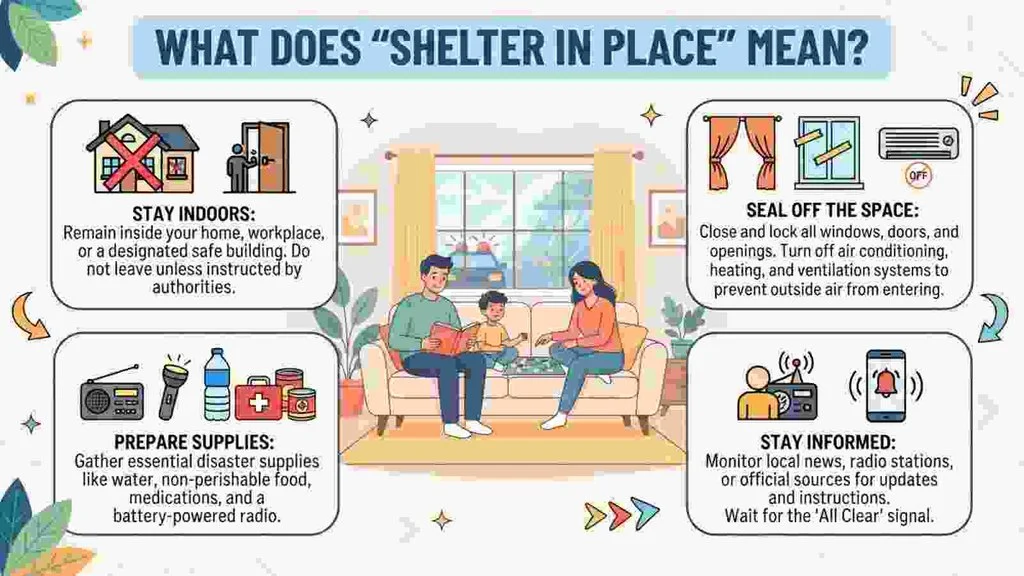
“Shelter in place” means staying inside a safe location instead of going outside or traveling somewhere else.
It is usually used during an emergency or dangerous situation.
For example, authorities may tell people to shelter in place because of:
- Severe weather
- A dangerous situation nearby
- A chemical or hazardous material release
- An environmental emergency
- A public safety threat
- Another situation where leaving could be unsafe
The exact action can depend on the emergency. A shelter-in-place message does not always mean the same safety steps are needed in every situation.
For example:
Alert: “Residents should shelter in place.”
This generally means residents should stay indoors and wait for further instructions.
The phrase is different from simply saying “stay home.” “Shelter in place” is often an official safety instruction.
If an alert gives extra instructions, follow those instructions carefully.
Full Form of “Shelter in Place”
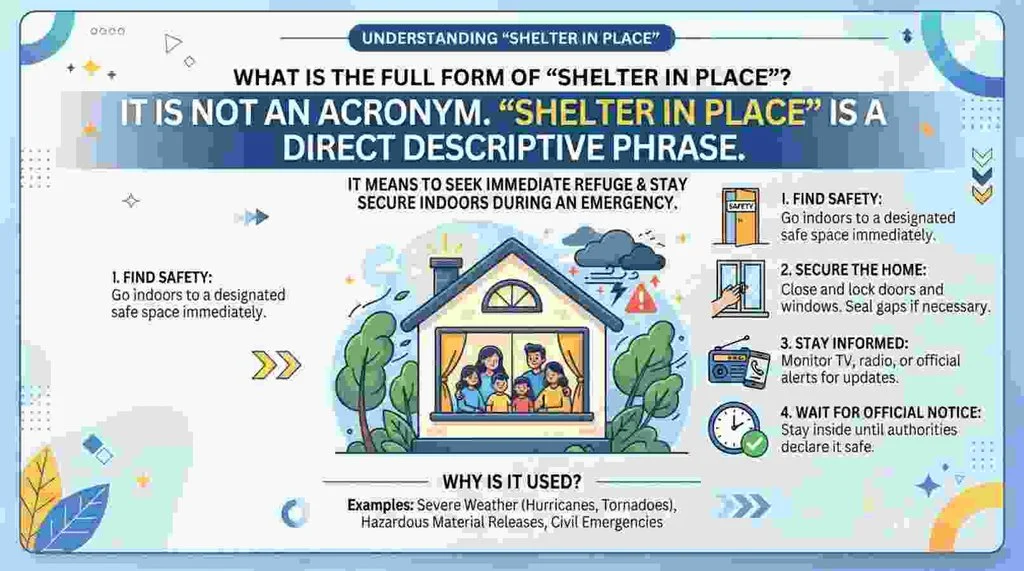
Shelter in place does not have a special full form.
It is a regular English phrase, not an abbreviation or acronym.
The words have a simple meaning:
- Shelter means a safe place or protection from danger.
- In place means staying where you are.
Together, “shelter in place” means to stay in a safe location and protect yourself from an immediate danger.
You may also see the phrase shortened in casual online conversations, but the full phrase is the standard form.
How Is “Shelter in Place” Used in Chat?
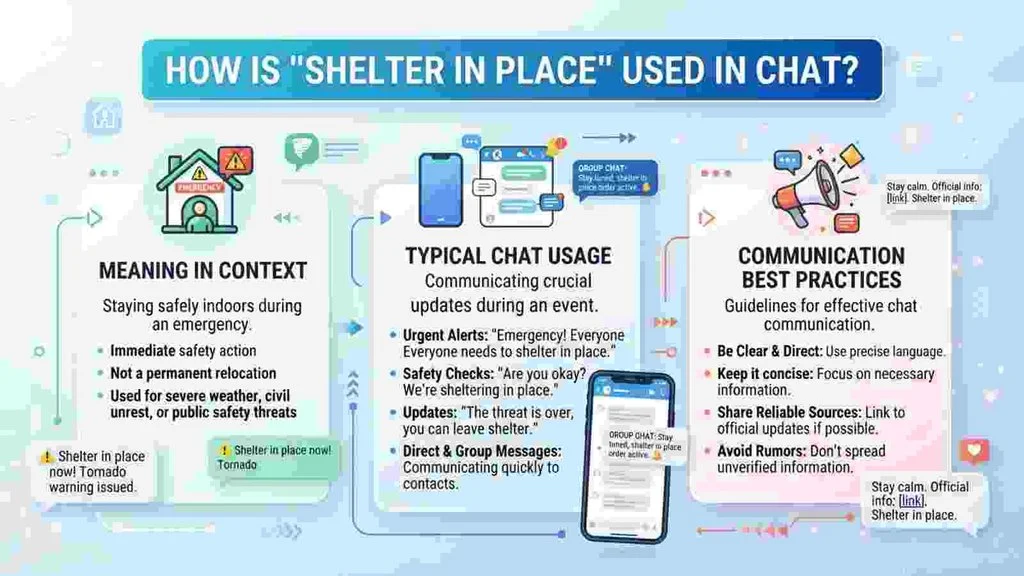
People may use shelter in place when sharing an emergency alert or talking about a safety situation.
Example 1
Alex: “Did you see the alert?”
Sam: “Yes. It says to shelter in place.”
Here, Sam means that people should stay in a safe location until more information is provided.
Example 2
Mia: “Are you coming to school?”
Liam: “No. We were told to shelter in place.”
The phrase explains why Liam is staying where he is.
Example 3
Friend: “What does shelter in place mean?”
You: “It means staying somewhere safe instead of going outside until it is safe to leave.”
In everyday chat, the phrase is usually serious. It is not typical slang.
What Does “Shelter in Place” Mean From a Girl or Boy?
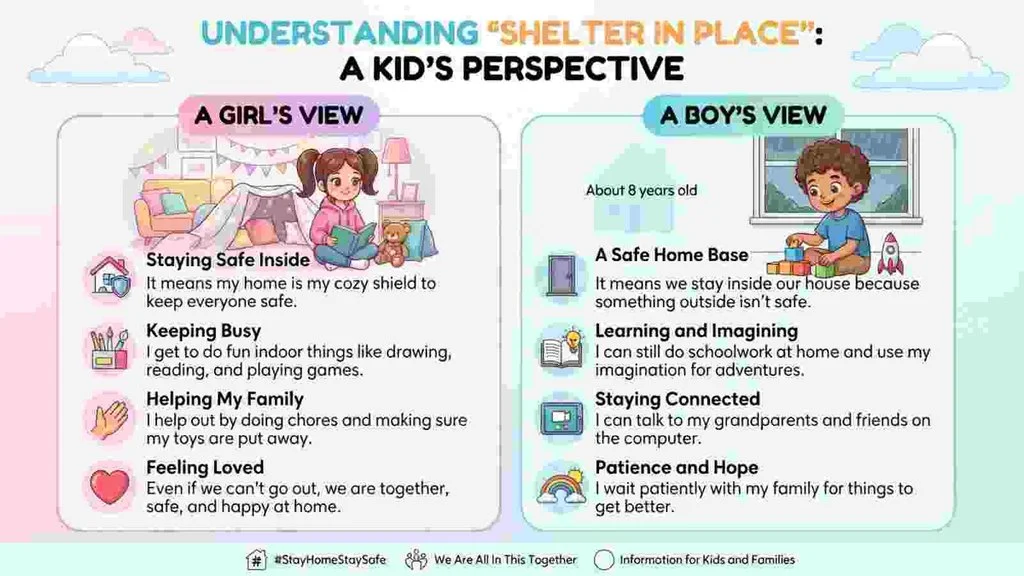
The phrase “shelter in place” does not normally have a special meaning when a girl or boy says it.
Its meaning usually stays the same.
For example, if someone texts:
“We have to shelter in place.”
They are most likely talking about a safety instruction or emergency situation.
It is not normally a flirty phrase or a secret dating term.
The emotional tone can still vary depending on the situation.
Serious
“The school told us to shelter in place.”
This sounds serious and safety-related.
Informative
“They told everyone to shelter in place, so I’m staying home.”
This simply shares information.
Casual reference
Someone might mention the phrase while talking about a past event, but the basic meaning remains the same.
Context matters more than the gender of the person using it.
Is “Shelter in Place” Rude or Polite?
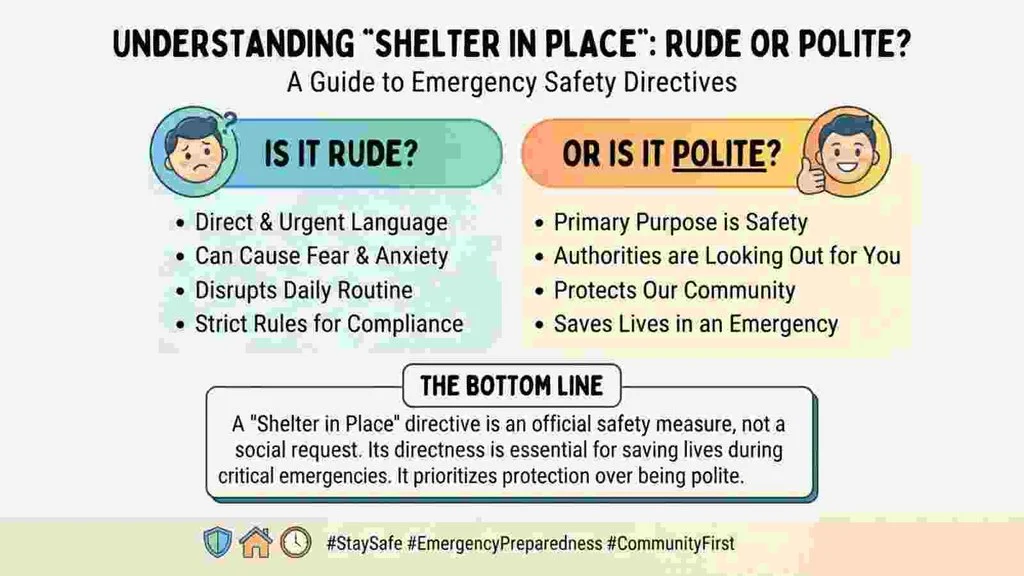
“Shelter in place” is neither rude nor impolite. It is a neutral safety phrase.
It is often used by schools, workplaces, government agencies, emergency services, and news organizations.
However, the phrase can feel serious because it is usually connected to a possible danger.
For example:
“Please shelter in place until further notice.”
This is a clear and formal instruction.
It could sound inappropriate if someone uses it as a joke during a real emergency.
For example, joking about an emergency alert could upset people who are genuinely worried.
So, the phrase itself is not rude. The situation and tone determine how appropriate its use is.
When Should You Use “Shelter in Place”?
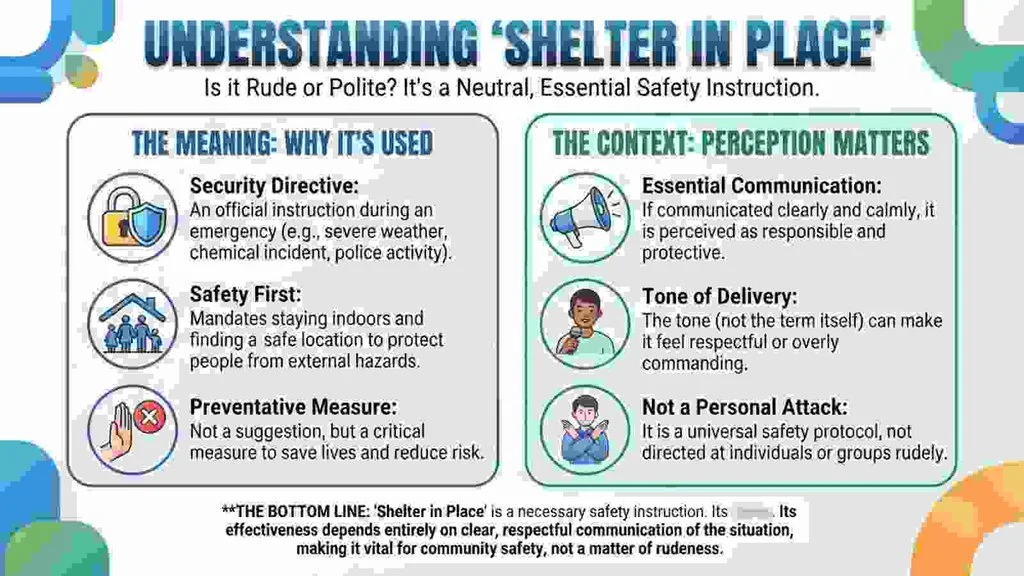
Use the phrase when you are talking about a real or clearly described safety situation.
You can use it when:
- Sharing an official emergency message.
- Explaining why you are staying indoors.
- Discussing an emergency drill.
- Talking about a news event.
- Explaining a school or workplace safety instruction.
- Describing emergency procedures.
For example:
“The school sent an alert asking everyone to shelter in place.”
Or:
“We are sheltering in place until we receive another update.”
When discussing a real emergency, it is better to rely on official instructions rather than social media rumors.
When Should You NOT Use “Shelter in Place”?
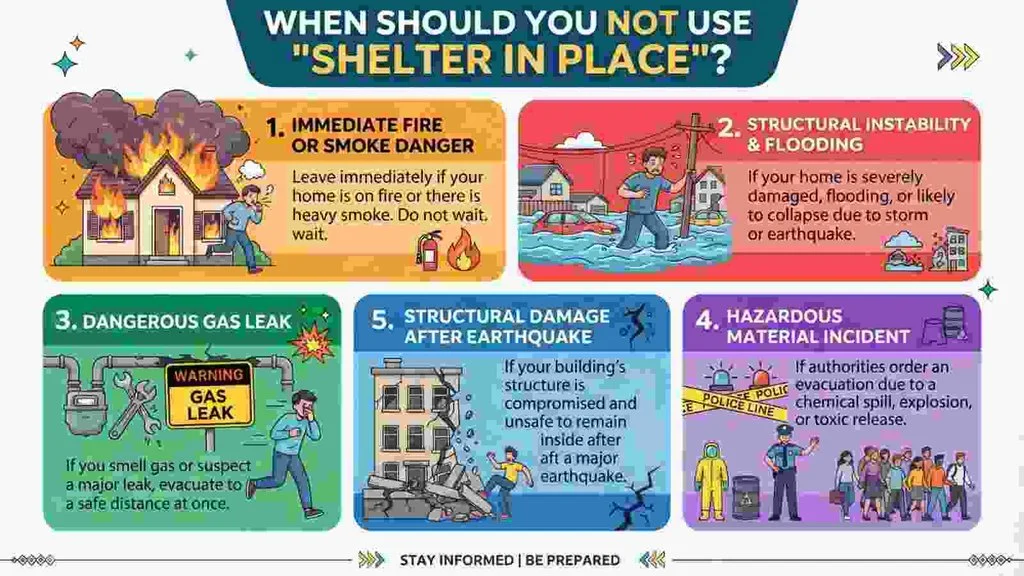
Avoid using the phrase casually when there is no reason to suggest danger.
For example, saying:
“Shelter in place because it’s raining.”
would normally sound strange unless there is a specific safety reason.
You should also avoid:
- Using the phrase to make a serious situation sound funny.
- Sharing an unverified emergency claim as fact.
- Giving emergency instructions you are not qualified to give.
- Using the phrase to frighten other people.
- Treating a real emergency as a joke.
In a serious situation, follow instructions from trusted local authorities or emergency services.
Best Replies to “Shelter in Place”
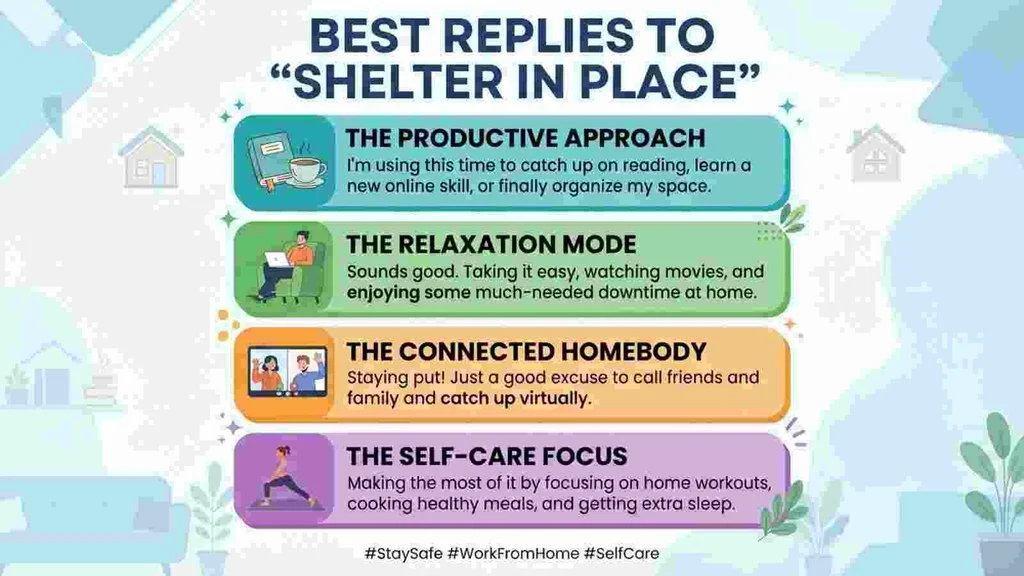
If someone tells you they have been asked to shelter in place, your reply should be calm and supportive.
Here are five simple responses:
- “Okay. Stay safe.”
- “Got it. Let me know when you’re safe.”
- “Thanks for letting me know.”
- “Stay inside and keep me updated.”
- “I hope everything is okay.”
If you do not understand why they are sheltering in place, you can ask:
“Is everything okay? What happened?”
If they are following an official emergency instruction, avoid encouraging them to ignore it.
“Shelter in Place” Meaning on WhatsApp, Instagram, and Snapchat
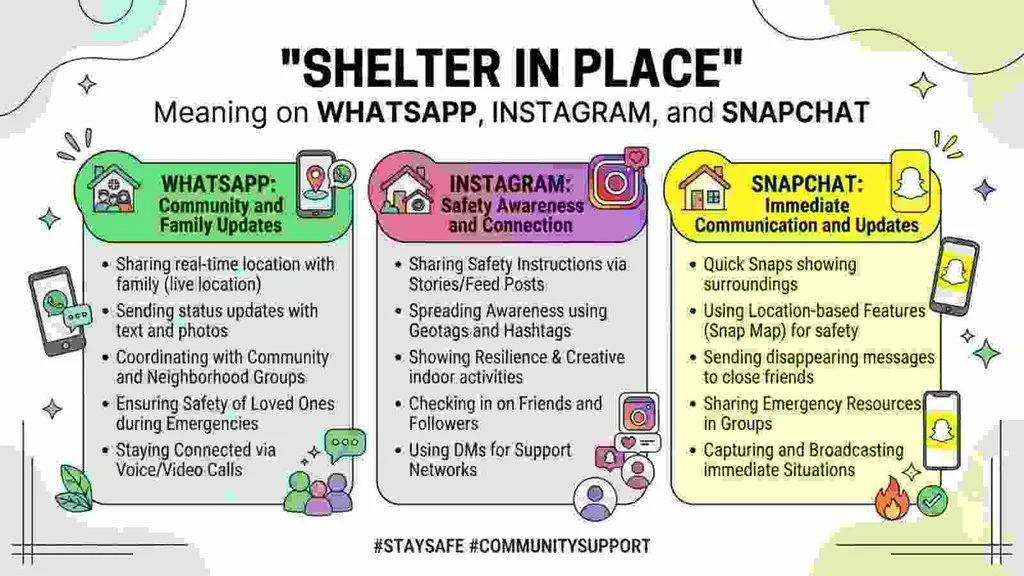
The meaning of shelter in place generally stays the same across WhatsApp, Instagram, Snapchat, and other social platforms.
The platform does not change the basic meaning.
Shelter in Place on WhatsApp
Someone may send an emergency alert to a family or friend group.
“The school just told us to shelter in place.”
This means they are staying where they are because of a safety instruction.
Shelter in Place on Instagram
You may see the phrase in a Story, post, or message.
For example:
“Everyone at work has been told to shelter in place.”
The person is sharing information about a safety situation.
Shelter in Place on Snapchat
A user might mention the phrase while updating friends during an emergency.
The meaning is still about remaining in a safe location.
The app does not create a special slang meaning for this phrase.
Similar Words and Phrases Like “Shelter in Place”
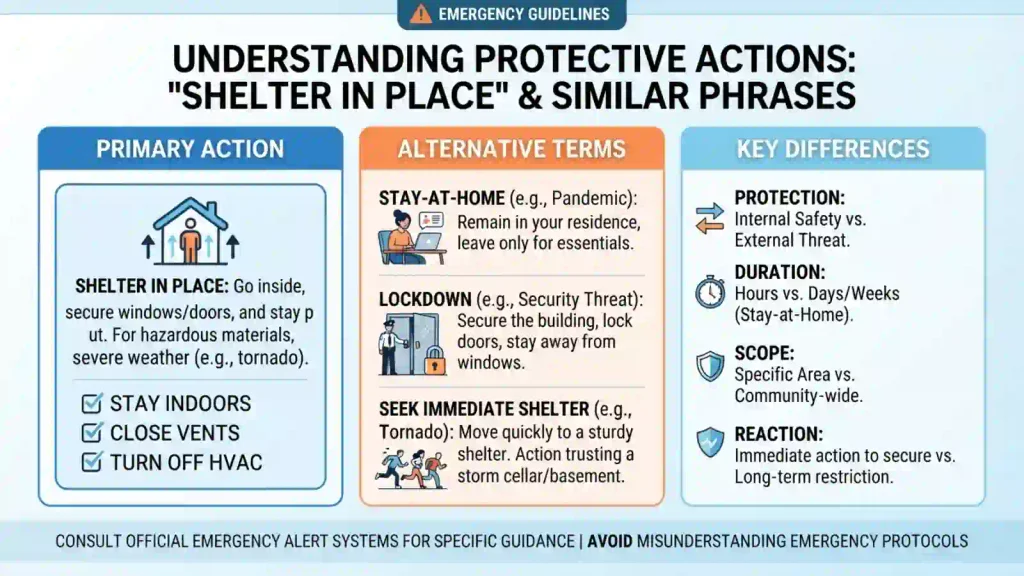
Several phrases are related to shelter in place, but they do not always mean exactly the same thing.
1. Stay indoors
This means remaining inside instead of going outside.
2. Stay safe
This is a general phrase used when someone may be facing a risky situation.
3. Take shelter
This means moving to a safe place for protection from danger.
4. Emergency lockdown
This usually refers to restricting movement during a serious security or safety situation.
5. Evacuate
This means leaving an area because staying there may be dangerous.
These terms can have different instructions attached to them. “Shelter in place” and “evacuate” should not be treated as the same instruction.
FAQs About “Shelter in Place Meaning”
Is “shelter in place” positive or negative?
It is neutral in wording, but it is usually connected to a potentially serious or dangerous situation.
Is “shelter in place” slang?
No. Shelter in place is not normally slang. It is a standard phrase often used for safety and emergency instructions.
Is it safe to use “shelter in place” with elders?
Yes. It is a normal English phrase and can be used with people of any age.
Is “shelter in place” common in daily chat?
It is not as common as everyday phrases like “stay home” or “stay inside.” You are more likely to see it in emergency alerts, news, school messages, or official communications.
Does “shelter in place” mean stay home?
Not always. It generally means staying in a safe location rather than going outside or traveling. The exact instructions depend on the emergency.
Does “shelter in place” mean lockdown?
Not necessarily. The terms can refer to different safety procedures. Always follow the specific instructions provided by the relevant authority.
Is “shelter in place” a dating term?
No. It does not normally have a special romantic or dating meaning.
Conclusion
The shelter in place meaning is simple: stay in a safe location and remain there until it is safe to leave or you receive further instructions.
It is not usually slang. It is a standard phrase used in emergency alerts, schools, workplaces, news reports, and online conversations.
You may see it on WhatsApp, Instagram, Snapchat, or other platforms, but its basic meaning stays the same.
Remember that shelter in place is not the same as evacuating. The correct action depends on the situation and the instructions given by trusted authorities.
Now, when you see “shelter in place,” you can understand that it is generally a safety instruction rather than a secret texting phrase.
Related slang and phrase meanings can also help you understand unfamiliar words and expressions you see online.

Ella Peterson is an English language writer and grammar enthusiast at MeaningZones.com. She focuses on clear and practical English grammar, vocabulary, sentence structure, and everyday language usage.
Through easy-to-understand explanations and helpful examples, Ella helps readers improve their English writing and communication skills. Her goal is to make English grammar simple, useful, and accessible to everyone.