Imagine you are chatting with a friend and suddenly they say, “You’ve been MIA all day!” You may wonder, “What does MIA mean?” If you have seen this word on WhatsApp, Instagram, or Snapchat, you may have had the same question.
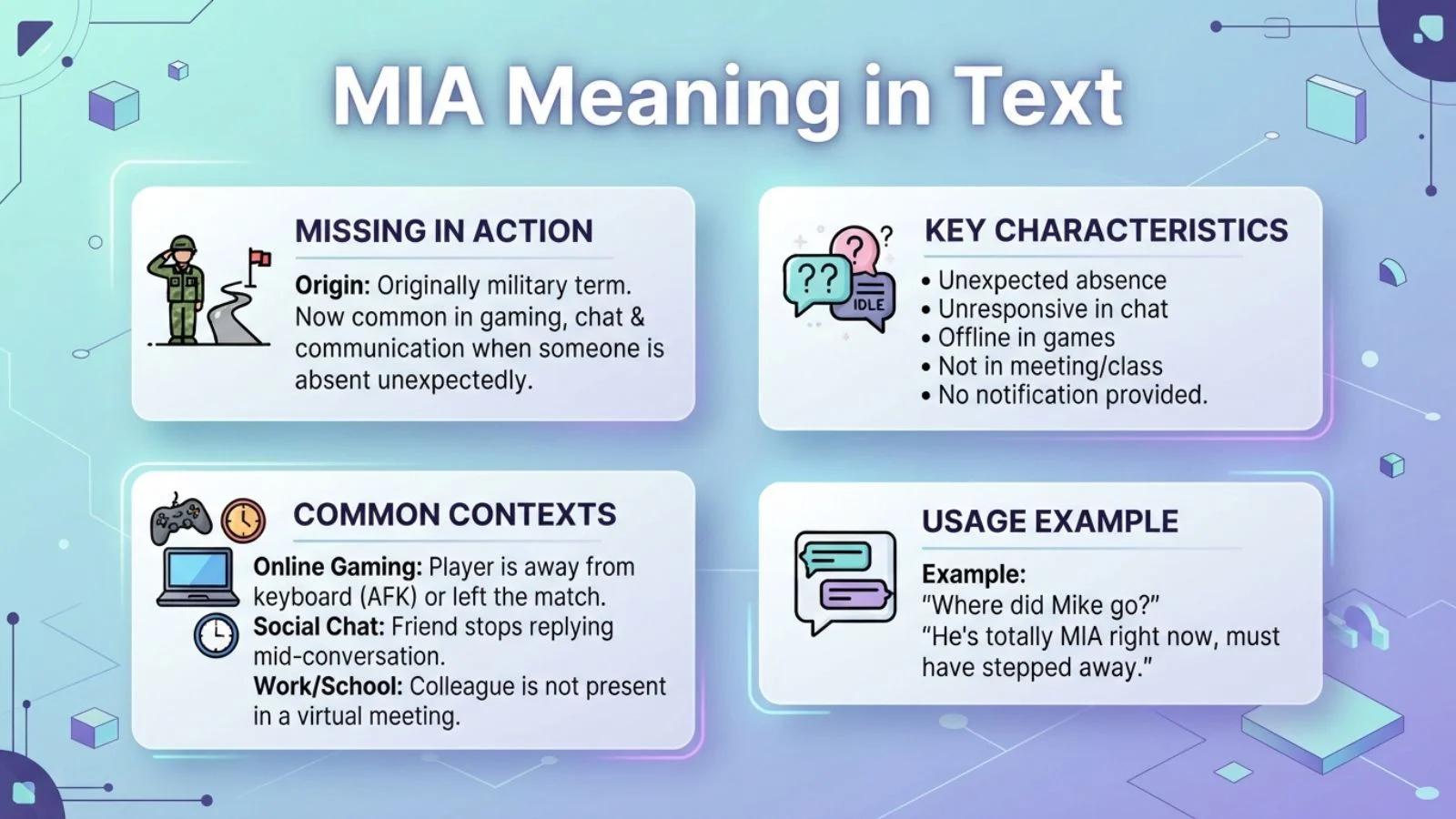
MIA means “Missing in Action.” In everyday texting, it usually means that someone has been away, quiet, or not responding for a while.
People often use MIA in a casual and friendly way. It can describe someone who has stopped replying, disappeared from a group chat, or has not posted online.
You may see MIA in texts, social media posts, gaming chats, and casual conversations. Understanding it helps you know what someone means without guessing.
In this guide, you will learn what MIA means in text, how to use it, how to reply, and what it means on popular social media apps.
What Does “MIA” Mean in Text?
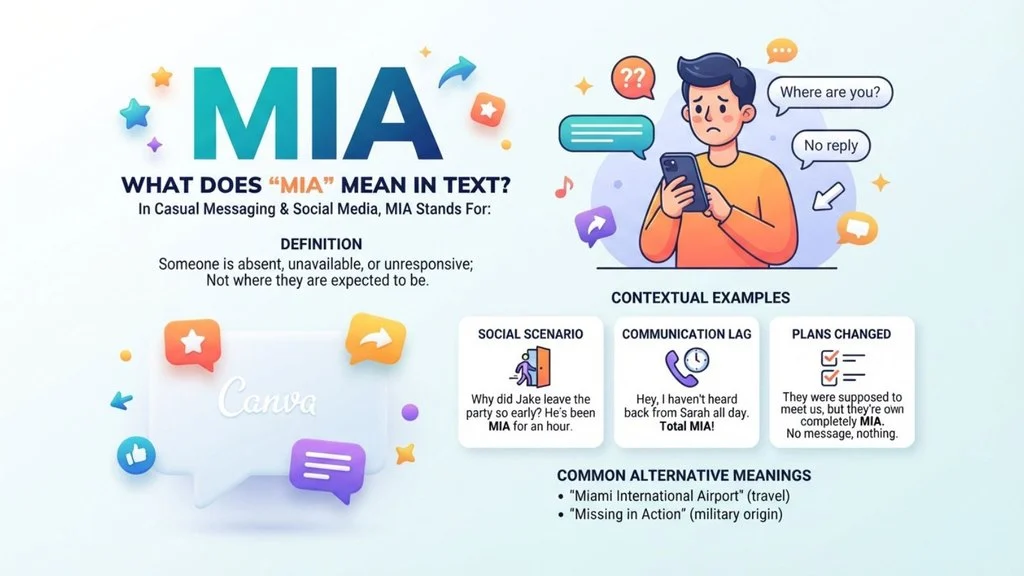
MIA means “Missing in Action.”
In texting, MIA usually describes someone who has been absent, quiet, or unavailable.
For example:
Friend: “Where have you been? You’ve been MIA!”
This means:
“Where have you been? You have not been around or replying.”
The phrase comes from a military term. But today, people often use it in a much more casual way.
Someone might say:
- “You’ve been MIA lately.”
- “Sorry, I was MIA yesterday.”
- “Why are you MIA?”
- “He went MIA after the party.”
In these examples, MIA does not usually mean that someone is literally missing. It often means they have not been communicating or showing up.
Full Form of “MIA”
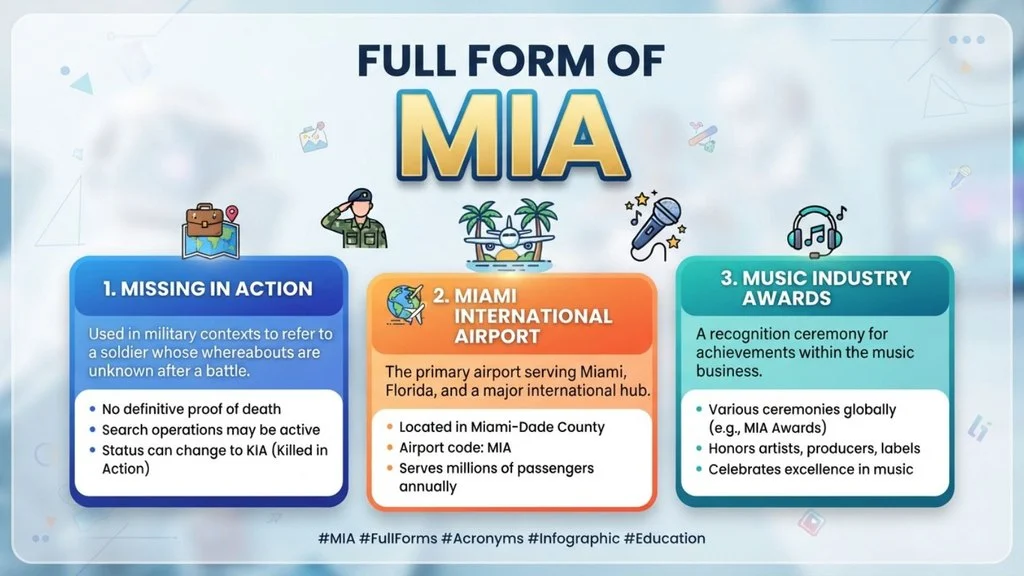
The full form of MIA is “Missing in Action.”
The phrase originally comes from military language. It describes a service member who is reported as missing during military operations and whose status is not immediately known.
In modern texting, the meaning is usually much lighter.
When someone says:
“I’ve been MIA this week.”
They normally mean:
“I have been away or not very active this week.”
So, the meaning has expanded from a serious military term to a common informal expression.
How Is “MIA” Used in Chat?
MIA is common in casual conversations. It is often used when someone has not replied, joined a conversation, or appeared online.
Example 1: Not Replying
Sarah: “Hey! You’ve been MIA.”
Emma: “Sorry! I was really busy yesterday.”
Here, Sarah means Emma has not been replying or around.
Example 2: Group Chat
Ali: “Where is Hamza?”
Zain: “He’s been MIA since Monday.”
This means Hamza has not been active in the group.
Example 3: Social Media
Maya: “You’ve been MIA on Instagram!”
Lina: “I took a break from social media.”
Here, MIA means Lina has not been active on Instagram.
Example 4: Gaming
Player 1: “Where were you last night?”
Player 2: “Sorry, I was MIA. Had some work to do.”
This means the player was unavailable.
What Does “MIA” Mean From a Girl or Boy?
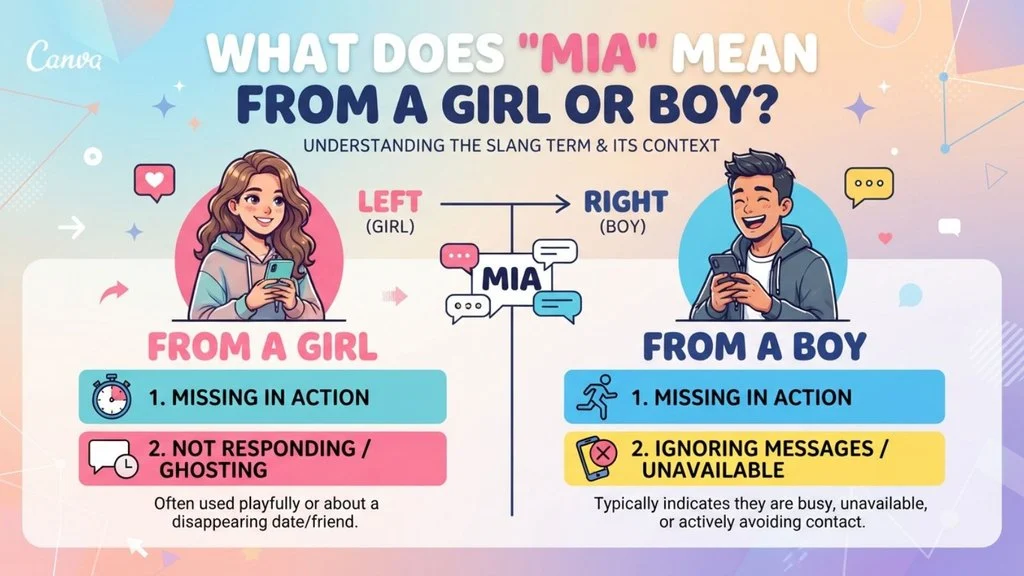
When a girl or boy says “MIA,” the basic meaning stays the same. They usually mean that someone has been absent, quiet, or difficult to reach.
However, the tone can change depending on the relationship.
Friendly Meaning
A friend may say:
“You’ve been MIA! Everything okay?”
This sounds caring and friendly.
Playful Meaning
Someone may say:
“Wow, you went MIA again 😂”
This can be a light joke about not replying.
Flirty Meaning
In a dating conversation, MIA can sometimes have a playful or flirty tone.
Person A: “You went MIA on me.”
Person B: “Maybe you should have texted me first 😉”
The word itself is not automatically flirty. The surrounding conversation creates that tone.
Serious Meaning
If someone says:
“You’ve been MIA for days. Is everything okay?”
They may genuinely be concerned.
So, do not assume that MIA means flirting or anger. Look at the full conversation and the relationship between the people.
Is “MIA” Rude or Polite?
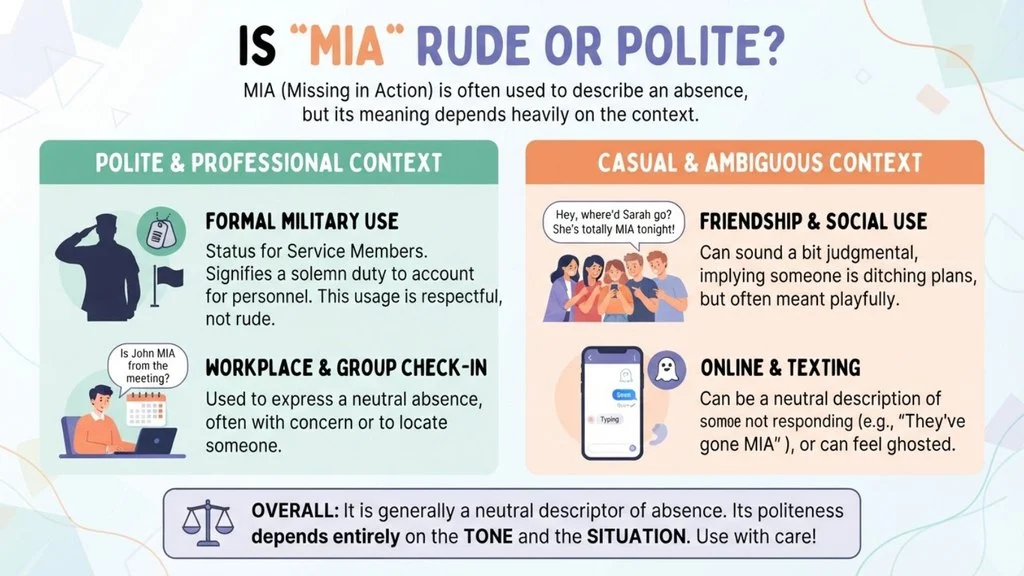
MIA is usually casual and not rude.
Friends often use it to joke about someone being absent or not replying.
For example:
“You’ve been MIA lately!”
This can sound friendly.
But the tone can change depending on the words around it.
When MIA May Sound Rude
It may sound rude if you use it to criticize someone.
“Why are you always MIA?”
This can sound annoyed or blaming.
A softer version would be:
“Hey, I haven’t heard from you lately. Everything okay?”
The relationship also matters. A close friend may understand the joke, while a new person may take it seriously.
When Should You Use “MIA”?
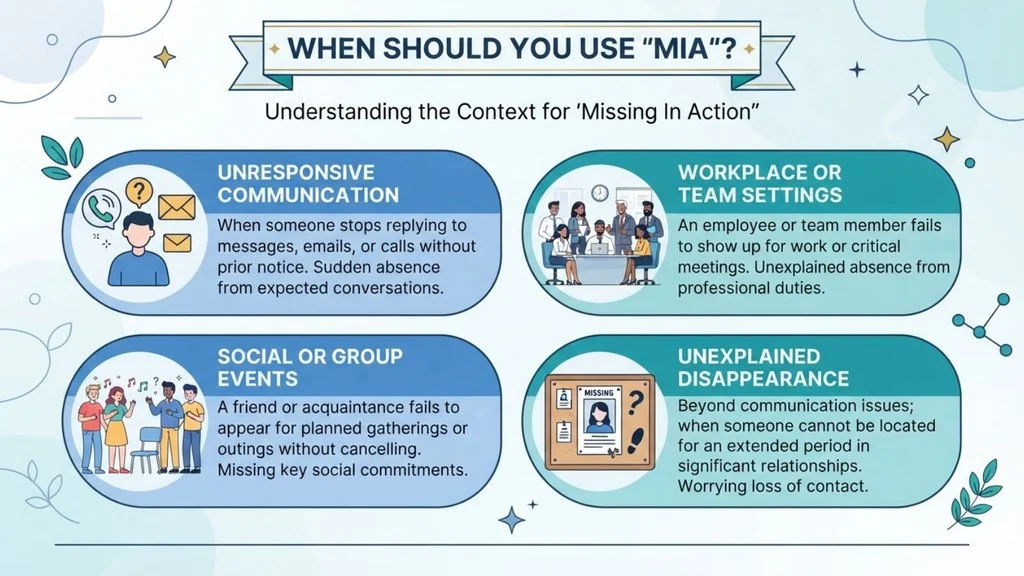
You can use MIA in casual situations when the other person understands informal slang.
Use it when:
- Talking with close friends.
- Chatting in a group.
- Posting casually on social media.
- Talking about someone who has not replied.
- Talking about a break from social media.
- Chatting in gaming communities.
- Making a light joke about someone’s absence.
Example
“Sorry I’ve been MIA. Work has been chaotic!”
This is a natural casual use.
When Should You NOT Use “MIA”?
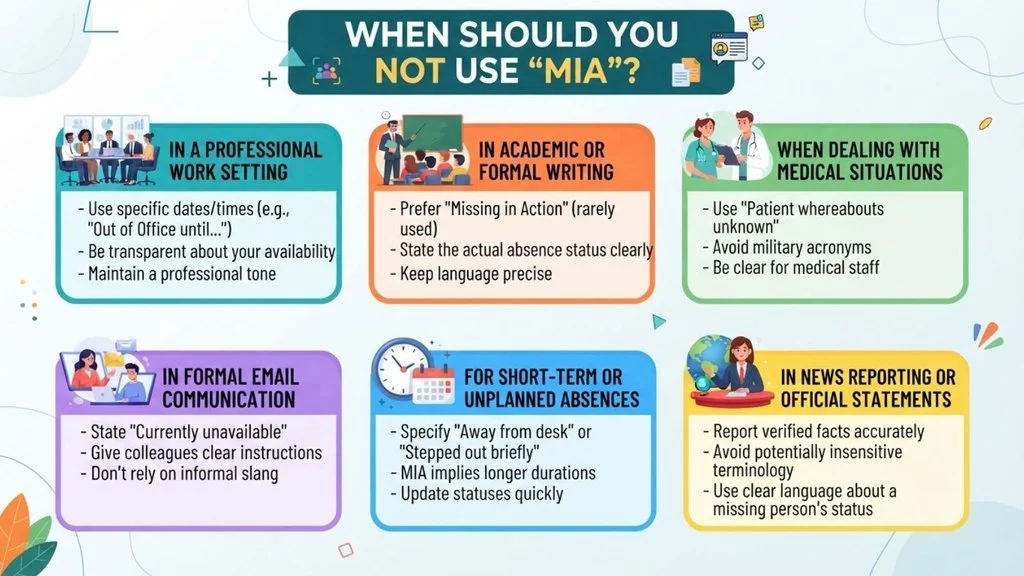
MIA is informal, so it may not be the best choice in serious or professional communication.
Avoid it when:
- Writing a formal email.
- Talking to a client.
- Writing an official report.
- Discussing a serious absence.
- Speaking to someone who may not know the expression.
- Communicating important information.
Instead of:
“The manager has been MIA.”
You could say:
“The manager has been unavailable.”
This sounds clearer and more professional.
Best Replies to “MIA”
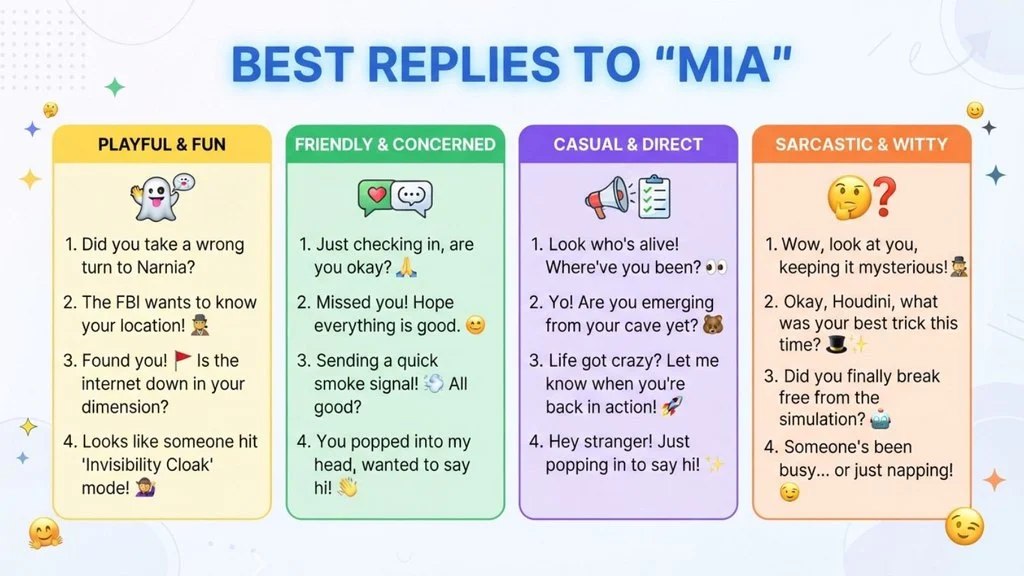
If someone says “You’ve been MIA,” there are many simple ways to reply.
1. Simple Reply
“Sorry! I’ve been busy.”
2. Friendly Reply
“Haha, yeah! I’ve had a lot going on.”
3. Funny Reply
“I’m back from the dead 😂”
4. Honest Reply
“I needed some time offline.”
5. Casual Reply
“Yeah, I know! I’ll be around more now.”
You can also explain why you were away.
“Sorry I went MIA. I had some family stuff to handle.”
You do not have to give personal details if you do not want to.
“MIA” Meaning on WhatsApp, Instagram, and Snapchat
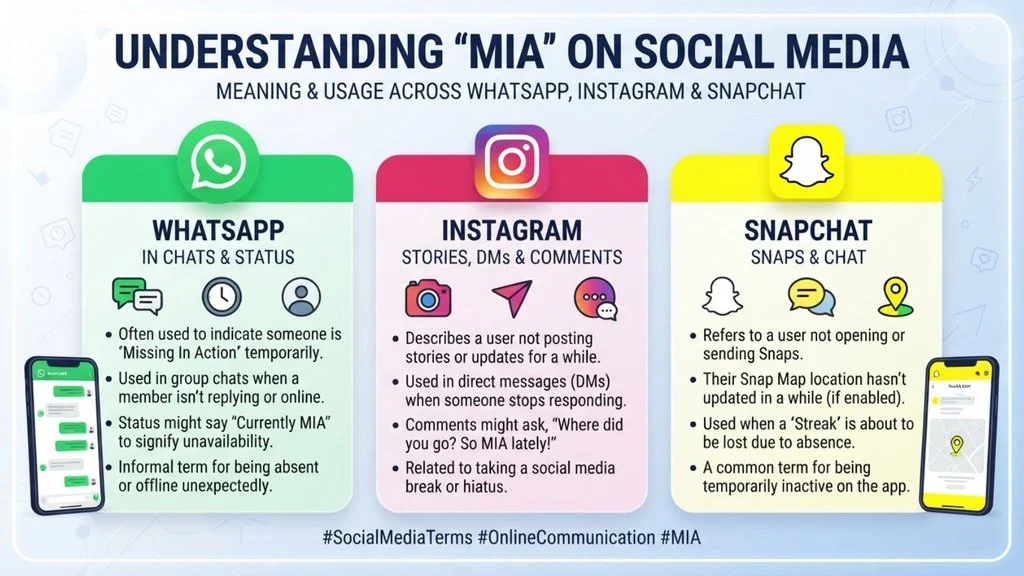
The basic meaning of MIA usually stays the same across social media platforms.
MIA on WhatsApp
On WhatsApp, MIA usually means someone has not been replying or participating in chats.
“You’ve been MIA on WhatsApp!”
This means the person has not been active or responsive.
MIA on Instagram
On Instagram, MIA can describe someone who has not posted, commented, or interacted for a while.
“I’ve been MIA from Instagram lately.”
This means the person has not been active on Instagram.
MIA on Snapchat
On Snapchat, MIA can mean someone has stopped sending snaps or interacting.
“Where have you been? You’re MIA!”
Again, the meaning is usually absent or inactive.
The platform does not normally change the basic slang meaning. The context simply tells you what type of activity the person is talking about.
Similar Slang Words Like “MIA”
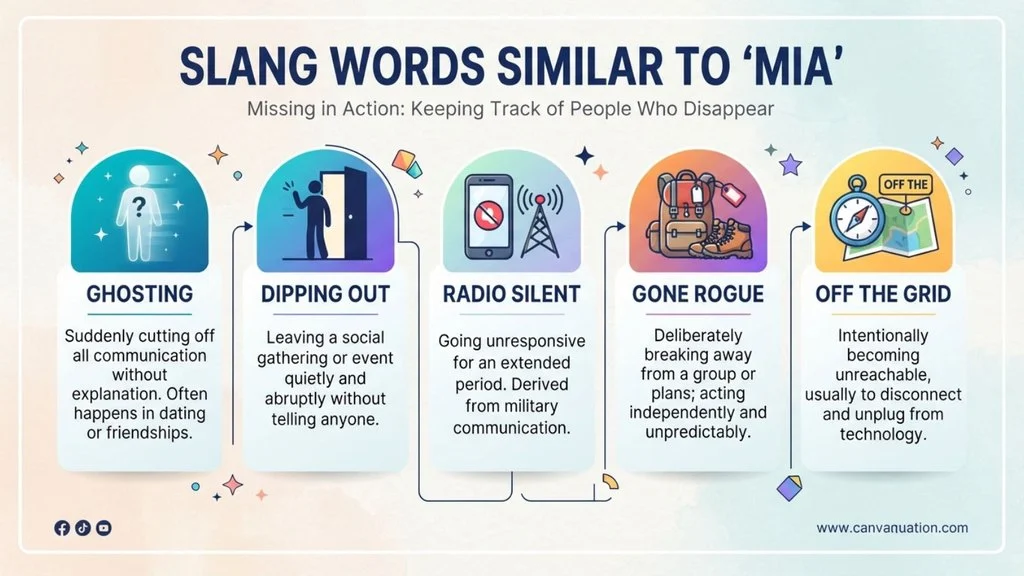
Here are five expressions that are related to MIA:
1. AFK
AFK means “Away From Keyboard.” It is common in gaming and online chats.
2. Ghosting
Ghosting means suddenly stopping communication with someone without explaining why.
3. BRB
BRB means “Be Right Back.” It tells someone you will return soon.
4. Offline
Offline means someone is not currently connected or active online.
5. Inactive
Inactive means someone has not been using an account or participating for some time.
MIA is often more casual than “inactive” and less serious than “ghosting.”
FAQs About “MIA Meaning in Text”
Is MIA positive or negative?
MIA is usually neutral or casual. It can sound positive, negative, or playful depending on the context.
Is MIA safe to use with elders?
It is better to use the full phrase with people who may not know internet slang. With family members who understand casual English, MIA may be fine.
Is MIA common in daily chat?
Yes. MIA is a familiar informal expression, especially in texting, social media, and online conversations.
Does MIA mean someone is missing?
Literally, “Missing in Action” has a serious meaning. In everyday texting, however, MIA usually means someone has been absent, unavailable, or inactive.
Does MIA mean ghosting?
Not necessarily. Someone who is MIA may simply be busy or taking a break. Ghosting usually suggests that a person has deliberately stopped communicating without explanation.
Can MIA be used for social media?
Yes. People often say they have been MIA when they have not posted or interacted on social media for some time.
Is MIA formal English?
MIA is an informal expression in everyday conversation. In formal writing, phrases such as “absent,” “unavailable,” or “not currently active” may be clearer.
Conclusion
MIA means “Missing in Action.” In texting and social media, it usually means that someone has been absent, quiet, unavailable, or inactive.
You may see MIA on WhatsApp, Instagram, Snapchat, gaming chats, and other online platforms. The basic meaning usually stays the same.
The tone depends on the situation. Friends may use MIA as a joke. Someone you are dating may use it in a playful way. A serious message may use it to show concern.
Remember that MIA is informal. It works well in casual chats but may not be suitable for formal or professional messages.

William Bennett is a dedicated writer and language enthusiast who shares clear, helpful insights on word meanings, spelling, grammar, and everyday English.
As an author at MeaningZones.com, he aims to make confusing language topics simple, practical, and easy for readers to understand.