Have you ever received a text that simply said “WBU?” and wondered what to say next?
Hey, I want to share something that happened to me recently about WBU Meaning in Text.
I was chatting with a friend when I suddenly saw this term pop up, and honestly, I had no clue what it meant at first.
Wondering, “Am I missing something here?” It was a bit confusing, and I didn’t want to respond the wrong way.
So, I decided to look into WBU meaning in text and figure out its meaning and context.
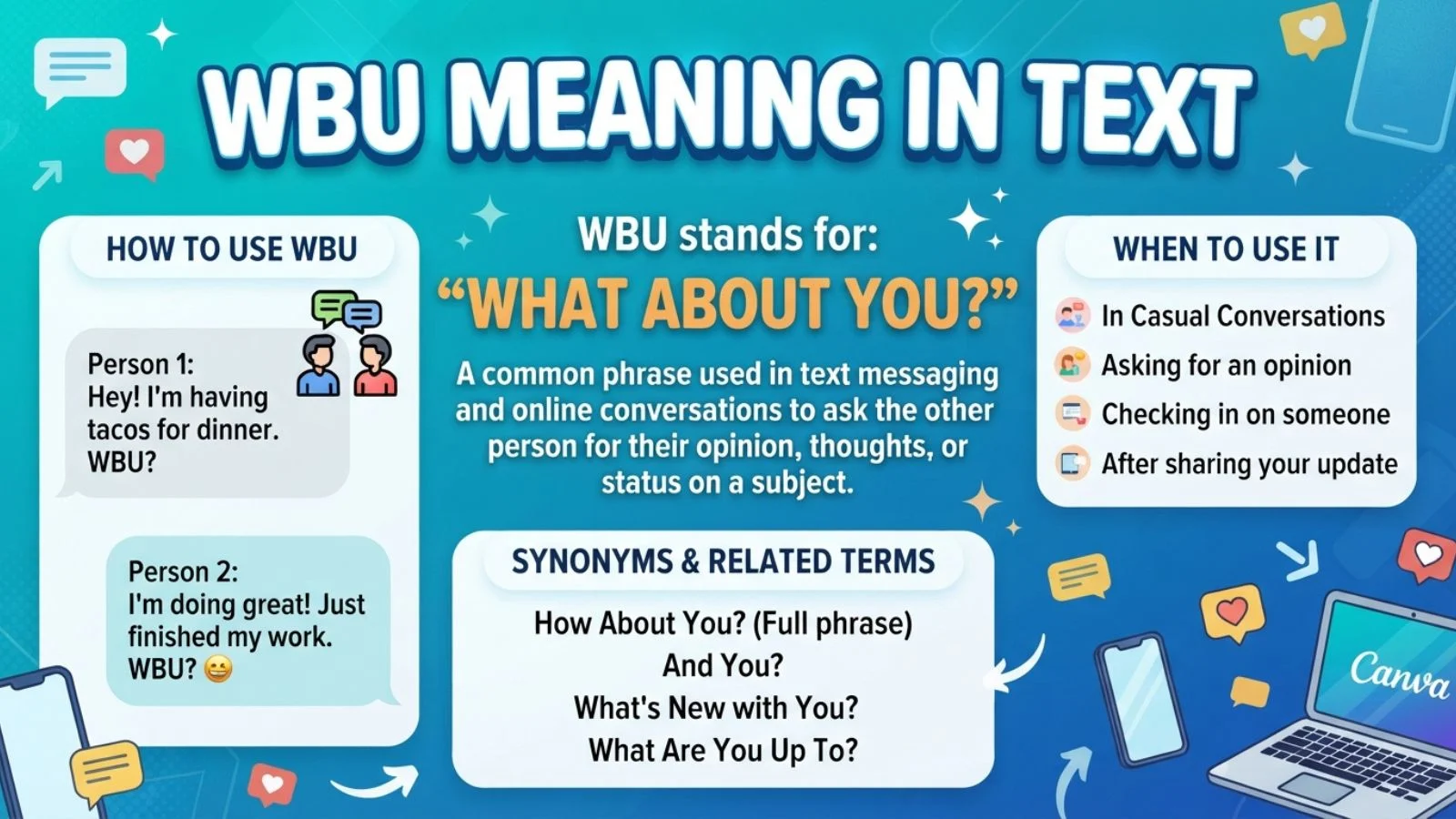
I learned that WBU stands for “What About You?” People often use it in texts and social media to ask about someone else’s thoughts, feelings, or plans.
After understanding it, I realized how useful it is to know these short forms. They help make conversations quick and easy.
Now, I feel ready to respond confidently whenever I see WBU in chats or social media.
Definition and Meaning of WBU
What Does WBU Stand For?
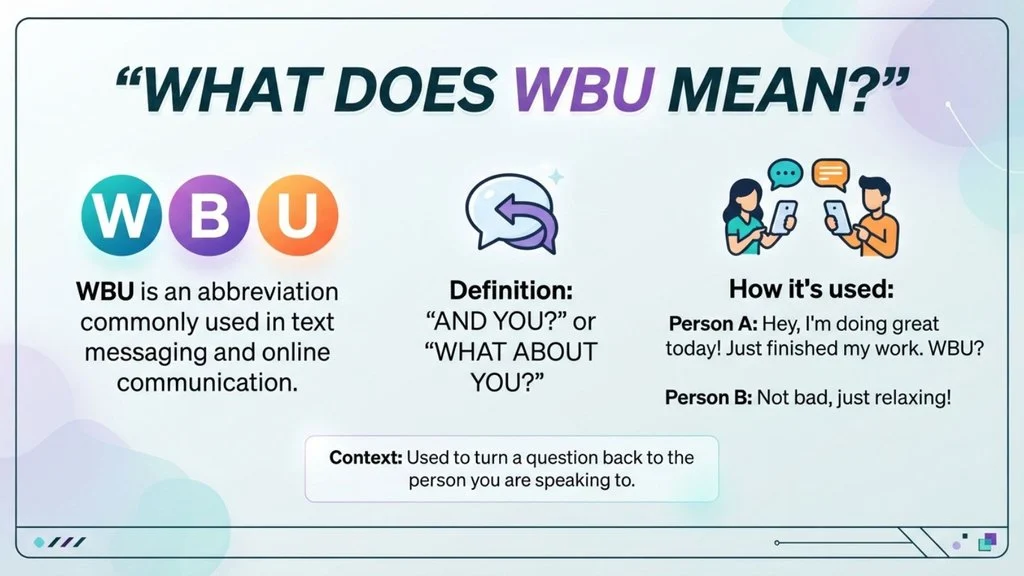
WBU stands for “What About You?”
It is a common text abbreviation. People use it to ask about another person’s thoughts, feelings, plans, or choices.
WBU helps make messages shorter. It also makes chats feel quick and natural.
For example:
- “I’m feeling great. WBU?”
- “I love pizza. WBU?”
- “I’m going out tonight. WBU?”
In each case, the sender wants to know what the other person thinks or plans to do.
How Is WBU Used in a Sentence?
WBU often comes after a statement or answer. It turns the question back to the other person.
Example 1: Asking about feelings
- Alex: “I’m happy today. WBU?”
- Sam: “I’m happy too!”
Question 2: Asking about plans
- Mia: “I’m watching a movie tonight. WBU?”
- Ben: “I’m playing games.”
Example 3: Asking about likes
- Lily: “I love cats. WBU?”
- Noah: “I like dogs more.”
Why Do People Use WBU?
People use WBU for several reasons:
- It saves time: You type fewer letters.
- It keeps chats going: You show interest in the other person.
- It feels casual: It fits friendly and relaxed talks.
- It makes questions easy: You can ask about the same topic without repeating the full question.
WBU is simple, but it can help make a chat feel more friendly and engaging.
Background and History of WBU
Where Did WBU Come From?
WBU grew from the common English phrase “What about you?”
People have used this phrase in everyday speech for many years. It is a simple way to return a question or ask someone for their view.
The exact date when WBU first appeared is not clear. However, it fits the wider growth of short forms used in digital messages.
How Did WBU Become Popular?
Text messaging helped make short forms more common. Early mobile phones often had small keypads. Typing long messages could take time.
People began using short forms to send messages faster. Terms like LOL, BRB, and WBU became familiar in online chats.
As phones and messaging apps improved, people kept using these short forms. They were quick to type and easy to understand.
WBU in Modern Digital Communication
Today, WBU appears in many kinds of online conversations.
People use it in:
- Text messages
- WhatsApp chats
- Instagram messages
- Facebook Messenger
- Online gaming chats
- Dating app conversations
It is also common in casual talks between friends and family.
WBU has kept the same basic meaning over time. Its main purpose is still to ask, “What about you?”
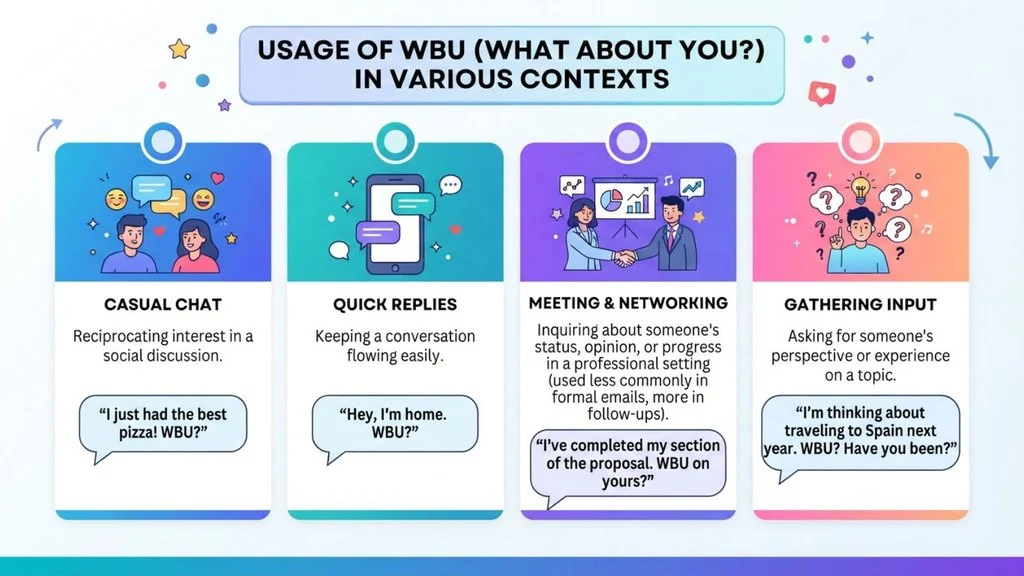
Usage of WBU in Various Contexts
1. WBU in Text Messages
WBU is common in everyday texting. People often use it after sharing an answer.
Example:
- Emma: “I’m going to the mall. WBU?”
- Jake: “I’m staying home.”
It makes the chat short and easy.
2. WBU on Social Media
People may use WBU in comments, direct messages, or replies.
Example:
- User 1: “I love summer!”
- User 2: “Same! WBU?”
It invites others to share their thoughts.
3. WBU in Gaming Chats
Gamers may use WBU to ask about plans or choices during a game.
Example:
- Player 1: “I’m joining the next match. WBU?”
- Player 2: “I’ll join in five minutes.”
It helps players communicate quickly.
4. WBU in Casual Conversations
Friends and family may use WBU to ask about feelings, plans, or interests.
Example:
- Friend 1: “I’m tired today. WBU?”
- Friend 2: “I didn’t sleep well either.”
5. WBU in Group Chats
WBU can help include other people in a conversation.
Example:
- Aisha: “I want to order burgers.”
- Hamza: “Sounds good! WBU, Sara?”
Here, the question asks Sara for her choice.
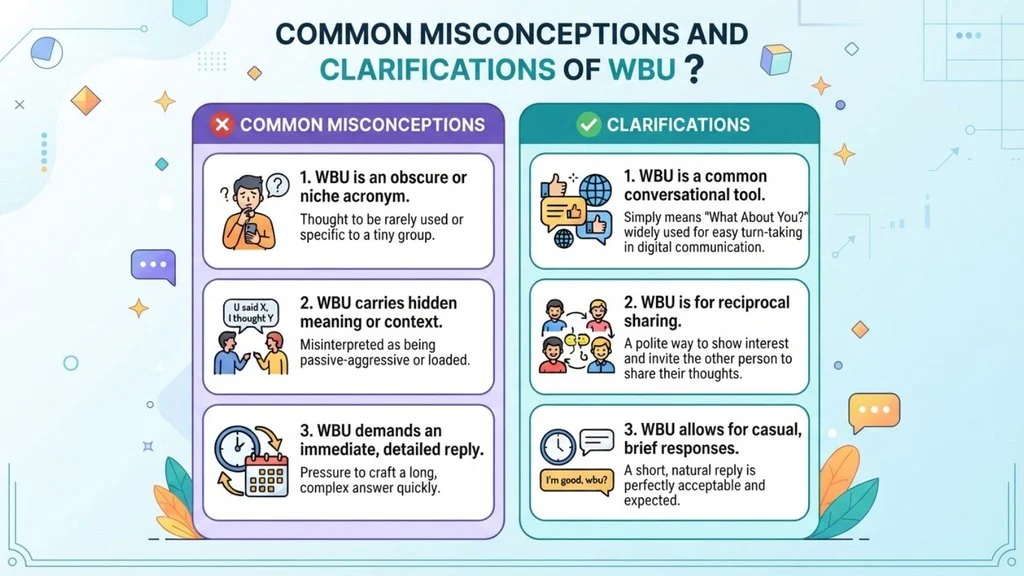
Common Misconceptions and Clarifications of WBU ?
Is WBU the Same as WYD?
No. These abbreviations have different meanings.
- WBU: What About You?
- WYD: What You Doing?
WBU asks about someone’s view, answer, or situation. WYD asks what someone is doing.
Does WBU Always Need a Question Mark?
No. People often write “WBU?” because it is a question. But they may also write it without punctuation.
Both forms are easy to understand:
- “I’m fine, WBU?”
- “I’m fine, wbu”
The meaning stays the same.
Is WBU Rude?
WBU is not rude by itself. It is usually a friendly and casual question.
However, the tone and context can affect how it feels.
For example:
- “I’m good, WBU?” sounds friendly.
- “WBU???” may sound impatient in some situations.
The relationship between the people also matters.
Does WBU Have Other Meanings?
In everyday texting, WBU usually means “What About You?” Some people may use the same letters in a special group or workplace, but those meanings depend on the context.
If you are unsure, look at the full message or ask what the sender means.
Similar Terms and Alternatives to WBU
There are many short forms that people use in chats. Some have meanings close to WBU, while others serve a different purpose.
Common Alternatives
- HBU: How About You?
- WYD: What You Doing?
- HRU: How Are You?
- AND U?: And You?
- WHAT ABOUT YOU?: The full phrase.
Comparison Table
|
Term
|
Full Meaning
|
Main Use
|
| — | — | — |
|
WBU
|
What About You?
|
Asking about someone
|
|
HBU
|
How About You?
|
Asking how someone feels or what they think
|
|
WYD
|
What You Doing?
|
Asking about current activity
|
|
HRU
|
How Are You?
|
Asking about well-being
|
|
AND U?
|
And You?
|
Returning a question
|
WBU vs. HBU
WBU and HBU are very close in meaning.
For example:
- “I like football. WBU?”
- “I like football. HBU?”
Both ask the other person about their choice.
The main difference is the wording. WBU uses “What,” while HBU uses “How.”
How to Respond to WBU
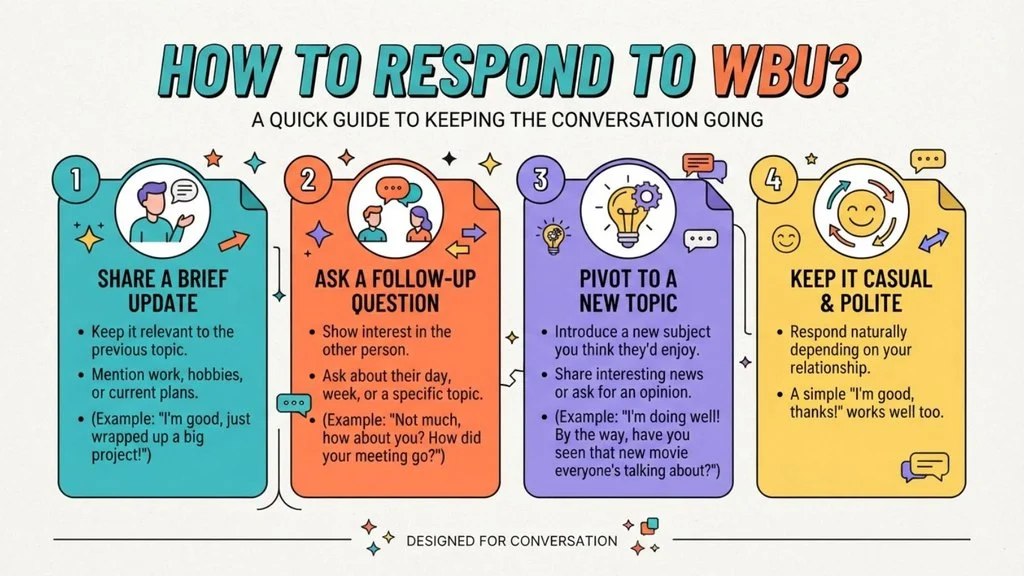
Your reply depends on what the person is asking about. You can keep it short, friendly, funny, or more formal.
1. Casual Responses
Use these when talking with friends or family.
- “I’m good too!”
- “Same here.”
- “I’m doing great.”
- “Not much, just relaxing.”
Example:
- Friend: “I’m feeling good. WBU?”
- You: “I’m good too!”
2. Funny Responses
A playful answer can make a friendly chat more fun.
- “Just trying to survive Monday!”
- “Thinking about food, as usual.”
- “Waiting for the weekend!”
Example:
- Friend: “I’m bored. WBU?”
- You: “Same! We need a new hobby.”
3. Friendly Responses
If you want to keep the conversation going, add a question.
- “I’m good! How was your day?”
- “I’m fine. Any plans for tonight?”
- “Doing well! What are you up to?”
4. Privacy-Conscious Responses
You do not have to share personal details just because someone asks.
You can say:
- “I’m doing okay, thanks!”
- “I’d rather not get into that right now.”
- “Just taking some time for myself.”
5. Professional Responses
In a work chat, use clear and polite wording.
- “I’m doing well, thank you. How are you?”
- “The project is on track. How about yours?”
Regional and Cultural Differences in WBU
Is WBU Used Around the World?
WBU is used by English-speaking people in many parts of the world. It also appears in chats among people who use English as a second language.
You may see it in countries such as:
- The United States
- The United Kingdom
- Canada
- Australia
- Pakistan
- India
Its use can vary by age, social group, and personal texting style.
WBU in Pakistan and India
In Pakistan and India, many people use English abbreviations in online chats. WBU may appear alongside local languages or mixed-language messages.
Example:
- Friend: “Main theek hoon, WBU?”
- Reply: “Main bhi theek hoon!”
This kind of message mixes English slang with Roman Urdu or Hindi.
WBU in Other Languages
Not every language uses WBU. People may use their own words or short forms to ask the same question.
The idea behind WBU is easy to understand, even if the exact abbreviation changes from one language to another.
Comparison with Similar Terms
WBU vs. HBU vs. WYD
These terms may look alike, but they are used in different ways.
|
Feature
|
WBU
|
HBU
|
WYD
|
| — | — | — | — |
|
Full form
|
What About You?
|
How About You?
|
What You Doing?
|
|
Main purpose
|
Ask about the other person
|
Ask about feelings or views
|
Ask about current activity
|
|
Common use
|
Casual chats
|
Friendly questions
|
Starting or continuing chats
|
|
Example
|
“I like tea. WBU?”
|
“I’m fine. HBU?”
|
“Hey, WYD?”
|
When Should You Use Each Term?
Use WBU when you want to ask about someone’s answer, choice, or situation.
HBU when you want to ask how someone feels or what they think.
Use WYD when you want to know what someone is doing right now.
Choosing the right term helps make your message clear.
WBU in Online Communities and Dating Apps
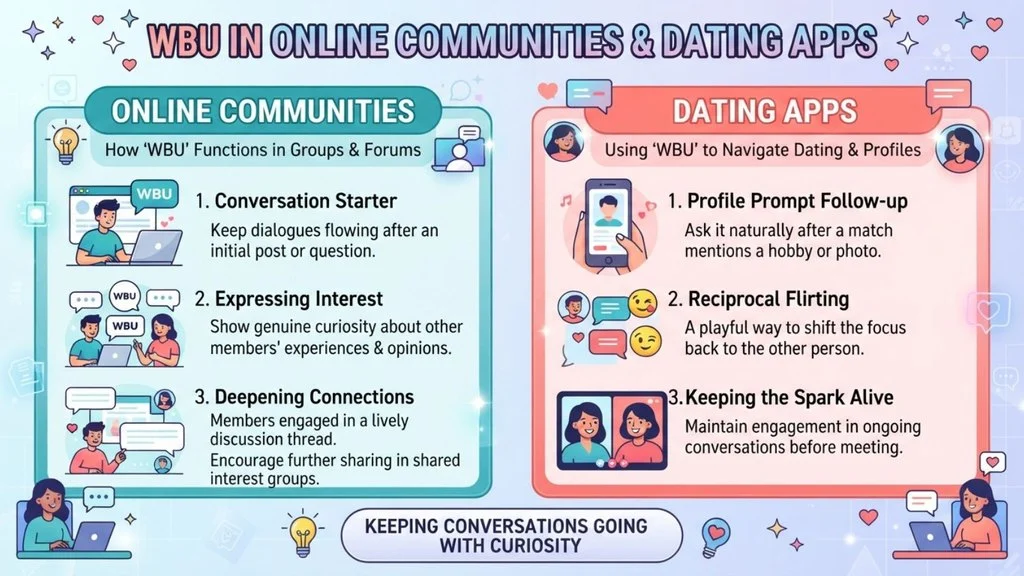
WBU on Tinder and Dating Apps
On dating apps, WBU can help keep a conversation going. Someone may use it after sharing their interests, plans, or feelings.
Example:
- Alex: “I love hiking on weekends. WBU?”
- Jamie: “I enjoy going to the beach.”
It gives both people a chance to share more about themselves.
WBU on Twitter and Social Media
On platforms such as X, formerly Twitter, people may use WBU in replies or direct messages.
It can be used to ask about opinions, interests, or daily activities.
WBU in Gaming Communities
Gaming communities often use short forms because players want to send quick messages.
Example:
- Player 1: “I’m ready for another round. WBU?”
- Player 2: “Let’s go!”
Tips for Responding Online
- Keep your reply related to the question.
- Be friendly if you want to continue the chat.
- Avoid sharing private details with strangers.
- Ask a follow-up question if you want to learn more.
- Use clear words if the conversation feels confusing.
Hidden or Offensive Meanings of WBU
Does WBU Have a Hidden Meaning?
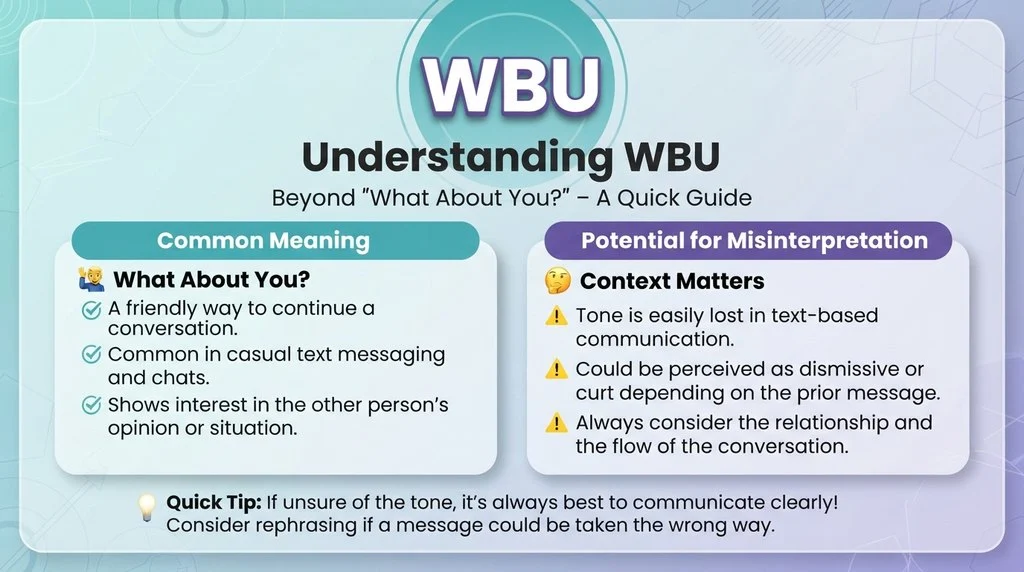
In common texting, WBU means “What About You?” It is not generally an offensive term.
Still, some abbreviations can have different meanings in special groups or situations. That is why context matters.
Can WBU Be Misinterpreted?
Yes, but usually because of the conversation rather than the abbreviation itself.
For example:
- “WBU?” may sound friendly.
- “WBU???” may seem impatient.
- “WBU” after a personal question may feel too direct to some people.
These interpretations depend on tone, punctuation, and the relationship between the people.
How to Avoid Confusion
If you are not sure what someone means, you can ask:
- “What do you mean by WBU?”
- “Are you asking about my plans?”
- “Do you mean, ‘What about me?’”
Clear questions can help prevent misunderstandings.
Suitability of WBU for Professional Communication
Can You Use WBU at Work?
WBU is common in casual chats, but it may not suit every workplace message.
It can be fine when talking with close coworkers in a relaxed setting. However, formal emails, client messages, and official work documents usually need clear wording.
Professional Alternatives to WBU
Instead of WBU, you can use:
- “How about you?”
- “What are your thoughts?”
- “Could you share your view?”
- “How is your project going?”
- “What is your availability?”
Examples of Professional Use
Casual work chat:
- Coworker: “I’m done with my part. WBU?”
- You: “I’m almost done too.”
Formal work message:
- Coworker: “I have completed my part.”
- You: “Thank you. How is your section progressing?”
The full phrase is often clearer in professional settings.
FAQs About WBU Meaning in Text
1. What does WBU mean in text?
WBU stands for “What About You?” It is used to ask someone about their feelings, plans, choices, or views.
2. What does WBU mean on social media?
On social media, WBU usually means “What About You?” People use it in comments, replies, and direct messages.
3. What is the difference between WBU and HBU?
WBU means “What About You?” HBU means “How About You?” Both can be used to ask about another person’s thoughts or situation.
4. How do I reply to WBU?
You can answer with a short phrase, such as “I’m good too,” “Same here,” or “I’m staying home.”
5. Is WBU rude or offensive?
No. WBU is usually a friendly abbreviation. However, tone and context can affect how a message feels.
6. Can I use WBU in professional messages?
You can use it in casual work chats if the setting allows it. In formal emails, use “How about you?” or another clear phrase.
7. What does WBU mean in dating?
On dating apps, WBU usually means “What About You?” It helps people share their interests, plans, and experiences.
Conclusion
The meaning of WBU in text is simple: “What About You?” It is a short and common way to ask someone about their feelings, plans, choices, or thoughts.
You may see WBU in text messages, social media chats, gaming communities, and dating apps. It helps people save time and keep conversations going.
WBU is close in meaning to HBU, but it is not the same as WYD. Knowing these differences can help you understand messages and reply with confidence.
You can answer WBU in many ways. A simple “I’m good too” works in a casual chat. A full phrase like “How about you?” may fit better in a work message.
The key is to understand the context and choose a reply that feels natural.
Continue Reading:
- IG Meaning in Texting: Definition, Examples, and Uses (for 2026)
- SMH Meaning in Texting: Meaning, Usage, and Examples (for 2026)
- IMO Meaning in Chat: Definition, Examples & Common Uses (for 2026)

Ella Peterson is an English language writer and grammar enthusiast at MeaningZones.com. She focuses on clear and practical English grammar, vocabulary, sentence structure, and everyday language usage.
Through easy-to-understand explanations and helpful examples, Ella helps readers improve their English writing and communication skills. Her goal is to make English grammar simple, useful, and accessible to everyone.