Imagine someone says, “He is getting a little long in the tooth.”
You may stop and wonder, “What does that even mean?” The words sound strange if you take them literally.
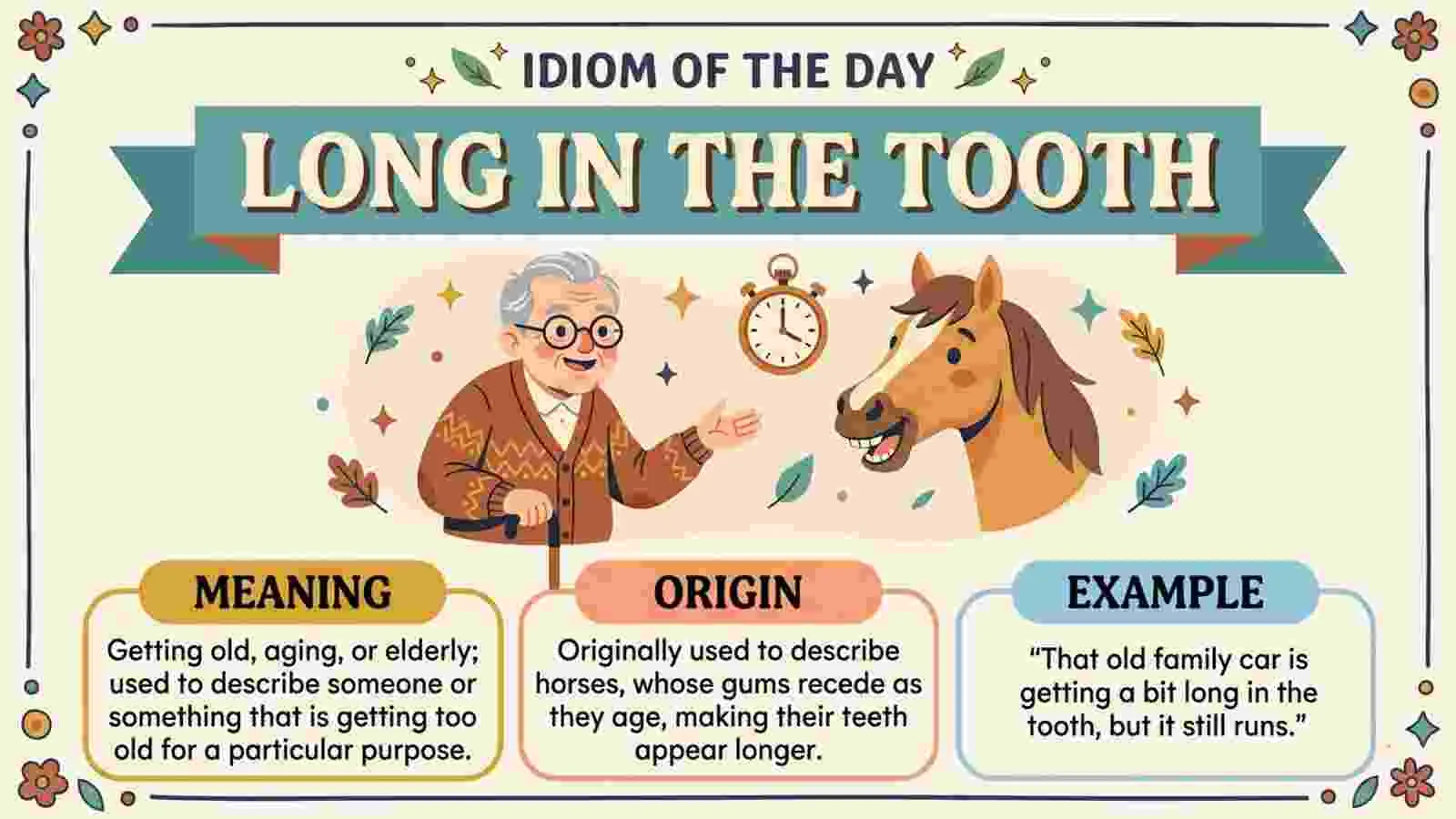
“Long in the tooth” means getting old or being older than expected. It is an old English idiom. People often use it to talk about a person, animal, or sometimes a thing that is no longer young.
May see this phrase in a WhatsApp chat, Instagram comment, Snapchat message, movie, book, or everyday conversation.
You may also hear it when people talk about age, experience, or something that has been around for a long time.
But the phrase can sound funny, teasing, or even rude. So, knowing the context is important.
In this guide, you will learn the long in the tooth meaning, where it came from, how to use it, and how to reply when someone says it.
What Does “Long in the Tooth” Mean in Text?
“Long in the tooth” means old, getting old, or no longer young.
It is an idiom, so the words do not have their literal meaning.
For example:
“My old laptop is getting long in the tooth.”
This means the laptop is old and outdated.
When used for a person, the phrase usually means that the person is older than they once were.
“He may be a little long in the tooth for professional football.”
This means the person may be too old for that activity or role.
The phrase can be playful, but it can also sound negative. It depends on who says it and how it is said.
Simple meaning
Long in the tooth = old, aging, or past its prime.
It can describe:
- An older person
- An old animal
- An old machine
- An outdated idea
- Something that has been around for a long time
The phrase is more common in normal speech and writing than in modern texting slang.
Full Form of “Long in the Tooth”
“Long in the tooth” has no full form.
It is not an acronym like LOL, BRB, or BTW.
It is an English idiom.
The phrase has a long history in English. It is linked to the idea that horses’ teeth can show signs of age.
So, if someone asks, “What is the full form of long in the tooth?” the simple answer is:
It has no full form because it is an idiomatic expression, not an abbreviation.
How Is “Long in the Tooth” Used in Chat?
You may see this phrase in casual chats when someone talks about age or something old.
Example 1
Alex: “Do you think Tom will join the marathon?”
Sam: “Maybe, but he is getting a little long in the tooth.”
Here, Sam is saying that Tom may be getting older for that activity.
Example 2
Mia: “I still use my old phone.”
Liam: “That phone is pretty long in the tooth now!”
Here, the phrase means the phone is old or outdated.
Example 3
Sara: “Grandpa says he wants to learn skateboarding.”
Jake: “He’s a little long in the tooth for that!”
This is likely a playful comment about Grandpa’s age.
Important: The phrase can sound teasing. Be careful when using it about someone’s age.
What Does “Long in the Tooth” Mean From a Girl or Boy?
If a girl or boy uses “long in the tooth” in a chat, the meaning usually stays the same. It generally means old, aging, or past one’s prime.
The emotional tone depends on the conversation.
Friendly or playful
A friend may use it as a joke.
“We’re getting long in the tooth, aren’t we?”
This could be a funny way of saying that both people are getting older.
Teasing
Someone might say:
“You’re getting long in the tooth!”
This can be playful between close friends. But it can also feel insulting if the relationship is not close.
Serious
The phrase may be used seriously when talking about age or suitability.
“He may be too long in the tooth for that position.”
Flirty use
The phrase is not normally a flirty expression.
If someone uses it while flirting, the meaning still relates to age. The romantic meaning comes from the wider conversation, not from the phrase itself.
Is “Long in the Tooth” Rude or Polite?
“Long in the tooth” is not automatically rude, but it can sound rude when used about a person.
It is often a softer or humorous way to say someone is old. Still, talking about someone’s age can be sensitive.
For example:
“My grandfather is a little long in the tooth.”
This may sound affectionate if said warmly.
But:
“You’re too long in the tooth to do that.”
This can sound insulting or dismissive.
When can it sound rude?
It may sound rude when:
- You use it with a stranger.
- You use it to mock someone’s age.
- You say it during an argument.
- You use it to suggest someone is useless or outdated.
- You use it with someone who is sensitive about their age.
Tip: Use the phrase carefully when talking about real people.
When Should You Use “Long in the Tooth”?
You can use the phrase in casual or humorous situations.
Use it when:
- Talking about something old.
- Joking with a close friend.
- Describing an old machine or object.
- Talking about an older animal.
- Discussing age in a light way.
- Writing a casual story or article.
For example:
“That old computer is getting long in the tooth.”
This sounds natural because you are talking about an object.
You can also use it for yourself:
“I’m getting a little long in the tooth for late-night gaming.”
This can sound humorous and self-aware.
When Should You NOT Use “Long in the Tooth”?
Avoid the phrase in situations where it could offend someone.
Do not use it:
- In a formal business email about someone’s age.
- When speaking to someone you do not know well.
- During a serious discussion about someone’s age.
- To insult an older person.
- In a job interview.
- When discussing someone’s health or physical ability.
- When you are unsure how the other person will react.
Instead, use clearer and more respectful words.
For example, say:
“He has many years of experience.”
instead of:
“He is long in the tooth.”
Best Replies to “Long in the Tooth”
Your reply depends on the tone of the conversation.
1. Funny reply
“Hey, I’m still young at heart!”
2. Playful reply
“Older, maybe. Wiser, definitely!”
3. Casual reply
“Haha, I guess I’m getting there!”
4. Confident reply
“Age is just a number.”
5. If you dislike the comment
“I’d rather not joke about my age.”
These replies let you match the tone without creating unnecessary tension.
“Long in the Tooth” Meaning on WhatsApp, Instagram, and Snapchat
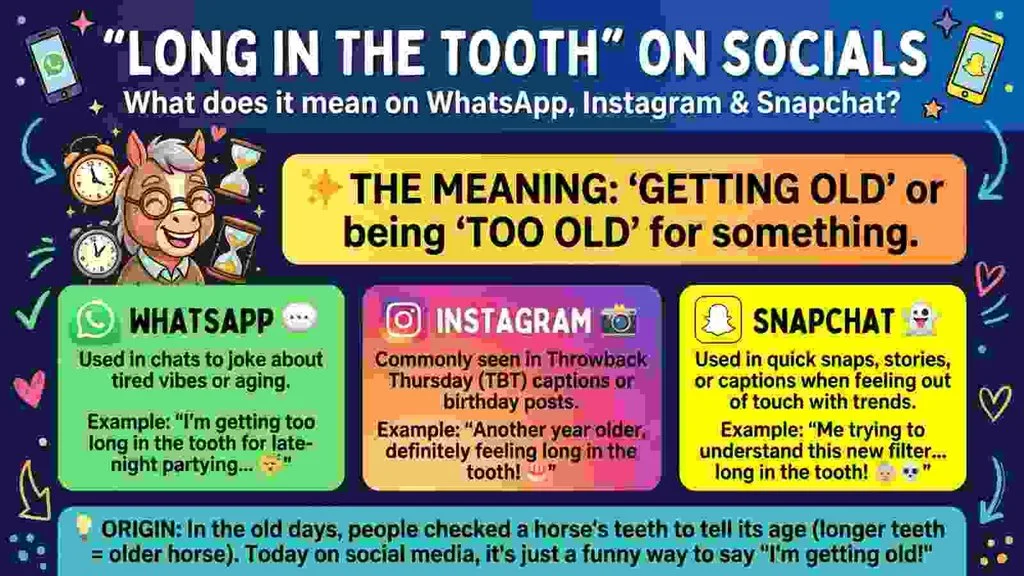
The meaning of “long in the tooth” does not normally change on WhatsApp, Instagram, or Snapchat.
It still means old, aging, or past its prime.
On WhatsApp
Someone might write:
“We’re getting long in the tooth 😂”
This could be a joke between friends about getting older.
On Instagram
You might see the phrase in a caption or comment.
“This camera is long in the tooth, but it still works!”
Here, it means the camera is old.
On Snapchat
A friend might send:
“We’re too long in the tooth for this!”
This could be a playful comment about being older.
The platform does not change the basic meaning. Context changes the tone.
Similar Slang Words Like “Long in the Tooth”
Here are five related expressions.
1. Getting on in years
This means someone is becoming older.
“He’s getting on in years.”
2. Over the hill
This means someone is considered past their prime.
It is often used jokingly.
3. Past one’s prime
This means someone or something is no longer at its best.
“That old car is past its prime.”
4. Old-school
This describes something old-fashioned or connected to an earlier time.
“He has an old-school style.”
5. Getting up there
This is a softer casual phrase for getting older.
“I’m getting up there in age.”
Quick comparison
| Phrase | Basic meaning | Tone |
| Long in the tooth | Old or aging | Humorous or teasing |
| Over the hill | Past one’s prime | Often teasing |
| Getting on in years | Becoming older | Mild and polite |
| Past one’s prime | No longer at one’s best | Neutral to negative |
| Getting up there | Getting older | Casual |
FAQs About “Long in the Tooth”
Is “long in the tooth” positive or negative?
It is usually neutral or mildly negative, depending on context. It can be humorous when used among friends.
Is “long in the tooth” a slang word?
Not exactly. It is an English idiom. It is more traditional than modern slang.
What is the simple meaning of long in the tooth?
It simply means old, aging, or past one’s prime.
Why do people say “long in the tooth”?
The phrase is linked to the old practice of estimating a horse’s age by looking at its teeth.
Is it safe to use with elders?
Use it with care. It can sound disrespectful when directed at an older person. It is safer in a friendly joke where you know the person well.
Is “long in the tooth” common in daily chat?
It is understood by many English speakers, but it is not one of the most common modern texting phrases. You are more likely to see it in conversation, books, articles, or humorous comments.
Can “long in the tooth” describe things?
Yes. It can describe something old or outdated.
For example:
“My laptop is getting long in the tooth.”
This means the laptop is old and may need replacing.
Conclusion
The long in the tooth meaning is simple: it means old, aging, or past one’s prime.
It is an English idiom, not an abbreviation or texting acronym. The phrase can describe people, animals, machines, or other things that are getting old.
Its tone matters. It can sound funny and playful among friends. But it may also sound rude if you use it to mock someone’s age.
You may see it on WhatsApp, Instagram, Snapchat, or in normal conversations. The basic meaning stays the same, but the tone depends on the situation.
Now you know what “long in the tooth” means and how to use it correctly. If you enjoy learning English phrases, checking related idioms can help you understand everyday conversations even better.

William Bennett is a dedicated writer and language enthusiast who shares clear, helpful insights on word meanings, spelling, grammar, and everyday English.
As an author at MeaningZones.com, he aims to make confusing language topics simple, practical, and easy for readers to understand.