Hey, I want to share something that happened to me recently about JSP meaning in text.
I was chatting with a friend when I suddenly saw “JSP” pop up in a message. Honestly, I had no clue what it meant at first.
I kept wondering, “Am I missing something here?” It was a bit confusing, and I didn’t want to respond the wrong way.
Have you ever received a message that made you stop and think, “What does JSP mean?”
So, I decided to look into JSP meaning in text and figure out its meaning and context.
After understanding it, I realized how important it is to know these terms to avoid awkward situations in conversations.
I learned how to understand the term and respond with confidence. Now, I feel ready whenever I see JSP again in chats or on social media.
JSP Definition and Meaning
JSP most commonly means “je sais pas” in French text messages. In English, this translates to “I don’t know.”
The phrase “je sais pas” is a casual form of “je ne sais pas.” The longer version is the standard French phrase for “I don’t know.” In everyday speech and texting, French speakers often leave out “ne.”
What does JSP stand for?
|
Short form
|
Full phrase
|
English meaning
|
| — | — | — |
|
JSP
|
Je sais pas
|
I don’t know
|
|
Je ne sais pas
|
Full French phrase
|
I do not know
|
People may use JSP when they do not know an answer, feel unsure, or do not want to explain something in detail.
Examples of JSP in a text
Example 1: Asking about plans
- Alex: “Tu viens ce soir?” (Are you coming tonight?)
- Sam: “JSP.” (I don’t know.)
Instance 2: Asking for an opinion
- Mia: “Tu aimes ce film?” (Do you like this movie?)
- Leo: “JSP, je l’ai pas vu.” (I don’t know. I haven’t seen it.)
Example 3: Asking about a person
- Friend 1: “Pourquoi il est parti?” (Why did he leave?)
- Friend 2: “JSP.” (I don’t know.)
In these examples, JSP is a quick way to say that the sender does not have an answer.
Does JSP always mean “I don’t know”?
No. Context matters. In a French conversation, JSP often means “je sais pas.” In an English conversation, the sender may use it differently, or it may be a personal abbreviation.
If you are unsure, read the messages around it.
The person is answering a question, “I don’t know” may fit. If it does not fit, ask what they mean.
Background and History of JSP
JSP comes from the French phrase “je sais pas,” which means “I don’t know.” It is an example of how people shorten everyday speech when they write messages.
French speakers often use informal language in quick conversations. In spoken French, “je ne sais pas” is often shortened to “je sais pas.” Texting makes it easy to shorten the phrase even more.
The first letters of “je sais pas” form JSP:
- J = Je
- S = Sais
- P = Pas
This makes JSP a simple initialism. Each letter represents a word in the phrase.
How did JSP become a texting abbreviation?
Text messages and online chats often favor short replies. People may use abbreviations to save time, especially when talking with friends.
French digital communication includes many shortened words and expressions. JSP fits this pattern because it turns a common phrase into three letters.
However, it is hard to name one exact person, date, or platform where JSP first appeared. Without reliable historical evidence, it is better not to claim a specific origin.
Where is JSP used today?
JSP may appear in:
- French text messages
- Chats between French-speaking friends
- Social media comments and direct messages
- Online conversations
- Informal group chats
It may be less clear to people who do not speak French. An English speaker could read JSP as a technical term or assume it is a personal shorthand.
JSP outside texting
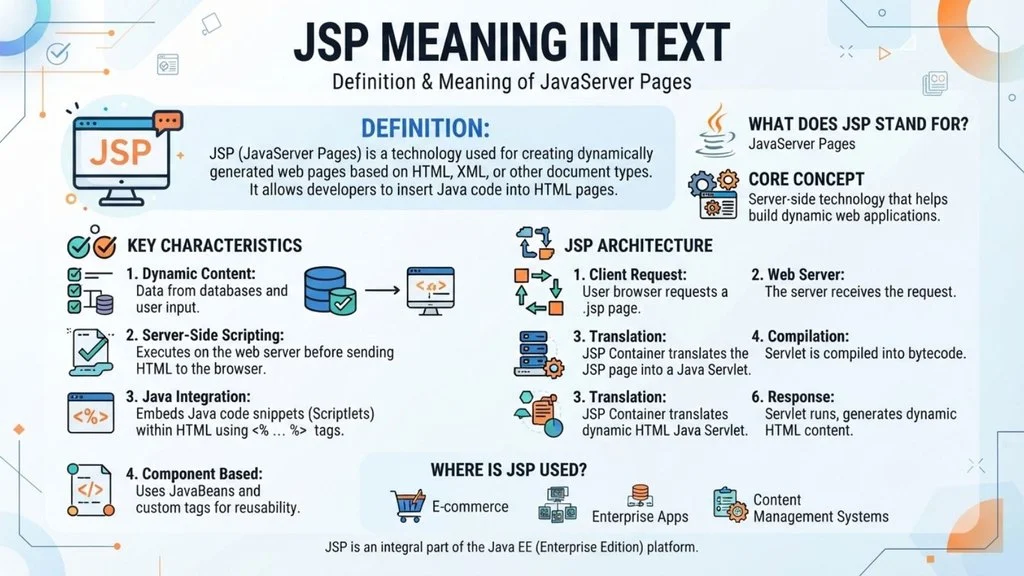
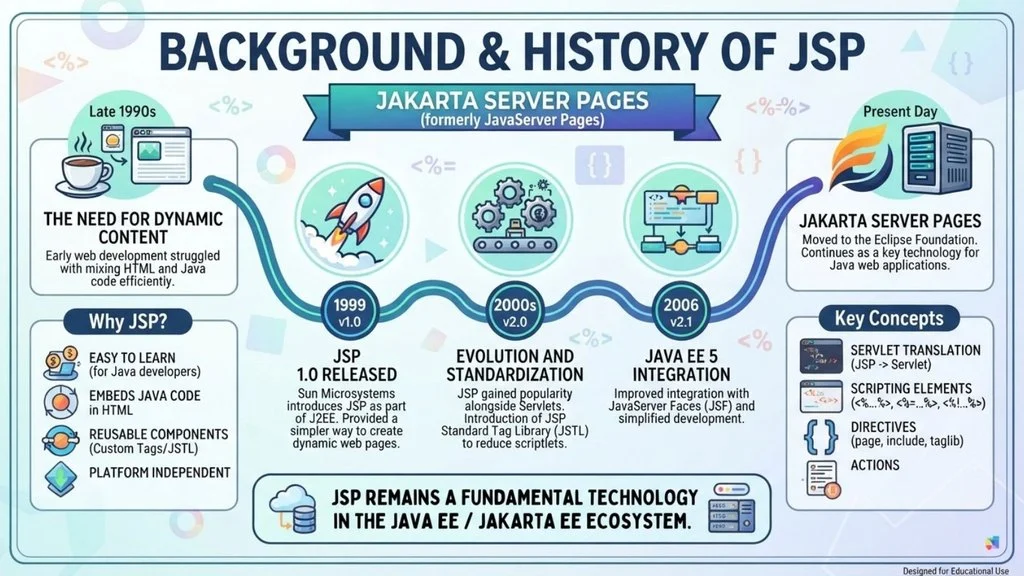
JSP also has a well-known meaning in technology: Jakarta Server Pages, formerly known as JavaServer Pages. It is a technology used to create dynamic web content.
This technical meaning is different from the French texting abbreviation. The topic of the conversation helps you tell them apart.
JSP Usage in Various Contexts
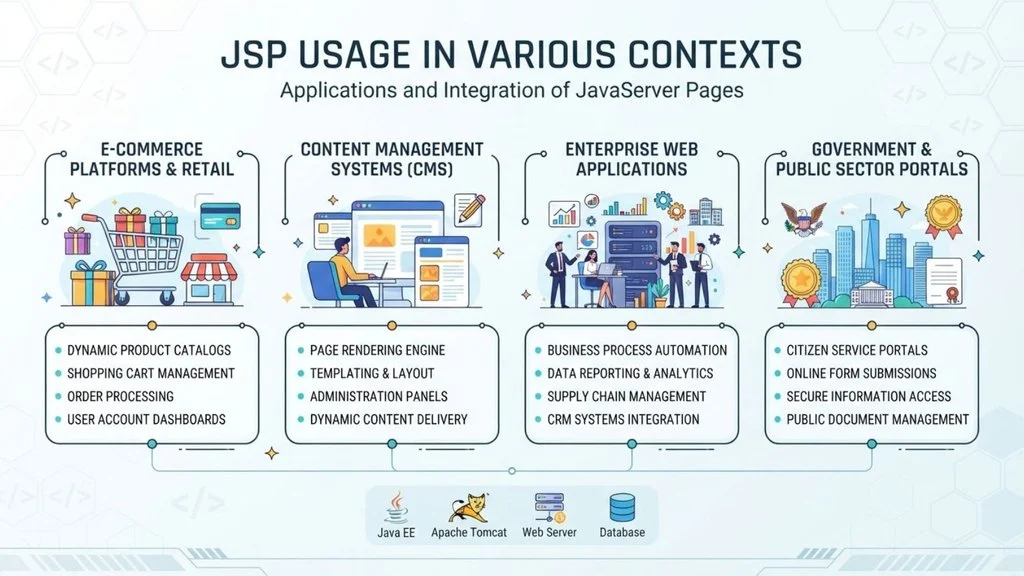
JSP can appear in different kinds of conversations. Its meaning depends on the language and topic.
JSP in texting
In French texting, JSP is a quick way to say “I don’t know.”
Example:
- Emma: “Tu sais où est Paul?” (Do you know where Paul is?)
- Lucas: “JSP.” (I don’t know.)
It can make a reply short and simple.
JSP on social media
French-speaking users may use JSP in comments, replies, or direct messages. They may use it when someone asks a question or when they want to show that they are unsure.
Example:
- User 1: “Vous savez qui a gagné?” (Do you know who won?)
- User 2: “JSP, je viens d’arriver.” (I don’t know. I just got here.)
JSP in gaming chats
In a French-speaking gaming group, JSP may be used when someone does not know where to go or what to do next.
Example:
- Player 1: “On va où maintenant?” (Where are we going now?)
- Player 2: “JSP, suis-moi.” (I don’t know, follow me.)
JSP in casual conversations
Friends may use JSP when they are unsure about plans, choices, or other people.
Example:
- Friend 1: “On mange quoi ce soir?” (What are we eating tonight?)
- Friend 2: “JSP, choisis toi.” (I don’t know, you choose.)
JSP in professional conversations
JSP is usually not the clearest choice in formal work messages. It may be understood by French-speaking coworkers, but a full phrase is often better.
Instead of writing:
– “JSP pour le délai.”
You could write:
– “Je ne connais pas encore le délai.” (I don’t know the timeline yet.)
Tip: Use JSP when the chat is casual and the other person understands French. Use clear wording when the meaning needs to be exact.
Common Misconceptions and Clarifications of JSP
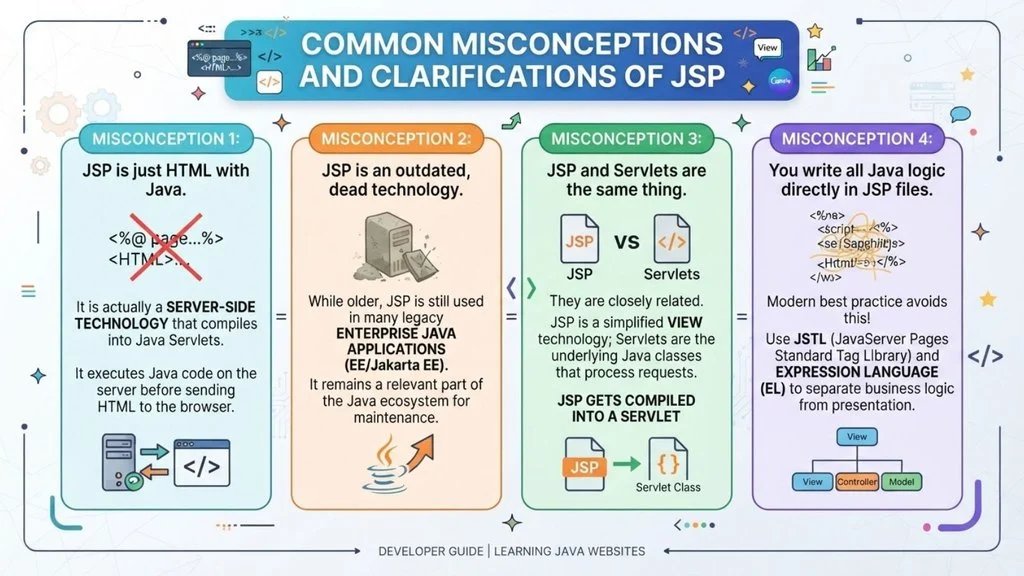
JSP can cause confusion because it has more than one possible meaning.
Misconception 1: JSP always means “Just Saying, Please”
This is not a standard meaning that you should assume. In French texting, JSP commonly means “je sais pas,” or “I don’t know.”
If someone uses JSP in an English chat, the meaning may be different. Check the conversation before deciding.
Misconception 2: JSP is only a French term
JSP is strongly associated with the French phrase “je sais pas” in texting, but the same letters can appear in other settings.
For example, JSP is also a web-development term. The letters alone do not tell you which meaning is intended.
Misconception 3: JSP is rude
JSP is not inherently rude or offensive. It can be a simple way to say “I don’t know.”
Still, a very short reply may sound cold if someone expects a longer answer. Tone, relationship, and context can affect how it feels.
Misconception 4: JSP means the sender does not care
Not necessarily. A person may genuinely not know the answer. They may also be busy or unsure how to respond.
You should not assume that JSP shows anger, boredom, or a lack of interest without more context.
Misconception 5: JSP has the same meaning in every country
No. French speakers may recognize the abbreviation, while people who use English or another language may not.
The safest approach is to check the language and topic of the conversation. If the meaning is still unclear, ask the sender directly.
Similar Terms and Alternatives
There are several short forms and phrases that can express uncertainty or a lack of knowledge.
|
Term
|
Meaning
|
Common use
|
| — | — | — |
|
JSP
|
Je sais pas — I don’t know
|
Informal French texting
|
|
IDK
|
I don’t know
|
English texting
|
|
J’en sais rien
|
I have no idea
|
Informal French
|
|
Je ne sais pas
|
I do not know
|
Standard French
|
|
Dunno
|
Don’t know
|
Casual English
|
|
Not sure
|
I am unsure
|
Casual or professional English
|
|
Maybe
|
It is possible
|
When something is uncertain
|
JSP vs. IDK
JSP and IDK can express the same idea, but they come from different languages.
- JSP is French.
- IDK is English.
Example:
- French chat: “JSP où il est.” (I don’t know where he is.)
- English chat: “IDK where he is.”
JSP vs. “Je ne sais pas”
Both phrases mean “I don’t know.”
The main difference is the level of formality. “Je ne sais pas” is the full form, while “je sais pas” is more informal.
JSP vs. “Not sure”
“Not sure” means that you are uncertain. It does not always mean that you have no knowledge at all.
For example:
- “JSP.” = “I don’t know.”
- “I’m not sure.” = “I may know something, but I am uncertain.”
Choose the phrase that best matches what you want to say.
How to Respond to JSP
The best reply depends on what the person means and what you want to say next.
If JSP is being used as “je sais pas,” you can respond in French or English.
Casual responses
Use these when chatting with friends.
- “Ah, d’accord!” — “Oh, okay!”
- “Pas grave.” — “No problem.”
- “Okay, merci!” — “Okay, thanks!”
Example:
- Alex: “Tu sais l’heure?” (Do you know the time?)
- Mia: “JSP.”
- Alex: “Pas grave!”
Funny responses
If you know the person well, you can keep things playful.
- “Mystère alors!”
- “On mène l’enquête!”
- “Same, je sais pas non plus!”
Example:
- Friend 1: “Tu sais qui a pris mon chargeur?”
- Friend 2: “JSP.”
- Friend 1: “Affaire classée… ou pas!”
These replies are lighthearted. Use them only when the mood is friendly.
Polite responses
If the conversation is more serious, keep your answer calm and clear.
- “D’accord, merci quand même.”
- “Pas de souci, je vais vérifier.”
- “Merci pour ta réponse.”
Professional responses
In a work conversation, a full sentence can help avoid confusion.
- “Merci. Je vais vérifier de mon côté.”
- “D’accord, faisons le point une fois que nous aurons l’information.”
- “Merci de me tenir au courant si vous obtenez une réponse.”
Privacy-conscious responses
Sometimes a person may use JSP because they do not know something or do not want to discuss it. Do not pressure them to share private information.
You can say:
- “Pas de souci, tu n’es pas obligé de répondre.”
- “No problem. You don’t have to explain.”
- “That’s okay. We can talk about something else.”
Tip: If you do not understand JSP, simply ask, “What does JSP mean here?” This is often the easiest way to avoid a misunderstanding.
Regional and Cultural Differences of JSP
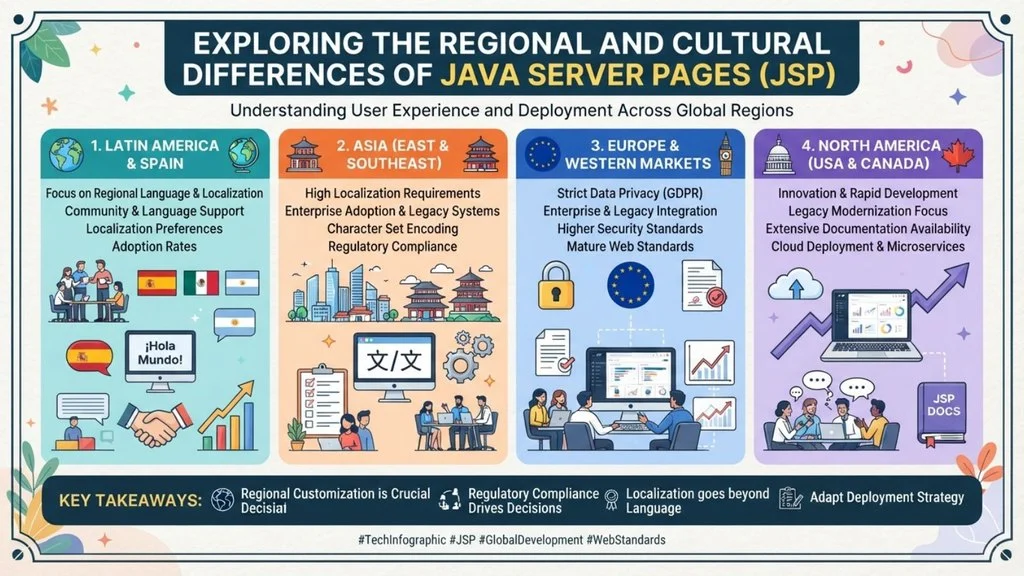
JSP is most easily understood when you know the language of the conversation.
JSP in France
In French conversations, JSP is a familiar shorthand for “je sais pas.” People may use it in informal messages with friends or family.
It can also appear in casual online discussions. However, not every French speaker will use the abbreviation in every situation.
JSP in French-speaking countries
French is spoken in many places, including Belgium, Switzerland, Canada, and several African countries.
People in these regions may understand “je sais pas,” but texting habits can differ. Some may use JSP, while others may prefer the full phrase or a local expression.
It is best not to assume that every French-speaking person uses the same slang.
JSP in English-speaking countries
In English-language chats, JSP may not be understood as “je sais pas.”
Some people may recognize it from French, while others may think it is a name, a technical term, or a private abbreviation.
If you are chatting with someone who does not speak French, use “I don’t know” or “IDK” to make your meaning clear.
JSP across cultures
Short forms often depend on shared language and social habits. A term that feels normal to one group may be confusing to another.
For example, a French speaker may understand JSP right away, while an English speaker may need an explanation.
The key point: Language, location, and personal texting habits can all affect how JSP is understood.
JSP Compared With Similar Terms
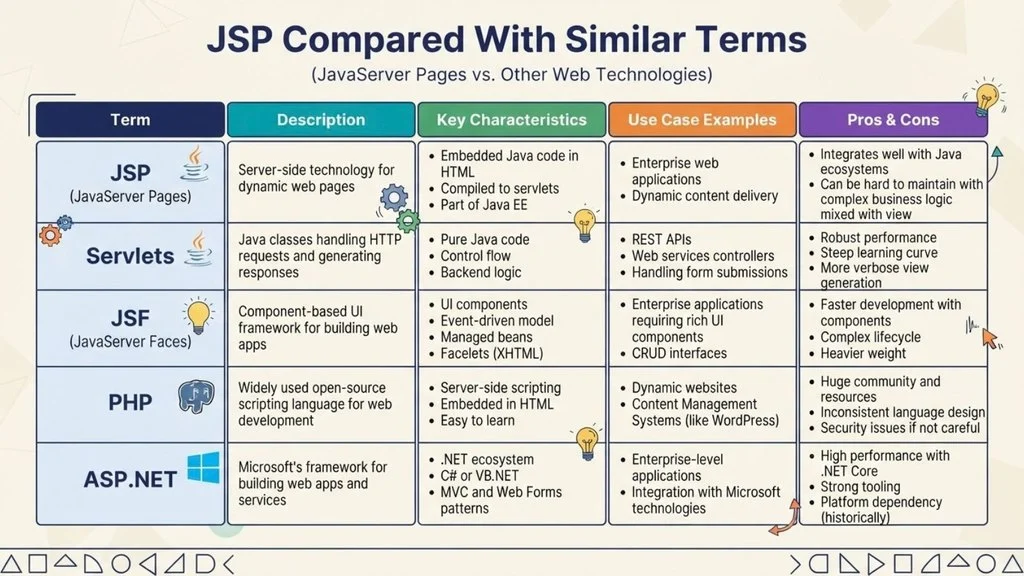
JSP is not the only way to express uncertainty. Here is how it compares with other common expressions.
|
Term
|
Language
|
Meaning
|
Tone
|
| — | — | — | — |
|
JSP
|
French
|
I don’t know
|
Informal
|
|
IDK
|
English
|
I don’t know
|
Informal
|
|
Je ne sais pas
|
French
|
I do not know
|
Neutral
|
|
J’en sais rien
|
French
|
I have no idea
|
Informal
|
|
Maybe
|
English
|
It is possible
|
Uncertain
|
|
Not sure
|
English
|
I am unsure
|
Neutral
|
|
No idea
|
English
|
I don’t know at all
|
Casual
|
When should you use JSP?
Use JSP when:
- You are chatting in French.
- The other person knows the abbreviation.
- The conversation is casual.
- You want to give a quick reply.
When should you use IDK?
Use IDK when the conversation is in English and the other person understands common texting abbreviations.
When should you use a full sentence?
Use a full sentence when:
- You are speaking to someone who may not know the abbreviation.
- You are discussing something important.
- You are writing a formal message.
- You want to explain why you do not know.
For example, instead of “JSP,” you could say, “Je ne sais pas encore, mais je vais vérifier.” This means, “I don’t know yet, but I will check.”
JSP in Online Communities and Dating Apps
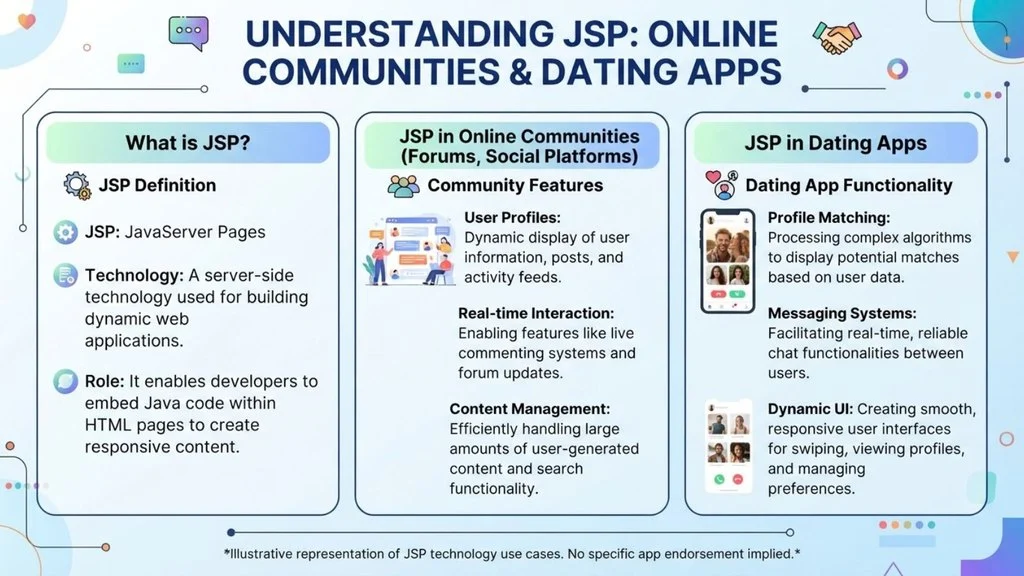
JSP may appear in online communities where French speakers chat with one another. Its meaning remains tied to the context of the conversation.
JSP on Tinder and dating apps
In a French-language dating conversation, someone may use JSP when asked about their plans, interests, or preferences.
Example:
- Person A: “Tu veux aller où pour notre premier rendez-vous?” (Where do you want to go for our first date?)
- Person B: “JSP, tu as une idée?” (I don’t know, do you have an idea?)
This does not automatically mean that the person is uninterested. They may simply not have a plan.
If you want to keep the conversation going, you can offer a choice:
– “On pourrait prendre un café ou faire une balade.” (We could get coffee or go for a walk.)
JSP on social media
French-speaking users may use JSP in comments or direct messages when answering questions.
For example:
– “JSP qui a posté ça.” — “I don’t know who posted that.”
The exact meaning still depends on the sentence.
JSP in gaming communities
In French gaming chats, JSP may be used to answer questions about a game, a team, or a next move.
Example:
- Player 1: “Tu sais où est l’objectif?”
- Player 2: “JSP, regarde sur la carte.”
Translation:
- Player 1: “Do you know where the objective is?”
- Player 2: “I don’t know, check the map.”
Tips for replying online
- Check the language before guessing what JSP means.
- Ask a simple question if the abbreviation is unclear.
- Do not assume a short reply reflects someone’s feelings.
- Keep your response friendly and respectful.
- Use full words if the conversation is serious.
Online abbreviations can make chats faster, but clear communication is still important.
Hidden or Offensive Meanings of JSP
JSP is not generally known as an offensive term when used to mean “je sais pas.” It is a casual way to say “I don’t know.”
However, a few points are worth keeping in mind.
Can JSP sound rude?
It can feel abrupt in some conversations because it is short.
For example:
- Person A: “Tu peux m’aider?”
- Person B: “JSP.”
Person A might feel that the reply is dismissive, even if Person B simply means they do not know.
A warmer reply could be:
– “JSP, désolé. Tu peux demander à quelqu’un d’autre?” (I don’t know, sorry. Could you ask someone else?)
Can JSP have another meaning?
Yes. Initialisms can have different meanings in different communities. In technology, JSP can refer to Jakarta Server Pages.
In a private chat, someone could also use the letters as personal shorthand. That does not make the alternative meaning universal.
How can you avoid confusion?
Look at the full message, the language, and the topic.
Someone is talking about French slang, “je sais pas” may fit. They are discussing web development, the technical meaning may be relevant.
If neither interpretation makes sense, ask the sender.
Remember: Do not assume an abbreviation is offensive just because you do not recognize it. Context is essential.
JSP is Suitable for Professional Communication
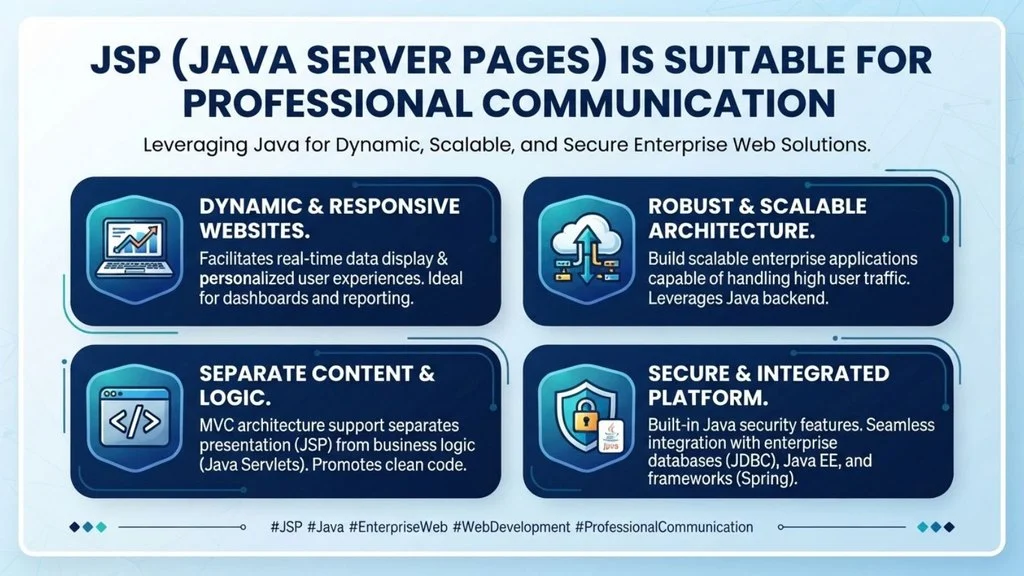
JSP is generally better suited to informal French conversations than formal professional writing.
Even if your coworkers understand the abbreviation, it may not be the clearest way to answer a work question.
When JSP may be acceptable
It may be fine in a casual team chat if:
- Everyone understands French.
- The conversation is informal.
- A short reply is appropriate.
- The meaning is clear.
For example, a coworker might ask a casual question in a French group chat, and JSP may be understood.
When to avoid JSP
Avoid relying on JSP in:
- Formal emails
- Client messages
- Job applications
- Reports
- Important work discussions
- Conversations with people who may not speak French
In these settings, full sentences help prevent confusion.
Professional alternatives to JSP
|
Instead of JSP
|
You can write
|
| — | — |
|
JSP
|
Je ne sais pas.
|
|
JSP
|
Je n’ai pas encore cette information.
|
|
JSP
|
Je vais vérifier et vous répondre.
|
|
JSP
|
Je ne peux pas le confirmer pour le moment.
|
In English, you can say:
- “I don’t know yet.”
- “I don’t have that information at the moment.”
- “I will check and get back to you.”
- “I cannot confirm that right now.”
These phrases tell the reader what you know and, when relevant, what you will do next.
Example of a professional reply
Coworker: “Do we have the final meeting time?”
You: “I don’t have the confirmed time yet. I’ll check and update you.”
This is clearer than using an abbreviation that may not be understood.
Bottom line: JSP can work in casual French chats, but full words are usually more suitable for professional communication.
12. FAQs About JSP Meaning in Text
1. What does JSP mean in text?
JSP commonly means “je sais pas” in French texting. It translates to “I don’t know” in English.
2. Is JSP French slang?
Yes. JSP is an informal abbreviation made from the French phrase “je sais pas.”
3. What does JSP mean in English?
When used as French texting slang, JSP means “I don’t know.” In English chats, it may have a different or personal meaning.
4. Is JSP the same as IDK?
They express the same idea, but JSP comes from French, while IDK stands for “I don’t know” in English.
5. Is JSP rude?
Not usually. It is a casual way to say that you do not know something. However, a short reply may seem abrupt in some situations.
6. What does JSP mean on Tinder?
In a French-language dating conversation, JSP may mean “I don’t know.” The exact meaning depends on the message and context.
7. What does JSP mean in programming?
In web development, JSP stands for Jakarta Server Pages, a technology used to create dynamic web content. This is different from its French texting meaning.
Conclusion
JSP commonly means “je sais pas,” or “I don’t know,” in French text messages. It is a short and casual way to reply when someone does not have an answer.
You may see it in messages between friends, social media chats, gaming conversations, and French-language dating apps. Its meaning can change when the conversation is in another language or relates to technology.
JSP is not usually offensive, but a very short reply may sometimes seem unclear or abrupt. If you are unsure what someone means, look at the surrounding messages or ask them to explain.
For English conversations, IDK is a more familiar way to say “I don’t know.” For formal or professional messages, full sentences are often clearer.

William Bennett is a dedicated writer and language enthusiast who shares clear, helpful insights on word meanings, spelling, grammar, and everyday English.
As an author at MeaningZones.com, he aims to make confusing language topics simple, practical, and easy for readers to understand.