Have you ever heard someone say “Hakuna Matata” and wondered what it means?
You may have heard it in a song, seen it in a social media post, or read it in a friend’s WhatsApp status. The phrase sounds fun and catchy, but its meaning may not be clear at first.
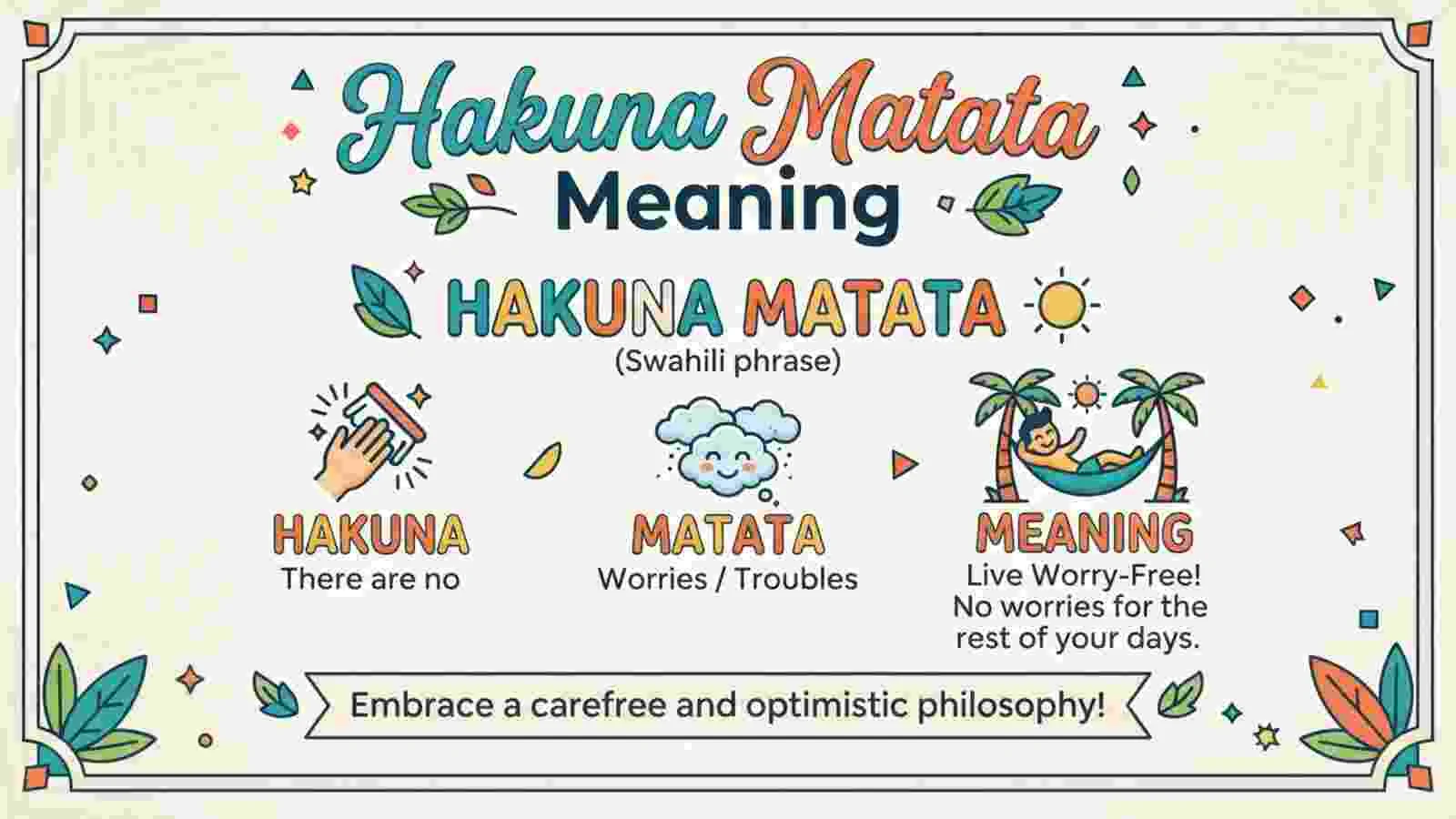
Hakuna Matata means “no worries” or “there are no problems” in English. It is a Swahili phrase that tells people to stay calm and not worry too much.
Many people know this phrase from Disney’s The Lion King. Since then, it has become popular around the world. People use it to share a happy mood, give comfort, or remind others to enjoy life.
In this guide, you will learn the meaning of Hakuna Matata, how to use it in chats, and how to reply when someone says it on WhatsApp, Instagram, or Snapchat.
What Does Hakuna Matata Mean in English?
Hakuna Matata means “no worries” or “no problems” in English.
It is a Swahili phrase. People often use it to show that everything is fine and there is no need to worry.
Here are some simple examples:
- “Don’t worry about the mistake. Hakuna Matata!”
- “We have plenty of time. Hakuna Matata.”
- “You forgot your keys? Hakuna Matata. We can get them later.”
The phrase has a calm and positive feel.
This can help people feel better when something goes wrong.
It can also express a relaxed way of life.
It reminds people not to let small problems spoil their day.
However, it does not mean that every problem can be ignored. It is a friendly way to say that there is no need to worry too much.
Full Form of Hakuna Matata
Hakuna Matata does not have a full form because it is not an acronym. It is a phrase in Swahili, a language spoken in East Africa.
The phrase has two main parts:
- Hakuna: There is no, or there are no.
- Matata: Problems or troubles.
Together, the words mean “there are no problems” or “no worries.”
The phrase became famous worldwide through Disney’s 1994 animated film The Lion King. In the film, Timon and Pumbaa teach Simba to live with less worry and enjoy life.
Today, people use the phrase in everyday speech, online messages, captions, and jokes. It is often linked with happiness, freedom, and a relaxed attitude.
How Is Hakuna Matata Used in Chat?
People use Hakuna Matata in chats to comfort someone, show that a problem is not serious, or keep a conversation light.
Here are three examples.
Example 1: When Someone Says Sorry
Alex: Sorry, I forgot to send you the photo.
Sam: Hakuna Matata! You can send it later.
Here, Sam tells Alex not to worry.
Example 2: When Plans Change
Mia: Sorry, I can’t meet you today.
Noah: Hakuna Matata. We can meet tomorrow.
Here, Noah shows that he is not upset about the change.
Example 3: When a Friend Feels Worried
Lily: I’m worried about my test tomorrow.
Jake: Hakuna Matata! Just study a little more and get some rest.
Here, Jake uses the phrase to help Lily feel calm.
These examples show how the phrase can make a chat feel warm, friendly, and positive.
What Does Hakuna Matata Mean From a Girl or Boy?
The phrase usually has the same meaning, no matter who says it. But the feeling behind it may depend on the situation.
When a Girl Says Hakuna Matata
A girl may use Hakuna Matata to show that she is relaxed, friendly, or not upset.
For example:
Girl: “You don’t need to say sorry. Hakuna Matata!”
She is telling you that everything is fine.
If she uses it with a smile or a playful message, she may be trying to keep the chat light. However, the phrase does not automatically mean she is flirting.
When a Boy Says Hakuna Matata
A boy may use the phrase to comfort someone or show that he is not worried.
For example:
Boy: “It’s okay that we’re late. Hakuna Matata!”
He wants the other person to relax.
Can Hakuna Matata Be Flirty?
It can be used in a playful or sweet conversation, but it is not a romantic phrase by itself.
For example:
You: “Sorry, I kept you waiting.”
Your crush: “Hakuna Matata 😊”
This may sound warm and friendly. To understand whether there is romantic interest, look at the full conversation rather than this phrase alone.
Is Hakuna Matata Rude or Polite?
Hakuna Matata is usually friendly, polite, and positive. People often use it to make someone feel better or show that they are not upset.
For example:
Friend: “Sorry I made a mistake.”
You: “Hakuna Matata! It happens.”
This is a kind way to respond.
However, the phrase may sound dismissive in a serious situation. If someone is sharing a painful problem, saying only “Hakuna Matata” may make it seem as if you do not care.
For example, if a friend is going through a major loss, they may need support and understanding instead of a cheerful phrase.
A more caring response would be:
“I’m sorry you’re going through this. I’m here for you.”
So, the phrase is not rude by itself. Its effect depends on the situation and your tone.
When Should You Use Hakuna Matata?
You can use Hakuna Matata in casual and friendly situations.
- When a friend says sorry for a small mistake.
- When plans change and you are not upset.
- When you want to help someone relax.
- When you want to share a positive mood.
- When writing a cheerful social media caption.
- When joking with friends about a small problem.
Example: “Don’t worry about being five minutes late. Hakuna Matata!”
The phrase works best when the problem is small or when a cheerful tone is welcome.
When Should You NOT Use Hakuna Matata?
Although the phrase is positive, it is not right for every situation.
- Avoid using it to dismiss someone’s serious feelings.
- Do not use it when someone needs urgent help.
- Avoid using it in a formal business message unless the tone is casual.
- Do not use it to suggest that a real problem does not matter.
- Avoid using it when the other person may not understand the phrase.
For example, if a coworker tells you that an important deadline has been missed, saying “Hakuna Matata!” may sound careless.
A better response would be:
“Let’s see how we can fix this.”
Always think about the other person’s feelings before using a cheerful phrase.
Best Replies to Hakuna Matata
If someone says Hakuna Matata to you, your reply can be simple and friendly.
Here are five natural replies:
- “That’s the spirit!” — A cheerful way to agree.
- “You’re right. No worries!” — Shows that you feel relaxed.
- “Thanks for making me feel better.” — Use this when someone comforts you.
- “Let’s enjoy the day!” — Keeps the conversation positive.
- “Hakuna Matata to you too!” — A fun reply when chatting with friends.
You can also reply with a smile emoji or a heart if it fits your relationship.
The best reply depends on why the person used the phrase. If they are comforting you, a simple “Thank you” may be enough.
Hakuna Matata Meaning on WhatsApp, Instagram, and Snapchat
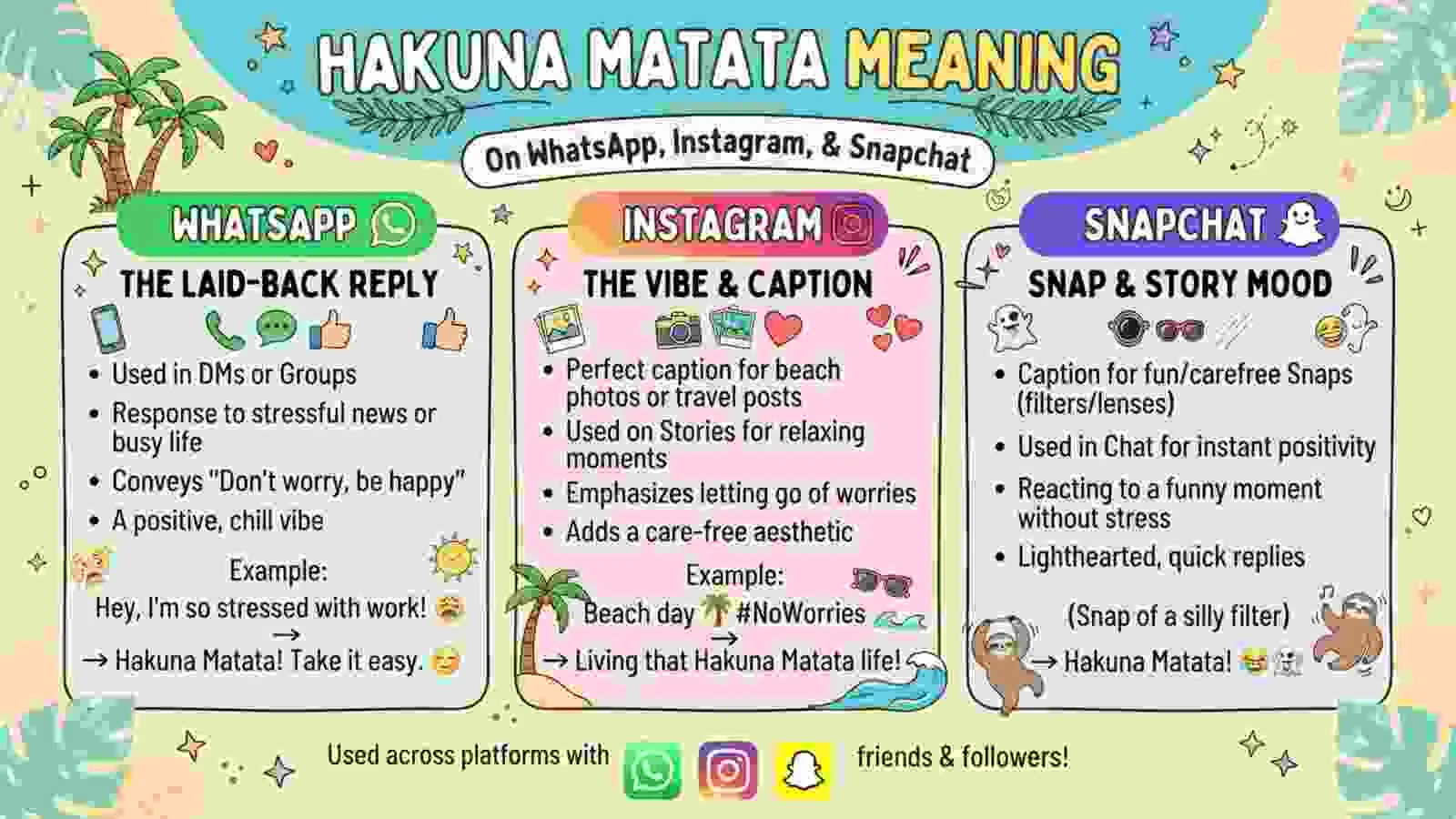
The meaning of Hakuna Matata usually stays the same across social media platforms. It means “no worries” or “no problems.”
Hakuna Matata on WhatsApp
People may use it in private chats or group messages to reassure a friend.
Example:
“It’s okay that you forgot. Hakuna Matata 😊”
It can also appear in a WhatsApp status to show a relaxed mood.
Hakuna Matata on Instagram
On Instagram, people often use the phrase in captions, reels, and comments.
Example caption:
“Enjoy the little things and let go of your worries. Hakuna Matata!”
It can express happiness, travel, fun, or a carefree attitude.
Hakuna Matata on Snapchat
On Snapchat, people may use it in short messages, snaps, or stories.
Example:
“Plans changed, but we’re still having fun. Hakuna Matata!”
The phrase does not have a special new meaning on these platforms. People mainly use it to share a positive message or show that they are not worried.
Similar Slang Words and Phrases Like Hakuna Matata
Here are five phrases with meanings close to Hakuna Matata.
- No worries: A friendly way to say that everything is okay.
- It’s all good: Means there is no problem or hard feeling.
- Chill: Means to relax or stay calm.
- Don’t sweat it: Tells someone not to worry about something small.
- YOLO: Means “You Only Live Once.” It encourages people to make the most of life, though it does not mean exactly the same thing as Hakuna Matata.
These phrases can all help create a relaxed tone, but they are not perfect replacements in every situation.
For example, “Don’t sweat it” is common in casual English, while Hakuna Matata has a Swahili origin and a strong link to The Lion King.
FAQs About Hakuna Matata Meaning in English
1. What does Hakuna Matata mean in English?
Hakuna Matata means “no worries” or “there are no problems.” It is a Swahili phrase.
2. Is Hakuna Matata a positive or negative phrase?
It is usually positive. People use it to show that they are relaxed, happy, or not worried.
3. Is Hakuna Matata a slang word?
It is not slang in its original form. It is a Swahili phrase that people around the world also use casually.
4. Is it okay to use Hakuna Matata with elders?
Yes, in a friendly conversation, especially if they know the phrase. In formal situations, a simple “No worries” may be clearer.
5. Is Hakuna Matata common in daily chat?
Yes. Many people know it from The Lion King and use it in casual conversations, captions, and messages.
6. Does Hakuna Matata mean no stress?
It can express a similar idea. It encourages a relaxed attitude and suggests that there is no need to worry too much.
7. Is Hakuna Matata a romantic phrase?
Not by itself. Someone may use it in a sweet or playful chat, but it usually means “no worries,” not “I love you.”
Conclusion
Hakuna Matata means “no worries” or “there are no problems” in English. It is a Swahili phrase that became famous around the world through Disney’s The Lion King.
People use it to comfort friends, respond to small mistakes, and share a happy, relaxed mood. You may see it in WhatsApp messages, Instagram captions, Snapchat stories, and everyday talks.
Now you know what Hakuna Matata means and how to use it. Remember that it works best in light and friendly situations. When someone faces a serious problem, show care and support instead of brushing their feelings aside.
Want to learn more everyday phrases? Explore other common idioms and slang terms to make your English chats easier and more natural.

Ella Peterson is an English language writer and grammar enthusiast at MeaningZones.com. She focuses on clear and practical English grammar, vocabulary, sentence structure, and everyday language usage.
Through easy-to-understand explanations and helpful examples, Ella helps readers improve their English writing and communication skills. Her goal is to make English grammar simple, useful, and accessible to everyone.


1 thought on “Hakuna Matata in English: Language, Culture, and Examples ( for 2026)”