You are chatting with a friend on WhatsApp when they suddenly say, “DM me. “What does DM mean?”
You are not alone. Many people see DM in texts, comments, and social media posts and want to know what it means.
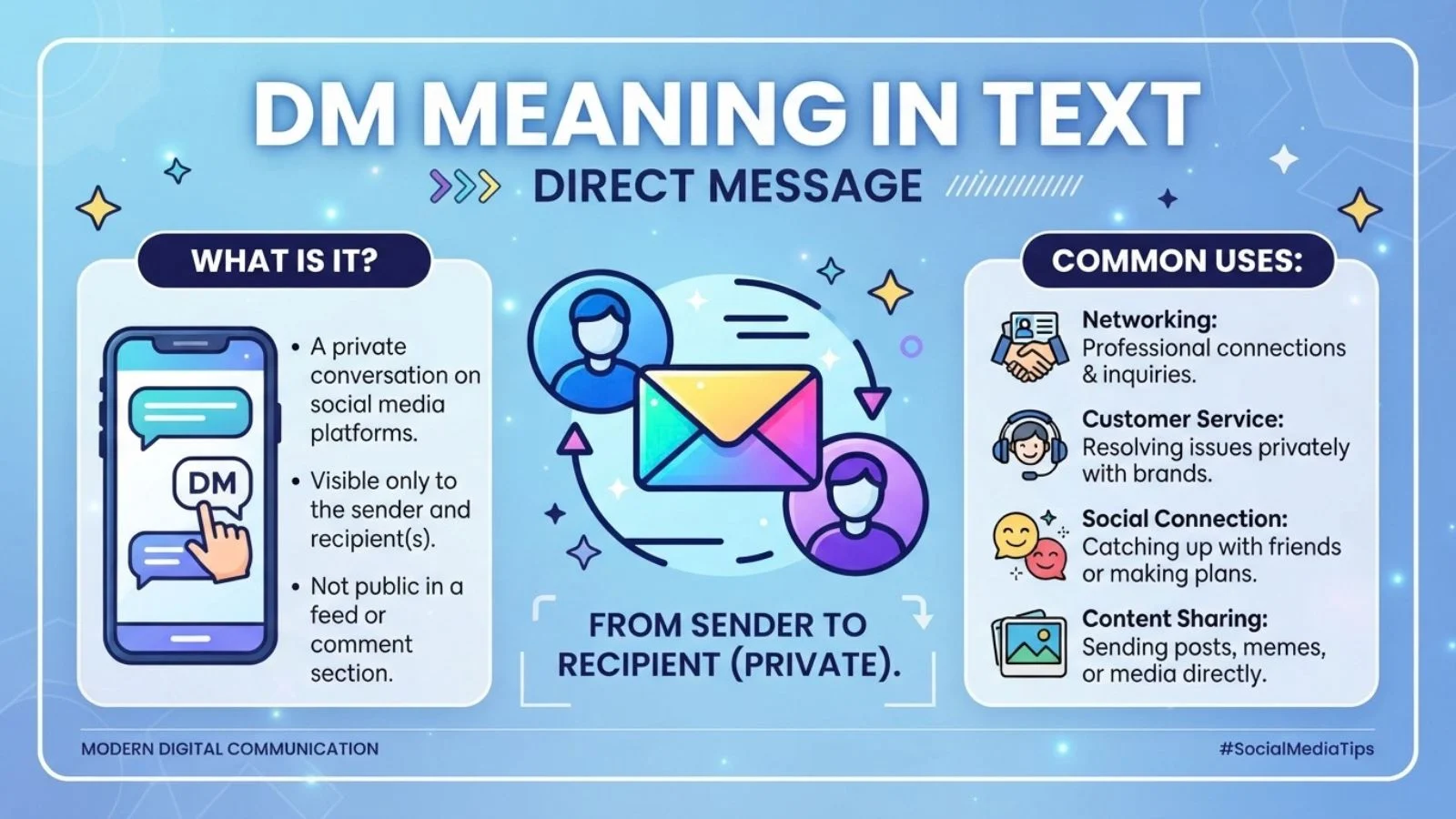
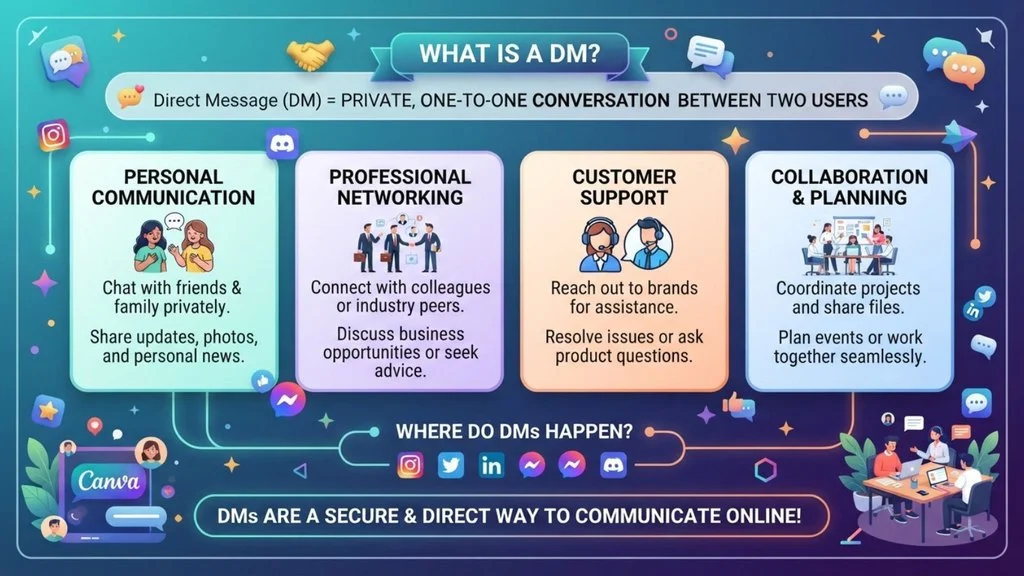
DM means “Direct Message.” It is a private message sent to someone on a social media app or online platform.
You may see DM on Instagram, Snapchat, WhatsApp, X, Facebook, TikTok, and other platforms.
People use it when they want to talk privately instead of posting a public comment.
Knowing the dm meaning in text can help you understand online conversations. It can also help you reply in the right way.
Let’s look at what DM means, how people use it, and what you can say when someone sends you “DM.”
What Does “DM” Mean in Text?
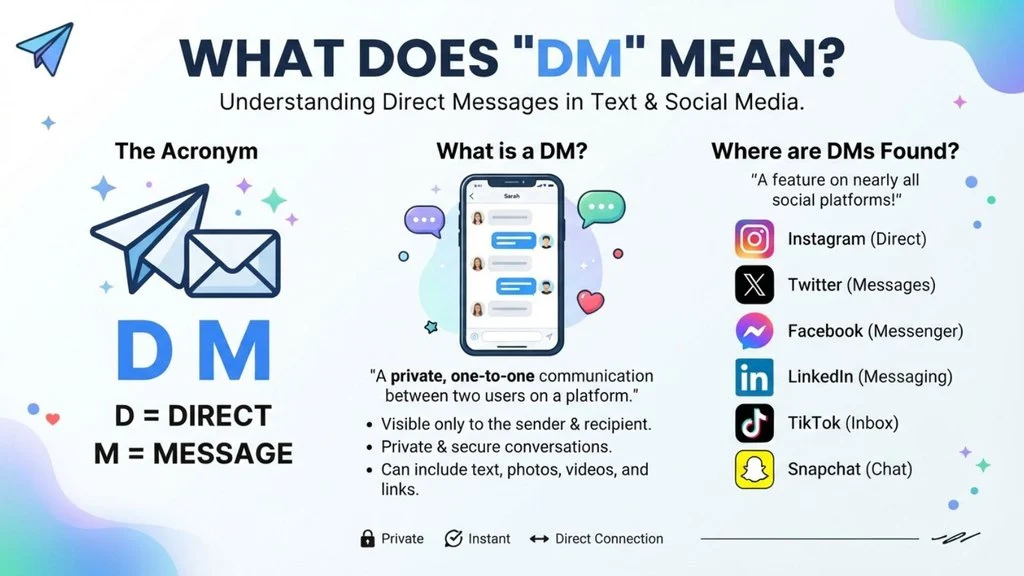
DM means “Direct Message.”
A direct message is a private message sent to another person online. Unlike a public comment, other people usually cannot see the conversation.
For example:
Alex: “I have something to tell you.”
Sam: “Okay, DM me.”
Here, Sam is asking Alex to send a private message.
People often use DM when they do not want to share something publicly.
Simple meaning of DM
DM = Direct Message = Private online message
You can use DM as both a noun and a verb.
As a noun:
“I got a DM from Sarah.”
This means Sarah sent a private message.
As a verb:
“DM me the details.”
This means, “Send me the details in a private message.”
Full Form of “DM”
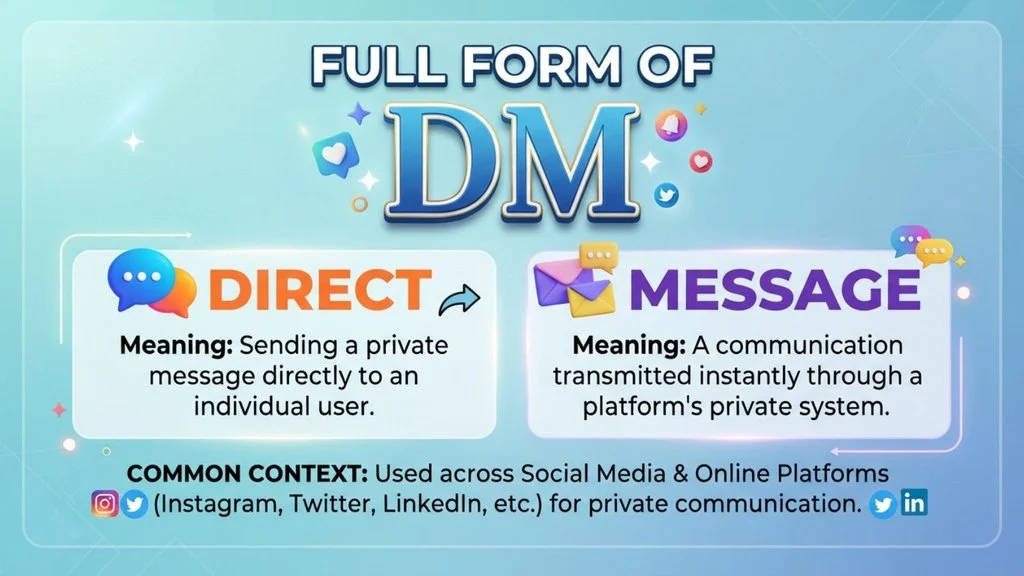
The full form of DM is “Direct Message.”
It refers to a private message sent through an online platform.
The term became very common with social media. People use it to talk privately with friends, family, customers, creators, and other users.
You may also see phrases like:
- DM me = Send me a direct message.
- Check your DMs = Look at your private messages.
- Send me a DM = Send me a private message.
- I got your DM = I received your private message.
- Slide into my DMs = Send me a private message, often in a friendly or flirty way.
How Is “DM” Used in Chat?
People use DM in many casual conversations.
Example 1: Asking for private information
Mia: “Can you send me the address?”
Noah: “Sure. DM me.”
Noah wants Mia to send the address privately.
Example 2: Moving a conversation to private chat
Liam: “I want to tell you something.”
Emma: “Sure. DM me.”
Here, Emma is asking Liam to continue the conversation privately.
Example 3: Social media conversation
Jake: “Do you still have those photos?”
Ryan: “Yes. DM me and I’ll send them.”
Ryan wants to send the photos through a private message.
Example 4: Business use
Customer: “How much does this cost?”
Seller: “DM us for the price.”
The seller is asking the customer to send a private message.
In most cases, DM simply means moving the conversation into a private message.
What Does “DM” Mean From a Girl or Boy?
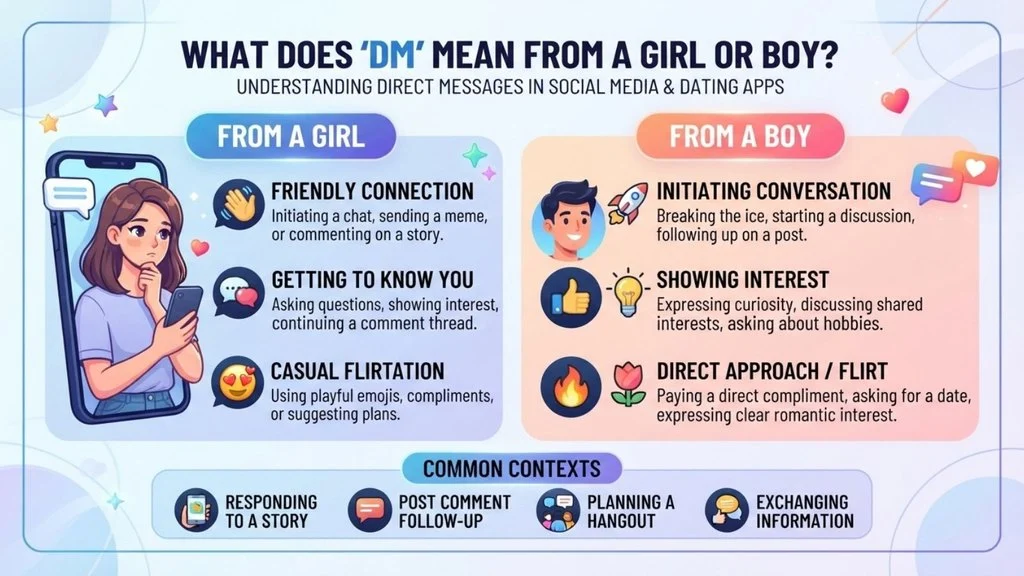
When a girl or boy says “DM me,” the basic meaning is the same: send me a private message.
However, the tone can change based on the situation.
Friendly
A friend may say:
“DM me when you get home.”
This is simply a casual request.
Serious
Someone may say:
“DM me. We need to talk.”
This can sound more serious because they want a private conversation.
Flirty
A person may say:
“You seem interesting. DM me 😉”
This may have a friendly or flirty tone.
But DM by itself does not prove romantic interest. Look at the rest of the conversation.
Casual
Someone may write:
“DM me the link.”
This has no romantic meaning. It is simply a request for information.
The meaning of DM stays the same, but the tone depends on the conversation.
Is “DM” Rude or Polite?
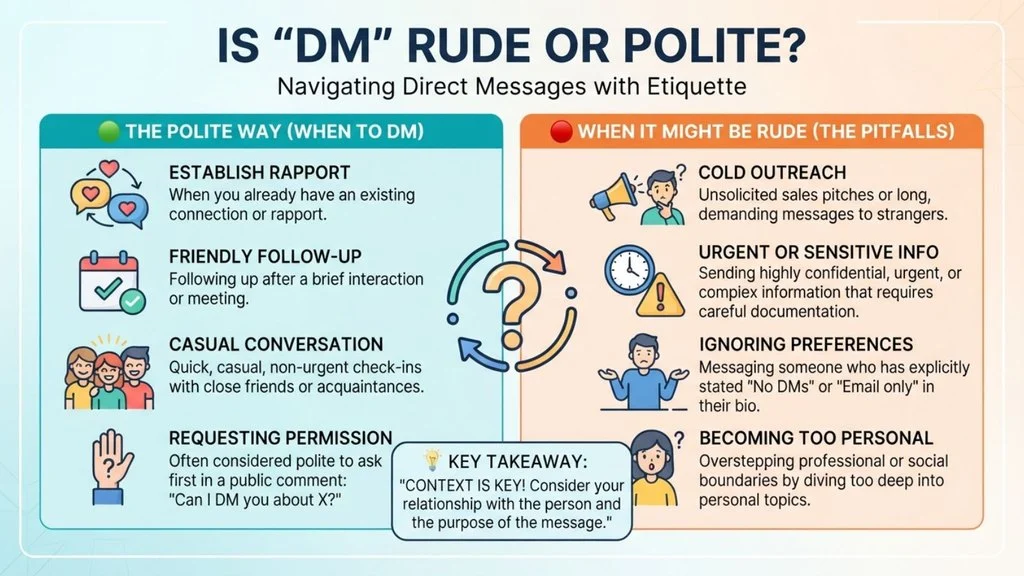
DM is neither rude nor polite by itself. It is a common online abbreviation.
Its tone depends on how you use it.
For example:
“DM me when you have time.”
This sounds polite and relaxed.
But:
“DM me NOW.”
This may sound demanding.
A short message can also seem cold if there is no other context.
Instead of:
“DM.”
You could write:
“Hey, can you DM me when you are free?”
This sounds warmer and clearer.
When can DM sound rude?
DM may sound rude when:
- You use it as a command.
- You use all caps.
- You demand an instant reply.
- You ask someone to move to private chat without explaining why.
- You repeatedly message someone who does not respond.
The word itself is not rude. The tone and situation matter.
When Should You Use “DM”?
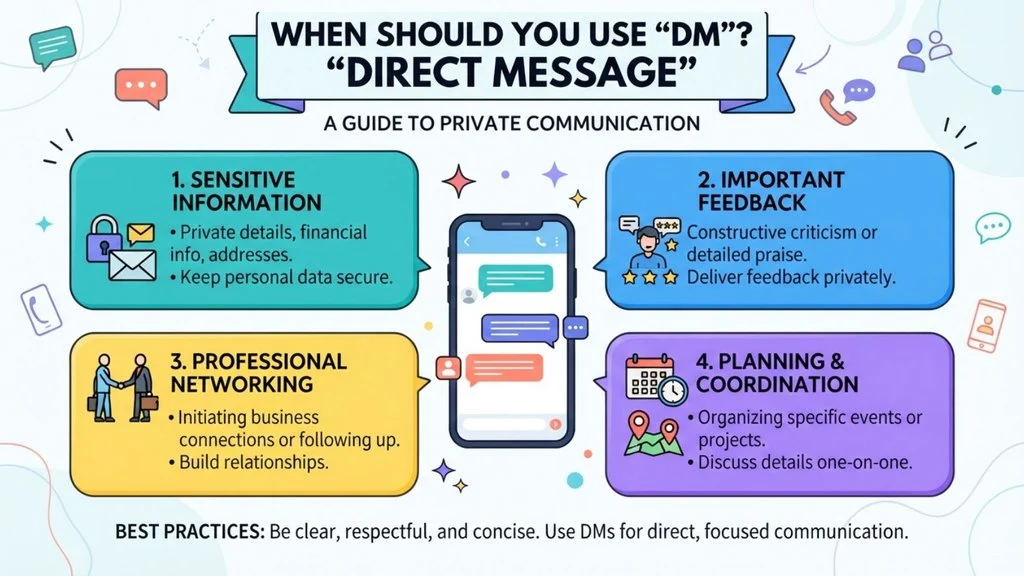
You can use DM in casual online conversations.
Use it when:
- You want a private conversation.
- You want to share personal information.
- You want to send photos privately.
- You want to discuss something away from a public comment section.
- You are chatting with friends or social media followers.
- You are talking to someone who understands the abbreviation.
Examples
“DM me the details.”
“You can DM me anytime.”
“I’ll send the photo by DM.”
“Check your DMs.”
DM is especially common in social media conversations.
When Should You NOT Use “DM”?
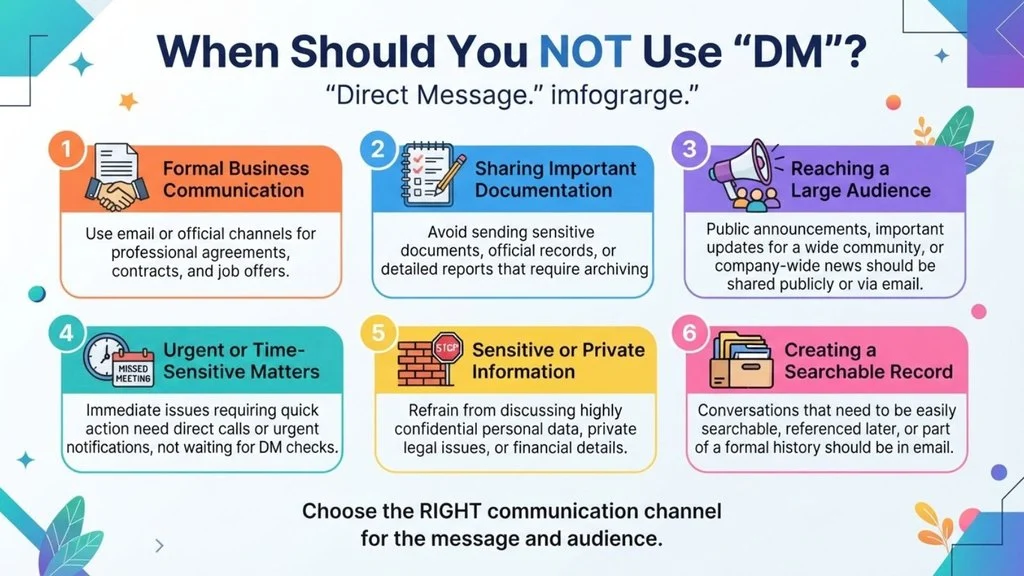
DM is common online, but it is not always the best choice.
Avoid using the abbreviation when writing a formal message to someone who may not understand it.
For example, instead of:
“DM me ASAP.”
A professional version would be:
“Please send me a private message as soon as possible.”
You may want to avoid casual DM language in:
- Formal business emails
- Academic writing
- Official documents
- Job applications
- Important professional notices
- Communication with someone unfamiliar with internet slang
If you are unsure, use “direct message” instead of “DM.”
Best Replies to “DM”
If someone says “DM me,” your reply can be simple.
Here are five natural responses:
- “Sure, I’ll DM you.”
- “Okay, check your DMs.”
- “Sure, sending it now.”
- “No problem.”
- “What do you want to discuss?”
If you do not want to move the conversation to private messages, you can say:
“Can we talk here instead?”
You do not have to send a DM just because someone asks.
“DM” Meaning on WhatsApp, Instagram, and Snapchat
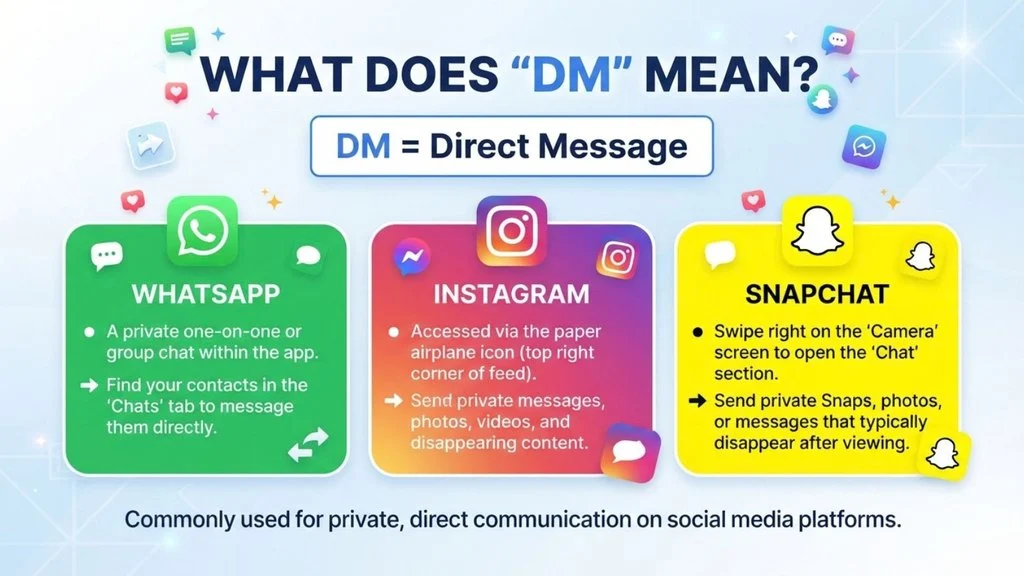
The basic idea of DM is private messaging, but platforms use different terms.
DM on Instagram
It is very common on Instagram.
“DM me the photo.”
This means, “Send me the photo privately on Instagram.”
People also say:
“Check your DMs.”
This means to check your Instagram private messages.
DM on Snapchat
People may use DM to describe a private chat, although Snapchat commonly focuses on chat or messages.
For example:
“DM me on Snapchat.”
The person is asking for a private conversation.
DM on WhatsApp
People sometimes use “DM” when talking about WhatsApp, but “message me” is more natural on WhatsApp.
For example:
“DM me on WhatsApp.”
This usually means:
“Send me a private message on WhatsApp.”
Does the meaning change?
No. The basic idea stays the same: private communication.
The exact name may change from one platform to another.
Similar Slang Words Like “DM”
Here are five related terms you may see online.
1. PM
PM means “Private Message.”
It has almost the same meaning as DM.
2. Inbox
Inbox refers to the place where you receive private messages.
“Check your inbox.”
3. Message
“Message me” is a simple way to ask someone to contact you privately.
4. Chat
Chat means having a conversation online.
It can be private or public depending on the platform.
5. Slide into my DMs
This phrase means sending someone a private message, often with a friendly, romantic, or flirty tone.
“If you want to talk, slide into my DMs.”
It is more playful than simply saying “DM me.”
FAQs About “DM Meaning in Text”
1. What does DM mean in text?
DM means “Direct Message.” It refers to a private message sent to someone online.
2. Is DM short for direct message?
Yes. DM is short for “Direct Message.”
3. Is DM positive or negative?
DM is neutral. It can be friendly, serious, professional, or flirty depending on the conversation.
4. What does “DM me” mean?
“DM me” means “Send me a private message.”
5. Is DM the same as PM?
They are very similar. DM means Direct Message, while PM means Private Message. Both usually refer to private online communication.
6. Is DM common in daily chat?
Yes. DM is very common in social media and online conversations, especially on platforms such as Instagram and X.
7. Is it safe to use DM with elders?
It depends on the person. If they understand social media language, DM is fine. If you are unsure, saying “Please send me a private message” is clearer.
Conclusion
The dm meaning in text is simple: DM means “Direct Message.” It is a private message sent to another person online.
You may see phrases like “DM me,” “check your DMs,” or “send me a DM.” They all relate to private online communication.
DM is common on social media and in casual chats. It can be friendly, serious, professional, or flirty depending on the situation.
If someone says “DM me,” they are usually asking you to continue the conversation privately.
Now you know what DM means and how to use it correctly. If you enjoy learning online slang, exploring other text abbreviations can also help you understand chats more easily.

William Bennett is a dedicated writer and language enthusiast who shares clear, helpful insights on word meanings, spelling, grammar, and everyday English.
As an author at MeaningZones.com, he aims to make confusing language topics simple, practical, and easy for readers to understand.