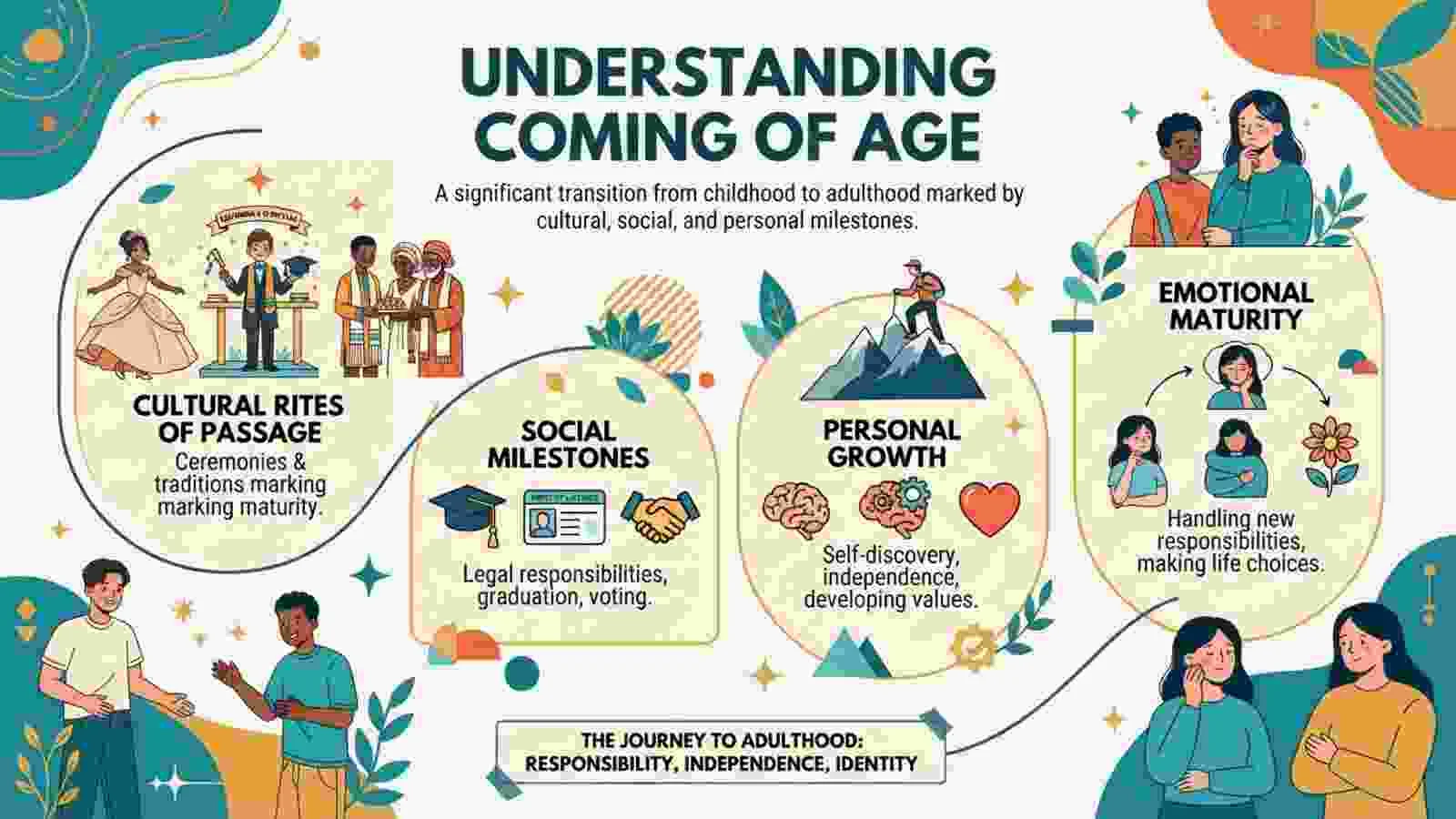
Imagine a friend says, “That movie is a great coming-of-age story.” You may understand the words, but you might still wonder, “What does coming of age mean?”
You may see this phrase in movie reviews, books, social media posts, or everyday chats.
It can also appear on WhatsApp, Instagram, and Snapchat when people talk about growing up, teenage life, or major life changes.
Coming of age is not really modern slang. It is a common English phrase used to describe the process of growing from childhood into adulthood.
It can also describe the important experiences that shape a young person’s identity, values, and view of life.
In this guide, you will learn the simple meaning of coming of age, how people use it in chat, what it means in movies and books, and how to use the phrase naturally.
What Does “Coming of Age” Mean?
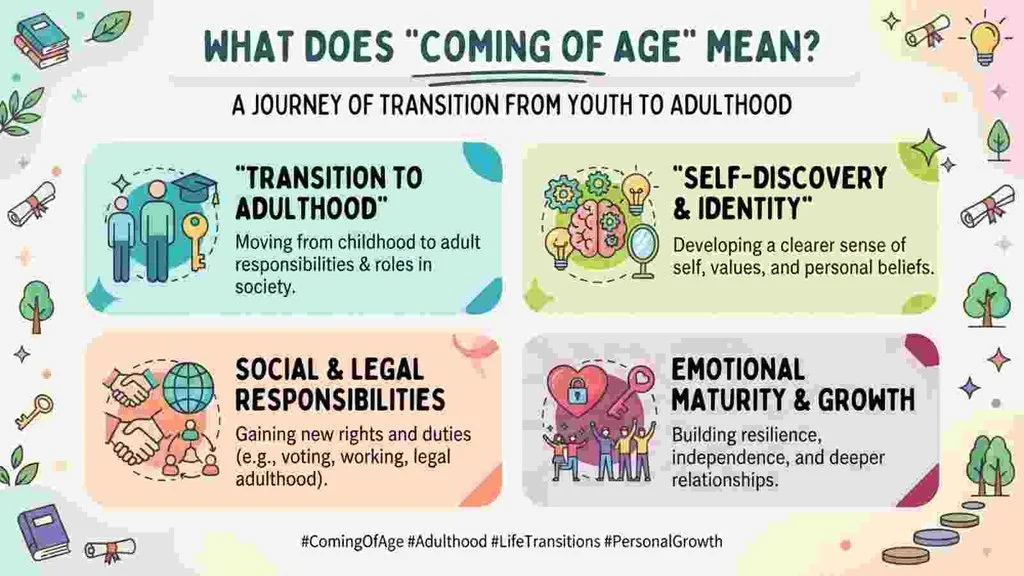
Coming of age means growing up and moving from childhood or youth toward adulthood.
It can describe both a stage of life and the experiences that help a person mature.
For example:
“Moving away for college was a coming-of-age experience.”
This means the experience helped the person grow, become more independent, or understand themselves better.
The phrase does not always mean reaching a specific age. It can also describe emotional growth, new responsibilities, relationships, challenges, and important life lessons.
Simple meaning
Coming of age = growing up and becoming more mature.
It is often connected with:
- Becoming independent
- Learning from life experiences
- Making important choices
- Understanding yourself
- Taking on new responsibilities
- Moving from childhood into adulthood
The phrase is very common when people discuss movies, books, stories, and real-life experiences.
For example:
“The movie is about a teenager coming of age.”
This means the story follows a young person as they grow, face challenges, and learn more about life.
Full Form of “Coming of Age”
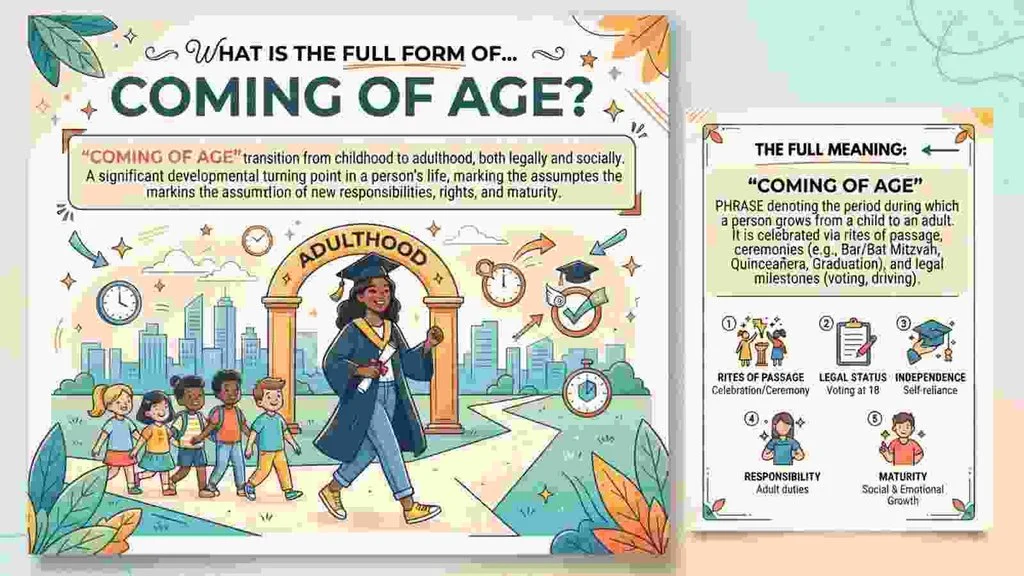
Coming of age does not have a full form.
It is a regular English phrase, not an abbreviation or acronym.
The phrase describes the process of growing up and becoming an adult or gaining greater maturity.
You may also see related phrases such as:
- Coming-of-age story
- Coming-of-age movie
- Coming-of-age experience
- Coming-of-age journey
These all relate to personal growth and maturity.
How Is “Coming of Age” Used in Chat?
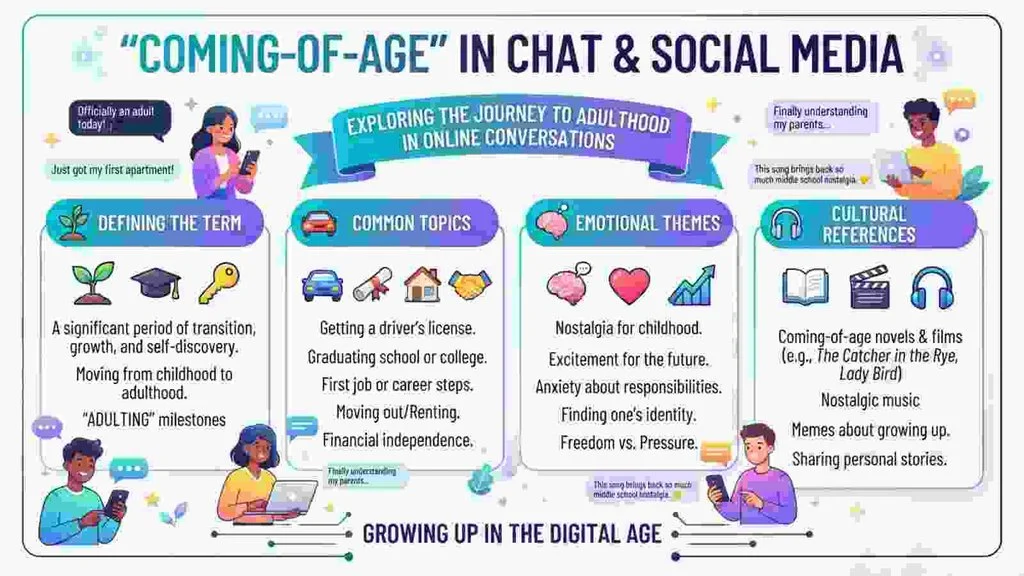
People use coming of age in casual conversations when talking about growing up, life experiences, movies, books, or personal changes.
Example 1: Talking about a movie
Alex: “Have you seen that new movie?”
Sam: “Yes. It is a coming-of-age story.”
Here, Sam means the movie focuses on a young person’s growth and journey into adulthood.
Example 2: Talking about life
Mia: “Leaving home changed me a lot.”
Lily: “Sounds like a real coming-of-age experience.”
Here, the phrase describes an experience that helped Mia become more mature and independent.
Example 3: Talking about growing up
Jake: “High school taught me so much.”
Ryan: “Yeah, those years can be a big coming-of-age period.”
Here, the phrase refers to a stage when young people often learn important lessons about themselves and life.
What Does “Coming of Age” Mean From a Girl or Boy?
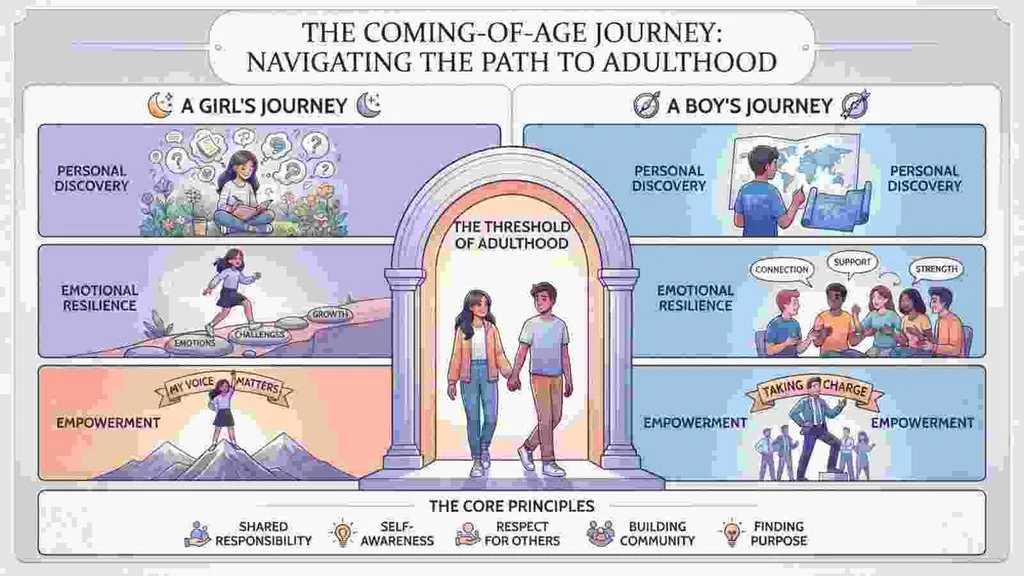
The meaning does not change based on whether a girl or boy uses it.
If a girl says:
“That was my coming-of-age moment.”
She may mean that something helped her grow or become more mature.
If a boy says:
“College was a coming-of-age experience for me.”
He may mean that college helped him become more independent.
Can it be flirty?
Usually, coming of age is not a flirty phrase.
It is more often serious, reflective, or casual.
Someone might use it while talking about:
- Childhood memories
- First relationships
- School life
- Moving away from home
- Becoming independent
- Personal growth
The emotional tone depends on the conversation.
Is “Coming of Age” Rude or Polite?
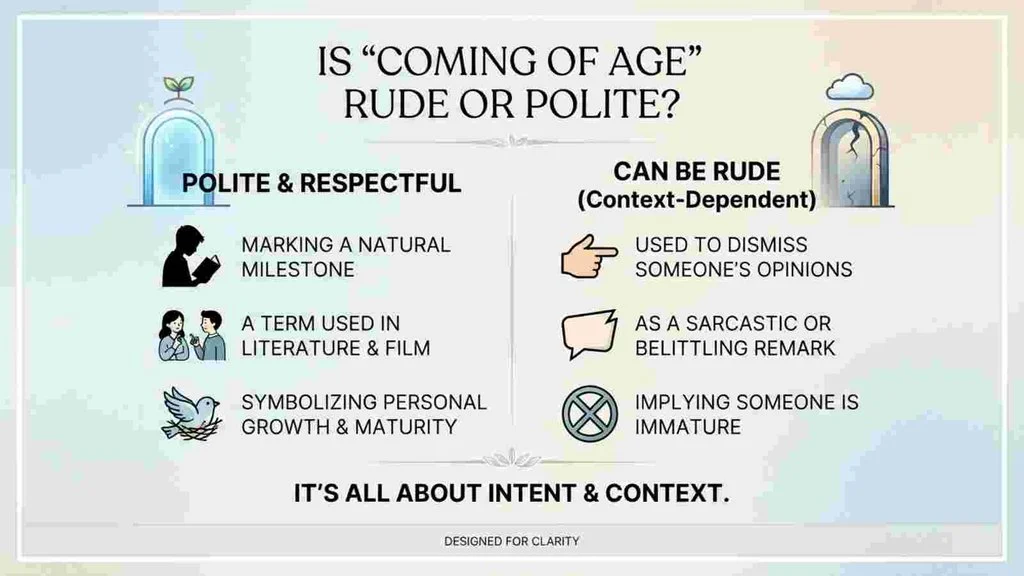
Coming of age is generally polite and neutral.
It is a normal English phrase. You can use it when talking about books, movies, personal experiences, or growing up.
For example:
“It is a beautiful coming-of-age story.”
This sounds positive and natural.
However, the phrase could sound insensitive if someone uses it to make fun of another person’s age or maturity.
For example:
“You are finally coming of age!”
Depending on the situation, this could sound teasing or patronizing.
So, the phrase itself is not rude. Tone and context matter.
When Should You Use “Coming of Age”?
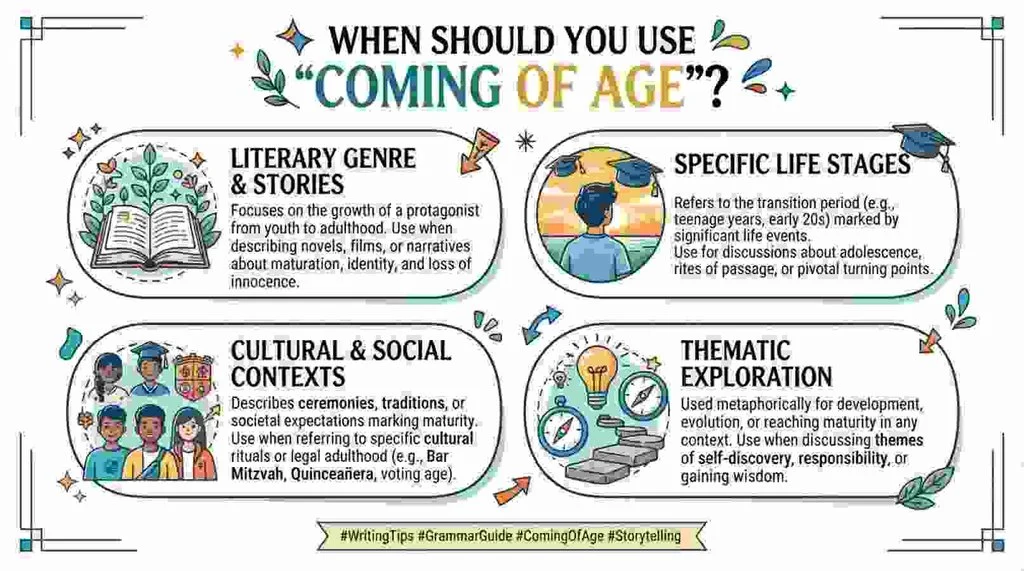
You can use this phrase when talking about growth and maturity.
Use it when:
- Talking about a coming-of-age movie or book
- Describing a young person’s growth
- Talking about becoming more independent
- Discussing important teenage experiences
- Describing a major life transition
- Reflecting on your own childhood or youth
- Talking about emotional or personal maturity
Example
“Moving to another city was a coming-of-age experience for me.”
This sounds natural because the event helped the speaker grow.
When Should You NOT Use “Coming of Age”?
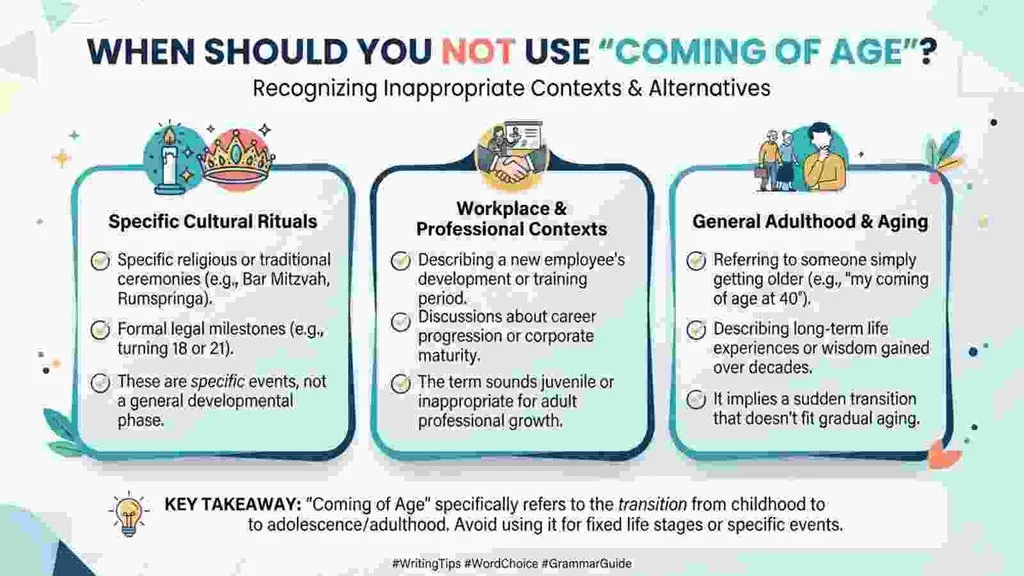
The phrase is flexible, but it may not fit every situation.
Avoid using it:
- When you simply mean getting older
- In a very technical context where a specific term is needed
- When the topic has nothing to do with growth or maturity
- To mock someone’s age
- When a simpler phrase such as growing up would be clearer
For example, instead of saying:
“My dog is coming of age.”
You may simply say:
“My dog is growing up.”
The right choice depends on the subject and context.
Best Replies to “Coming of Age”
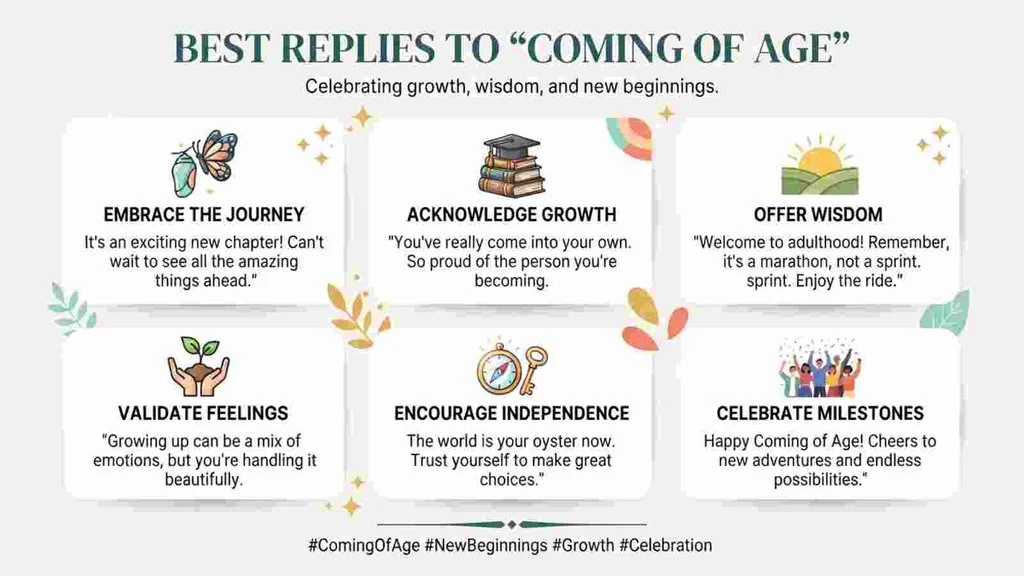
If someone uses the phrase in a conversation, your reply depends on what they are talking about.
Here are five simple replies:
- “Yeah, growing up changes a lot.”
- “I can relate to that.”
- “That sounds like a big experience.”
- “What made it a coming-of-age moment for you?”
- “I love stories like that.”
If someone is talking about a movie, you could say:
“I should watch it sometime.”
If they are talking about their personal experience, a thoughtful reply is better:
“What did you learn from it?”
“Coming of Age” Meaning on WhatsApp, Instagram, and Snapchat
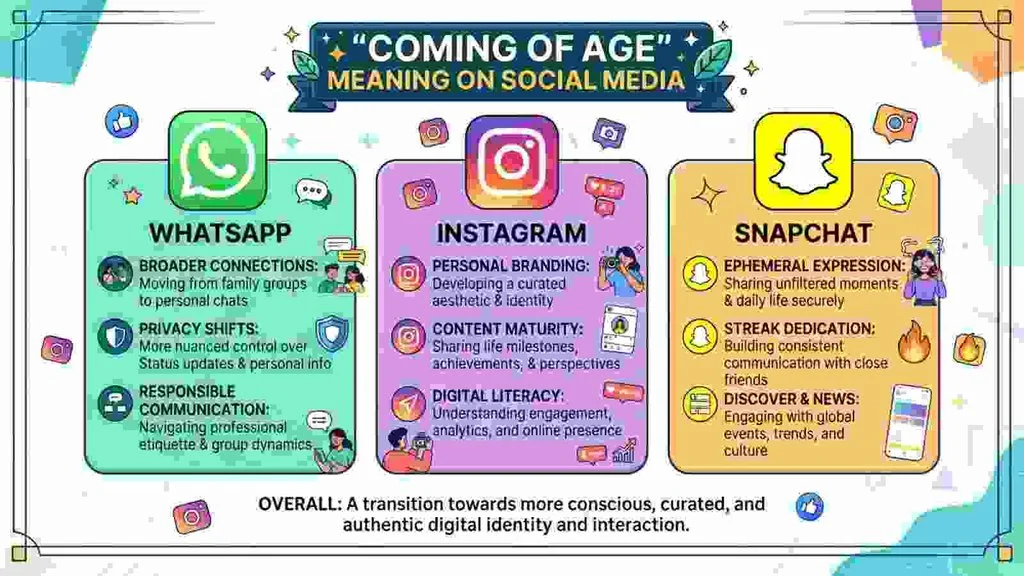
The basic meaning of coming of age stays the same on WhatsApp, Instagram, and Snapchat.
The phrase does not gain a special meaning just because it appears on a particular platform.
On WhatsApp
Someone might write:
“Moving out was my real coming-of-age moment.”
They are talking about personal growth.
On Instagram
You may see a caption such as:
“A little coming-of-age era.”
This can describe a period of change, self-discovery, or growing independence.
On Snapchat
A person might use the phrase while talking about school, friends, relationships, or memories.
For example:
“High school was such a coming-of-age phase.”
The exact meaning still depends on the context.
Tip: If you see “coming of age” online, think growing up, maturity, and life-changing experiences.
Similar Slang Words and Phrases Like “Coming of Age”
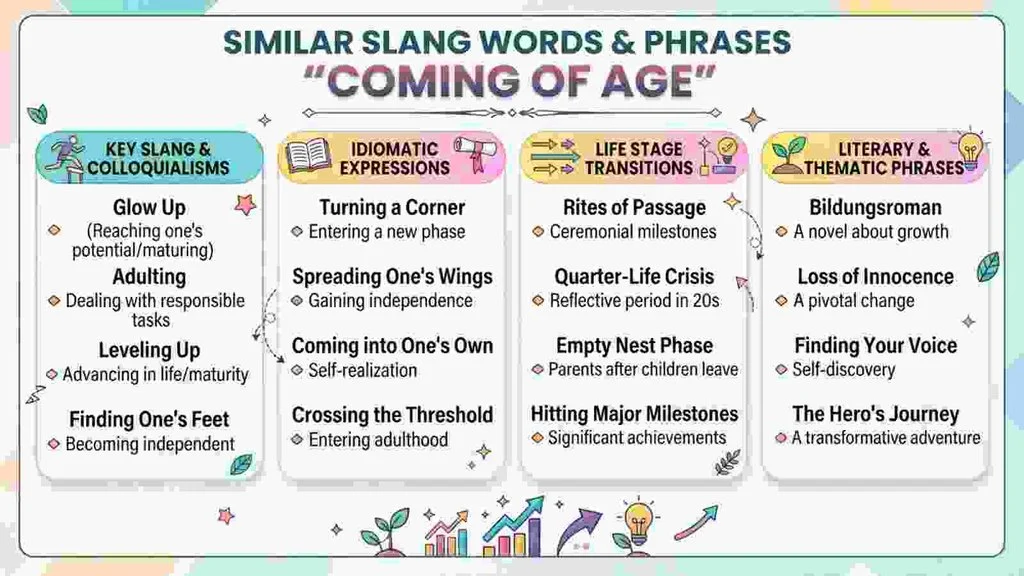
Here are five related expressions:
1. Growing Up
This means becoming older and more mature.
“I learned a lot while growing up.”
2. Maturing
This means becoming more emotionally or mentally mature.
“He has really matured over the years.”
3. Finding Yourself
This means learning more about your identity, goals, feelings, and values.
“College helped me find myself.”
4. Self-Discovery
This means learning more about who you are and what you want.
“Travel gave her a chance for self-discovery.”
5. Growing Into Adulthood
This directly describes the transition from youth to adult life.
“The story follows her journey into adulthood.”
These phrases are related, but they are not always interchangeable.
FAQs About “Coming of Age”
Is “coming of age” positive or negative?
It is usually neutral or positive. It describes growth and maturity. However, the experience being described can be happy, difficult, or both.
Is “coming of age” safe to use with elders?
Yes. The phrase is not offensive by itself. However, use it naturally and avoid using it to make fun of someone’s age.
Is “coming of age” common in daily chat?
It is fairly common, especially when people talk about movies, books, childhood, teenage years, or personal growth. “Growing up” is more common in simple everyday speech.
Is “coming of age” slang?
No. Coming of age is a standard English phrase, not slang. It is widely used in normal speech and writing.
What is a coming-of-age story?
A coming-of-age story focuses on a young person’s growth and movement toward adulthood. It often includes challenges, relationships, choices, and self-discovery.
Can adults have a coming-of-age experience?
Yes. The phrase often refers to youth, but people can describe major life experiences as coming-of-age moments when those experiences lead to greater maturity or independence.
What is another way to say coming of age?
Depending on the context, you can say growing up, maturing, entering adulthood, becoming independent, or finding yourself.
Conclusion
Coming of age means growing up and becoming more mature. It often describes the experiences that shape a young person’s identity, values, and understanding of life.
The phrase is not slang. It is a common English expression used in conversations, books, movies, social media, and everyday writing.
You can use it to talk about school, relationships, independence, personal growth, or major changes in life. You may also see it in phrases such as coming-of-age movie or coming-of-age story.
Now, when someone says, “That was a coming-of-age experience,” you will know they are talking about an experience that helped someone grow, change, or become more mature.
For more useful English phrases and slang meanings, explore related terms and learn how people use them in real conversations.